How Hard Is a Juicer to Clean Every Day
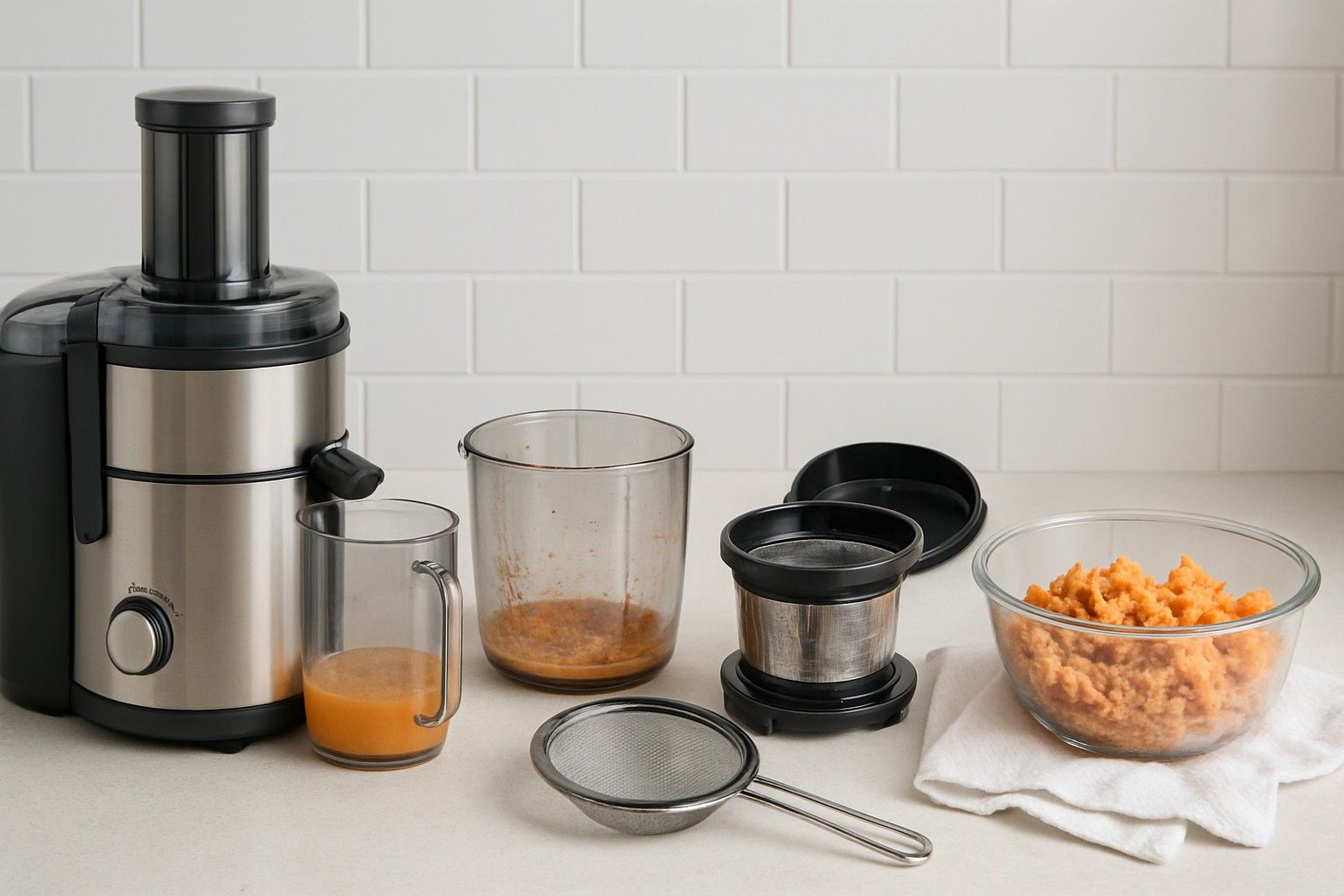
Cleaning a juicer takes anywhere from about three minutes to fifteen, depending on the design, and that gap decides whether you keep juicing or stop. If you have a busy morning routine, no domestic help, or a sink that is always full, this article shows what daily cleanup really involves and which design features cut it down. Prices run from ₹499 to ₹20,000, but as you will see, cleaning effort does not follow price in a straight line.
Why So Many Juicers End Up Unused in the Cupboard
Most juicers are not abandoned because the juice disappoints. They are abandoned because the first week's enthusiasm meets the reality of a wet, pulpy, multi-part machine that has to be washed straight away. Leave it for later and the pulp dries onto the mesh, the fibres cling to the corners, and the next session starts with a scrubbing job nobody wants.
Indian kitchens add their own friction. Many households juice fibrous produce such as carrot, beetroot, amla, sugarcane, ginger and wheatgrass, all of which leave dense pulp and stain plastic parts. Sink space is often small, hot water may not be on tap at 7 am, and a dishwasher is the exception rather than the rule.
So the real question is not whether a juicer can be cleaned, since every one can. It is whether the cleanup fits into the five minutes you will realistically spare after every use. A machine that needs ten minutes of brushing will be used on weekends for a month, then stored. Judging a juicer by its cleanup effort before you buy is the single most reliable way to avoid that outcome.
Cleaning Time: Cold Press vs Centrifugal
Centrifugal juicers usually have fewer parts and a wider feed chute, so disassembly is quick. You typically lift off the lid, pull out the pulp basket and the fine mesh filter, and rinse the jug. The catch is the filter: its fine mesh holds fibre in thousands of tiny holes, and it needs a few seconds under running water with a brush. Done immediately, the whole job is often a few minutes. Left for an hour, it gets much harder.
Cold press (slow) juicers have more components, commonly a bowl, a screw or auger, a juicing drum or screen, a cap with a spout, and a brush. That means more pieces to take apart and rinse, and the screen has to be brushed carefully. Even so, many people find the work is steady rather than difficult, because the pulp comes out firmer and rinses off cleanly when you wash straight away. Expect somewhat more time than a centrifugal model, especially the first few times until you learn the assembly.
The honest trade-off is this: centrifugal wins on speed and part count, while cold press asks for a bit more time in exchange for drier pulp and often less foam to wash off. If you want the full picture beyond cleanup, here is how the two juicer types compare on cleanup alongside yield, noise and juice quality.
Dishwasher-Safe Parts and Anti-Clog Design
Dishwasher-safe parts sound like a complete fix, but check what that claim covers. Often the jug, lid and pulp container can go into a dishwasher while the fine mesh or screen should still be brushed by hand, because food residue lodged in the holes does not always wash out in a cycle. Also, plenty of Indian homes do not have a dishwasher at all, so treat this as a bonus rather than a deciding feature. Read the manual's care section before you assume anything can go in.
Anti-clog design matters more for daily effort. A juicer that jams mid-session forces you to stop, reverse, open it up and pick out fibre, which is a cleaning task on top of the cleaning task. Look for a reverse function, a wide feed chute that reduces pre-cutting, and a screen or drum designed to shed fibre rather than trap it. Fibrous produce like celery, ginger and leafy greens is where weak designs struggle.
A few practical checks help:
- Parts should come apart without tools and go back together without guesswork.
- Smooth, simple surfaces clean faster than ones with ridges and tight corners.
- A supplied cleaning brush that actually fits the mesh is worth having.
- Rinse parts straight after juicing, before pulp dries.
Pulp Ejection and Wet vs Dry Pulp
Where the pulp goes, and what state it is in, shapes your cleanup more than most buyers expect. Models with continuous pulp ejection push waste into a separate container as you juice. This lets you process a larger quantity without stopping, and the bowl stays cleaner. Models without it hold pulp in the basket or chamber, so you have to pause, empty and wipe more often during a big batch.
Dry pulp is easier to deal with. It is crumbly and can be tipped into the bin or used in parathas, cutlets or compost without much mess. It also suggests the machine has extracted more juice. Wet pulp is soggy, heavier, and tends to smear across the container and surfaces, which means extra wiping and rinsing. It also leaves juice behind, so you are washing away value as well.
In general, cold press designs produce drier pulp, though results vary with the produce and how well the machine is fed. Citrus and watermelon will always be wetter than carrot. When comparing models, check whether the pulp container is easy to remove and wash, and whether its opening is wide enough to empty without scraping. A small, awkward container turns a good design into a daily chore.
Replacement Filters, Meshes and Long-Term Upkeep
Cleaning does not end each day; the wear shows up over months. Fine meshes and screens are the parts that clog, stain and eventually degrade. Regular use with hard produce like beetroot or carrot can dull or stretch a mesh, and a worn one traps more fibre and cleans less easily. Plastic parts also pick up stains from turmeric, carrot and beetroot, which looks untidy but is usually cosmetic.
Before buying, find out whether the filter, screen, brush and gaskets are sold separately and whether service support exists in your city. A juicer whose key part cannot be replaced becomes disposable the day that part fails. This matters across all juicer price rates: models in the ₹1,500 range often have limited spare availability, while those in the ₹4,500 and ₹12,000 ranges more commonly offer replaceable parts, though you should confirm this rather than assume it.
For longer life, soak the mesh in warm water with a little dish soap now and then, use the brush in the direction of the holes, and avoid abrasive scrubbers. Dry every part fully before reassembly, especially in humid months, to prevent odour and mould around gaskets and seals.
Choosing a Juicer You'll Actually Keep Using
Start with your honest routine. If you juice once a day on a rushed morning, favour fewer parts, a quick-rinse filter and a reverse or anti-clog feature, whatever the juicer type. If you juice in larger batches or want drier pulp and are fine spending a few extra minutes at the sink, a cold press design with continuous pulp ejection can suit you.
The average price across the category is ₹4,999, and the ₹4,500 band is where many buyers find a workable balance of simple assembly, replaceable parts and reasonable build. Paying more does not guarantee easier cleaning, so judge the design itself: count the parts, look at the mesh, and check how the pulp container comes out. Buying now with a model that fits your routine beats a perfect feature set that sits unused.
A short checklist before you commit:
- How many parts need washing after every use?
- Does the mesh or screen come with a fitting brush?
- Is the pulp container large, removable and easy to empty?
- Are replacement filters and service available in India?
Cleaning is one factor among several, and our buying guide helps you weigh cleaning against every other buying factor, including juice yield, noise, capacity and budget.
Daily juicer cleanup is manageable when the design helps you: few parts, a mesh that rinses easily, dry pulp and replaceable filters. Rinse straight after use and a good model costs you a few minutes, not a chore you dread. Pick for how you will actually live with the machine, and it will stay on your counter instead of in the cupboard.
Comments
Be the first to comment.