Common Juicer Buying Mistakes and Red Flags
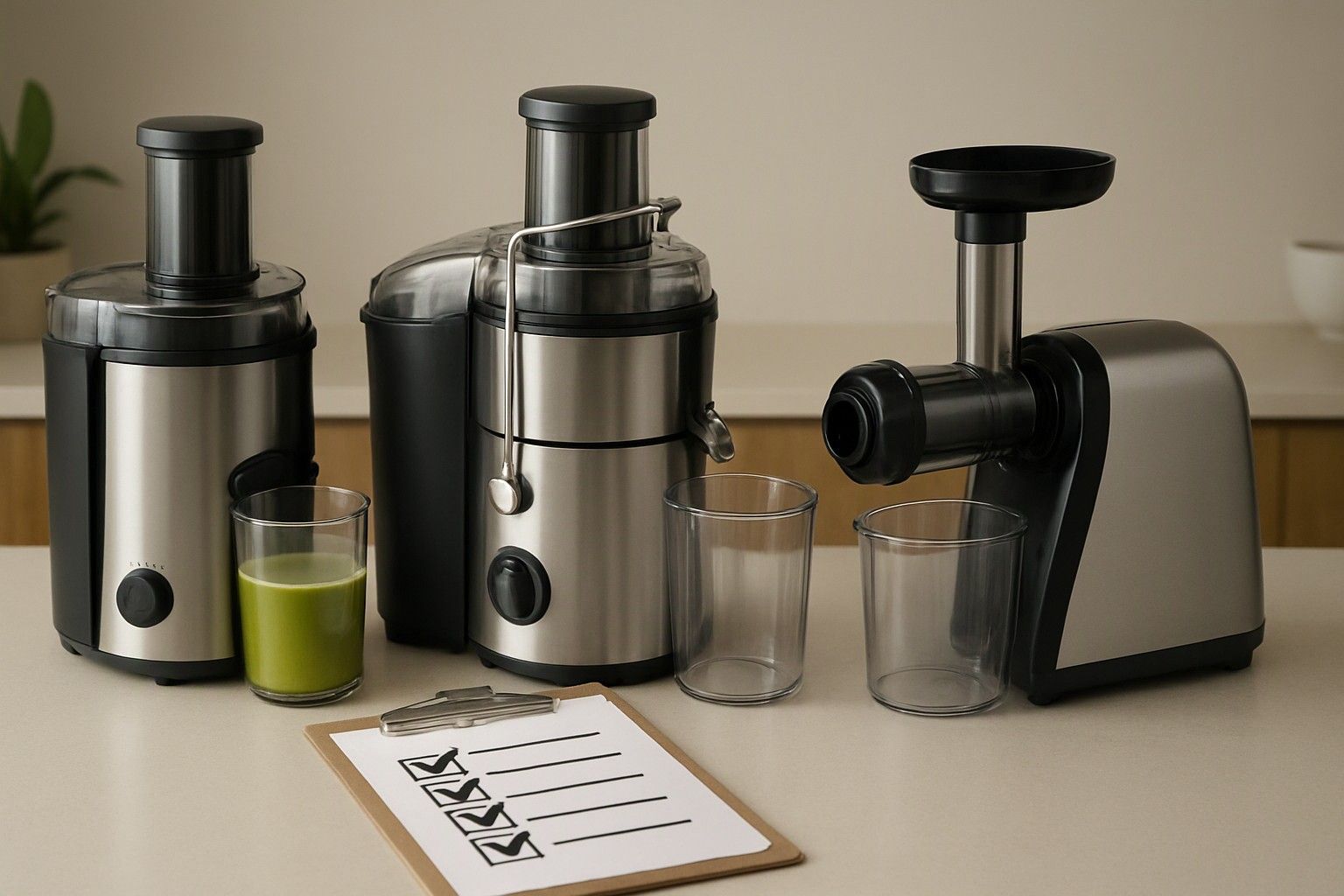
If you are close to buying a juicer and want to know what could go wrong, this page is for you. Most regrets in this category come from five things: numbers on the box that mislead, a juicer type that does not suit your produce, thin warranty cover, spare parts you cannot find, and features you end up never using. Each section below shows you how to spot the problem before you pay.
Misleading Wattage and Yield Claims
A big wattage figure on the box looks like proof of a strong juicer, but it often is not. Some listings quote peak or maximum input power instead of the rated power the motor can sustain, and some use figures borrowed from mixer-grinder marketing. Wattage also means different things across designs. Slow juicers usually run at much lower wattage than fast centrifugal ones, yet they can extract more from the same produce because the pressing action matters more than raw speed. Treat watts as one clue and not the verdict. If you want to see through inflated wattage numbers, learn the difference between rated and peak power and how torque and RPM change the result.
Yield claims need the same scepticism. Phrases like 'maximum juice' or 'dry pulp' tell you nothing unless they name the produce. Ask what was juiced, in what quantity, and whether the pulp was re-fed. Check the pulp yourself in user videos and reviews. Wet, fibrous pulp after a single pass means juice is being left behind. A claim you cannot connect to a specific fruit or vegetable is a marketing line, not a specification.
Buying the Wrong Type for Your Produce
A juicer can be well built and still be wrong for you. Centrifugal juicers are quick and suit soft fruits like apples, pineapple and watermelon, but they struggle with leafy greens, wheatgrass and herbs, and they give less juice from them. Slow, or masticating, juicers handle greens and fibrous produce much better and give drier pulp. The trade-off is slower juicing, more prep and more parts to wash. Citrus juicers are the simplest and cheapest option, but they only do oranges, mosambi and lemons.
The usual mistake is buying for the occasional smoothie-style fantasy instead of the daily routine. Someone who juices carrots, beetroot, amla and ginger every morning needs a machine that copes with hard produce without stalling or overheating. Someone who only wants a quick glass of mosambi juice on weekends does not need a heavy slow juicer. Write down the five things you juice most often, then match the type to what you juice most before looking at price or brand.
Warranty, Motor Coverage and After-Sales Service
Read the warranty terms, not just the headline. A line like 'two-year warranty' can mean full cover on the product, or it can mean cover on a few parts only. The motor is the most expensive component, so check whether it has its own, longer warranty and whether the term applies to the whole unit or only the motor. Also check what is excluded. Blades, strainers, filters, jars and plastic parts are often treated as wear items. Damage from overloading or running with hard produce can also void a claim.
Red flags include a warranty that is vague in the listing, no mention of how claims are made, and no service centre in or near your city. Before buying, find out whether service is done by home visit, pickup or only by posting the unit to a centre. Keep the invoice, register the product if the brand asks, and photograph the serial number on the day it arrives. A warranty only has value if the claim process is practical where you live.
Spare-Part Availability and Brand Support in India
A juicer is not a one-time purchase if its small parts can be bought only from the brand. Strainers, filter baskets, cleaning brushes, pusher caps, gaskets, jugs and pulp containers are the pieces that crack, warp or go missing. Check whether these are sold separately and whether the seller or brand lists them online. If a replacement strainer is hard to find, the whole machine is effectively finished the day it wears out.
Price the spares as well. In a category where juicers start at ₹499, a replacement part that costs a large share of that is a sign the machine is not meant to be repaired. Look at how the brand has handled complaints in customer reviews, especially anything about delayed service or parts that were 'out of stock' for months. A brand with a service network in your city and a clear spare-parts listing is a safer choice than an unfamiliar label offering extra features at a lower price.
Overpaying for Features You'll Never Use
Prices in this category run from ₹499 to ₹20,000, with an average around ₹4,999, so the gap between a sensible purchase and an expensive one is wide. The ₹1,500 tier suits citrus and light, occasional juicing. The ₹4,500 tier covers most households that juice a few times a week. The ₹12,000 tier makes sense for daily juicing, greens and tougher produce, where extraction and durability pay back over time.
Within any tier, watch for features that add cost without improving the juice. Several speed settings matter little if you only juice a couple of ingredients. Digital displays, extra attachments for sorbet or nut milk, and very large jugs are worth paying for only if you will use them every week. A small family rarely needs a large-capacity machine, and a bigger feed chute is useful mainly if you dislike chopping. Pay for the motor, the juicing mechanism, the build and the support. Treat everything else as optional, and buy at the tier that matches how often you actually juice.
A Final Pre-Purchase Checklist
Before you place the order, go through these points:
- Power claims: Is the figure rated power, and does the listing explain yield for the produce you use?
- Type: Does the juicer type suit your five most-used fruits and vegetables?
- Warranty: Is the motor covered separately, and are the exclusions clearly stated?
- Service: Is there a service route in your city, and how are claims made?
- Spares: Can strainers, brushes and jugs be bought separately, and at what cost?
- Features: Will you use each feature weekly, or are you paying for the look of a bigger spec sheet?
- Budget: Does the price sit in the tier that suits how often you juice?
If all seven are answered, you can buy with confidence at the current price. For a wider decision framework, run through the complete buying checklist covering types, motors, capacity and cleaning effort.
The mistakes worth avoiding are specific: trusting a bare wattage number, buying a type that does not suit your produce, accepting a vague warranty, ignoring spare parts, and paying for features that sit unused. Check those five and you have answered the question of what to watch out for before buying a juicer.
Comments
Be the first to comment.