Juicer vs Mixer Grinder: Do You Really Need Both
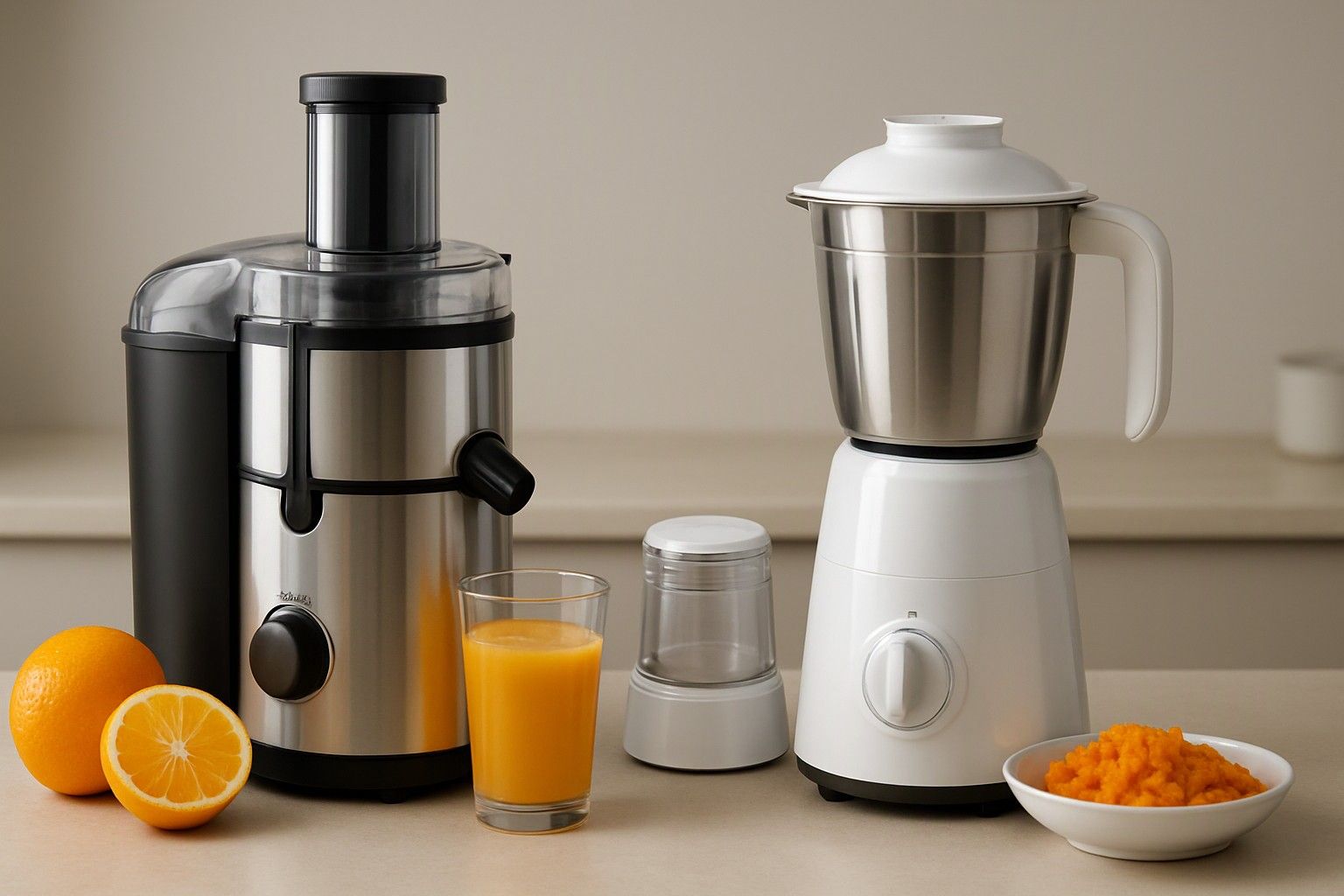
If you already have a mixer grinder at home, you probably wonder whether a separate juicer is worth buying. This article is for you if you juice now and then and want to know if your existing jar is enough, or if you want fresh juice regularly and are asking whether the mixer is holding you back. The short answer depends on what you juice, how often, and how much fibre and straining you can put up with.
What a Mixer Grinder Juicer Jar Can and Can't Do
A mixer grinder is built to grind and blend. Its blades are designed to break down masala, batter and chutney, so when you drop fruit into the juicer or blender jar, you get a blended mixture, not an extracted juice. The fibre stays in the liquid unless you strain it out yourself.
This works well for soft, watery produce. Watermelon, muskmelon, peeled oranges, pineapple and grapes break down easily, and a quick pulse followed by a sieve gives you a drinkable result. Mango and banana shakes are also work a mixer does well, and a juicer cannot do them at all.
It struggles with firm or fibrous produce such as carrot, beetroot, amla, ginger and leafy greens. You usually need to add water to get the blades moving, which dilutes the flavour. Sugarcane is out of the question. Pomegranate is awkward too, because blending crushes the seeds and can leave a bitter edge. Running the motor for long stretches to push through tough produce also strains it, since mixer motors are meant for short bursts.
Juice Quality: Dedicated Juicer vs Mixer Jar
The biggest difference is in what ends up in your glass. A dedicated juicer separates juice from pulp as it works, so you get a thinner, cleaner liquid with a more concentrated flavour. A mixer jar produces something closer to a thick, pulpy blend. After straining, the juice is acceptable, but it often tastes diluted if water was added.
Yield is the next gap. A dedicated juicer presses or spins out most of the liquid, especially from carrots, apples, beetroot and leafy greens. With a mixer, a good amount of juice stays trapped in the pulp left in the strainer unless you squeeze it by hand, which takes effort and still leaves some behind.
There is also a difference in texture and separation. Mixer-made juice tends to settle into layers faster because of the fine fibre suspended in it. Dedicated juicers vary among themselves: fast centrifugal types are quick but can leave a foamy top, while slow, press-style types give denser juice at a lower speed. If you only juice soft fruit occasionally, the mixer gap is small. If you want carrot, beetroot or green juices, the gap becomes obvious.
Pulp, Straining and Convenience Differences
With a mixer, straining is a separate step. You blend, pour through a sieve or muslin, press the pulp with a spoon, and then wash the sieve as well. For one glass this is manageable. For a family of four every morning, it becomes a chore many people quietly drop.
A dedicated juicer builds that separation into the machine. Pulp collects in a bin or is pushed out through a spout, and juice flows into a jug. You also don't need to chop produce as finely, and many models accept larger pieces. The trade-off is the number of parts: a juicer typically has a feed chute, a filter basket or screw, a pulp container and a lid, all of which need rinsing soon after use before pulp dries on them.
A mixer has fewer parts to clean but adds a sieve, and the blades and jar lid are awkward to scrub. Here is how cleanup compares between the two in more detail. Broadly, a mixer wins on convenience if you juice rarely and use the machine for many other jobs. A juicer wins on speed per glass once juicing becomes a daily habit.
When a Separate Juicer Is Worth the Money
A separate juicer makes sense when juicing is a routine, not an occasional treat. If you drink juice several times a week, want carrot, beetroot, amla or leafy green juices, or are making juice for kids and elders who prefer it pulp-free, the extra yield and lower effort add up quickly. It also helps if your mixer jar is already stressed by daily grinding and you would rather not add heavy juicing on top of it.
It is less justifiable if you juice a few times a month, mostly with watermelon, oranges or pineapple. In that case a mixer and a sieve do the job, and the money is better spent elsewhere in the kitchen.
Cost is modest compared with most appliances. Juicers in this category run from ₹499 to ₹20,000, with an average around ₹4,999. Basic models fall in the ₹1,500 band, while the ₹4,500 band is where many households find a good balance of motor power and ease of cleaning. For a clearer idea of what a dedicated juicer costs to add, look at which band matches how often you will actually use it. Higher bands, such as ₹12,000, suit heavy daily users who want slower, press-style extraction.
Making the Right Call for Your Kitchen
Start with what you actually juice. If it is mostly soft fruit and you are happy to strain, keep using your mixer and skip the extra purchase. If carrot, beetroot, amla, ginger or greens feature regularly, a juicer will repay you in taste, yield and time.
Then consider frequency and household size. Daily juicing for more than one person is where the mixer's straining step becomes tedious. Also check your counter and storage space, because a juicer is another bulky appliance that must be washed promptly, and one that sits unused is not a saving.
As a quick check, buy a juicer if you juice three or more times a week, want fibrous or leafy produce, or dislike pulp. Stay with the mixer if you juice occasionally, favour soft fruit, and value having fewer gadgets. Prices in this category are well within reach of most budgets, so the decision should rest on your habits and not on timing. When you are ready, factor this into the overall buying decision alongside motor type, jar capacity and ease of cleaning.
So, do you need a juicer if you already own a mixer grinder? Not if your juicing is occasional and limited to soft fruit. Yes, if you want regular, higher-yield, pulp-free juice from firm or leafy produce. Match the choice to your weekly habits and you will know your answer today.
Comments
Be the first to comment.