Cold Press vs Centrifugal Juicer: Which One to Buy
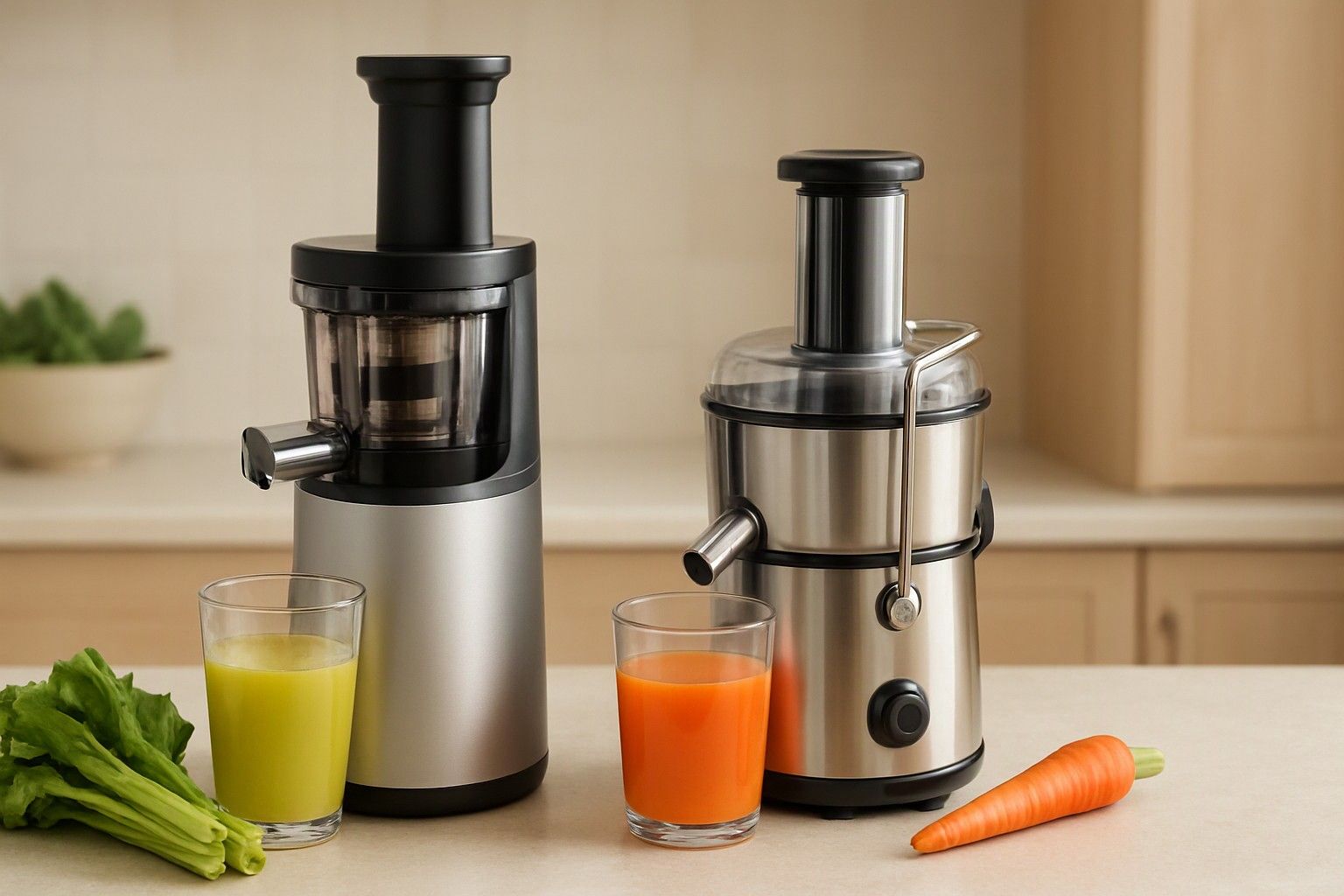
If you are trying to decide between a cold press (slow) juicer and a centrifugal one, this article is for you. The short version: cold press suits people who juice often, want more from every kilo of produce and plan to juice greens, while centrifugal suits people who want quick glasses with minimal prep and a lower spend. The sections below set out exactly where each type wins and loses, so you can decide today.
How Cold Press and Centrifugal Juicers Work Differently
A centrifugal juicer works like a very fast spinning grater. Produce is pushed down a feed chute onto a flat blade on a rapidly rotating basket, which shreds it. The spinning force flings the juice through a mesh filter, while the dry pulp collects in a separate bin. The whole process takes seconds.
A cold press juicer, also sold as a slow or masticating juicer, does the opposite. A slowly turning auger crushes and squeezes produce against a screen, pressing the juice out rather than flinging it. The motor turns at a fraction of the speed of a centrifugal one, which is why the process feels deliberate and why the term "cold" is used: there is far less friction and heat.
This single difference, spinning and shredding versus slow crushing and pressing, explains almost everything else in this article: yield, foam, noise, how greens are handled, cleaning effort and price.
Juice Yield, Nutrition and Taste Compared
Yield: Because a slow juicer presses produce rather than flinging it, it generally extracts more juice from the same quantity and leaves drier pulp. With a centrifugal juicer, the pulp often still feels damp, which means you are throwing away some juice. If you juice regularly with costly produce such as pomegranate, apples or carrots in bulk, that difference adds up over months.
Nutrition: Cold press juice is often marketed as more nutritious because there is less heat and less air whipped into it. The honest position is that slower pressing reduces oxidation, so juice tends to hold up longer in the fridge, but you should not expect dramatic nutritional gains from either type. Fresh juice from either machine, drunk soon after making, is far better than none.
Taste and texture: Cold press juice usually looks deeper in colour, feels smoother and separates more slowly. Centrifugal juice is lighter and frothier, and it tends to separate quickly, so it is best drunk straight away. Some people prefer that fresh, airy glass, so this comes down to personal taste.
Speed, Noise and Foam: Everyday Differences
Where centrifugal juicers of any brand win clearly is time. A wide feed chute lets you drop in whole or half-cut apples, tomatoes or oranges, and a glass is ready in a minute or two. That suits a rushed weekday morning, when you want juice before leaving for work or sending kids to school.
Slow juicers ask for more patience. Feed chutes are narrower, so you will chop produce into smaller pieces, and juice flows out steadily rather than in a rush. In return, they run much quieter, so you can use one early in the morning without waking the household, and they produce very little foam.
Centrifugal juicers are louder and create a layer of froth on top, which many people skim off or stir in. The same high speed that makes them quick also builds more heat and noise, and how motor speed affects heat and noise is worth understanding before you buy either type. If you juice daily, noise and foam become more noticeable than they sound on paper.
Which Type Handles Leafy Greens and Hard Produce Better
Leafy greens are the clearest dividing line. Spinach, palak, coriander, mint and wheatgrass are light and fibrous, and a spinning centrifugal blade tends to push them around and throw them into the pulp bin with little juice extracted. A cold press auger squeezes these leaves properly, so if greens are central to your routine, a slow juicer is the more sensible choice.
Hard produce is more nuanced. Carrots, beetroot and apples work in both types, but a centrifugal juicer gets through them faster with less chopping, and its higher speed is an advantage with dense items. A slow juicer handles them well too and extracts more, but you must cut pieces to fit and feed them steadily. Fibrous items like ginger and amla suit a slow juicer better, since pressing pulls out more of their juice.
If your juicing includes a mix of greens and tough roots, which type copes with tough Indian produce is a question worth reading through in detail before you commit.
Price Difference Between the Two Types
Across the category, juicers range from ₹499 to ₹20,000, with an average of ₹4,999. Centrifugal models cluster at the lower end of that range, and most buyers in the ₹1,500 tier will find centrifugal machines. Cold press juicers generally start higher and spread across the middle and upper tiers.
In the ₹4,500 tier, you begin to see both types, which makes it the most useful range for comparing them directly: you can weigh a capable centrifugal juicer against an entry-level slow one. The ₹12,000 tier is where well-built cold press juicers become more common, with sturdier augers, better motors and more complete accessories.
The sticker price is only part of the picture. A slow juicer that extracts more from every kilo of fruit and vegetables can make up part of its higher cost if you juice often, while a centrifugal juicer that sits unused because it is noisy or fiddly saves you nothing. For a closer breakdown, see what each type costs across budget tiers.
Which Juicer Type Is Right for Your Household
Choose a cold press juicer if:
- You juice most days and want the most from your produce.
- Spinach, wheatgrass, mint or other leafy greens are part of your routine.
- You like to make juice in the morning and want a quiet machine.
- You want to store juice for a few hours and have it hold up better.
Choose a centrifugal juicer if:
- You juice occasionally or on weekends and want a lower spend.
- Speed matters more to you than squeezing out every last drop.
- You mostly juice fruit and roots like oranges, apples and carrots.
- You do not want to chop produce into small pieces.
If your household is large and everyone wants a glass at the same time, a centrifugal juicer's speed is a real advantage. If it is one or two people with a steady daily habit, the slow juicer's yield and quiet running usually matter more. Whichever you lean towards, the full checklist for choosing a juicer covers the other factors, such as jar capacity, cleaning effort and warranty, that affect how happy you will be a year from now.
So, cold press or centrifugal? Pick cold press if you juice regularly, use greens and value yield and quiet. Pick centrifugal if you want fast, low-prep juice for occasional use at a lower price. Match the type to how you will actually use it each week, and you can buy with confidence today.

Comments
Be the first to comment.