Refrigerator Buying Checklist: What to Verify Before and at Delivery
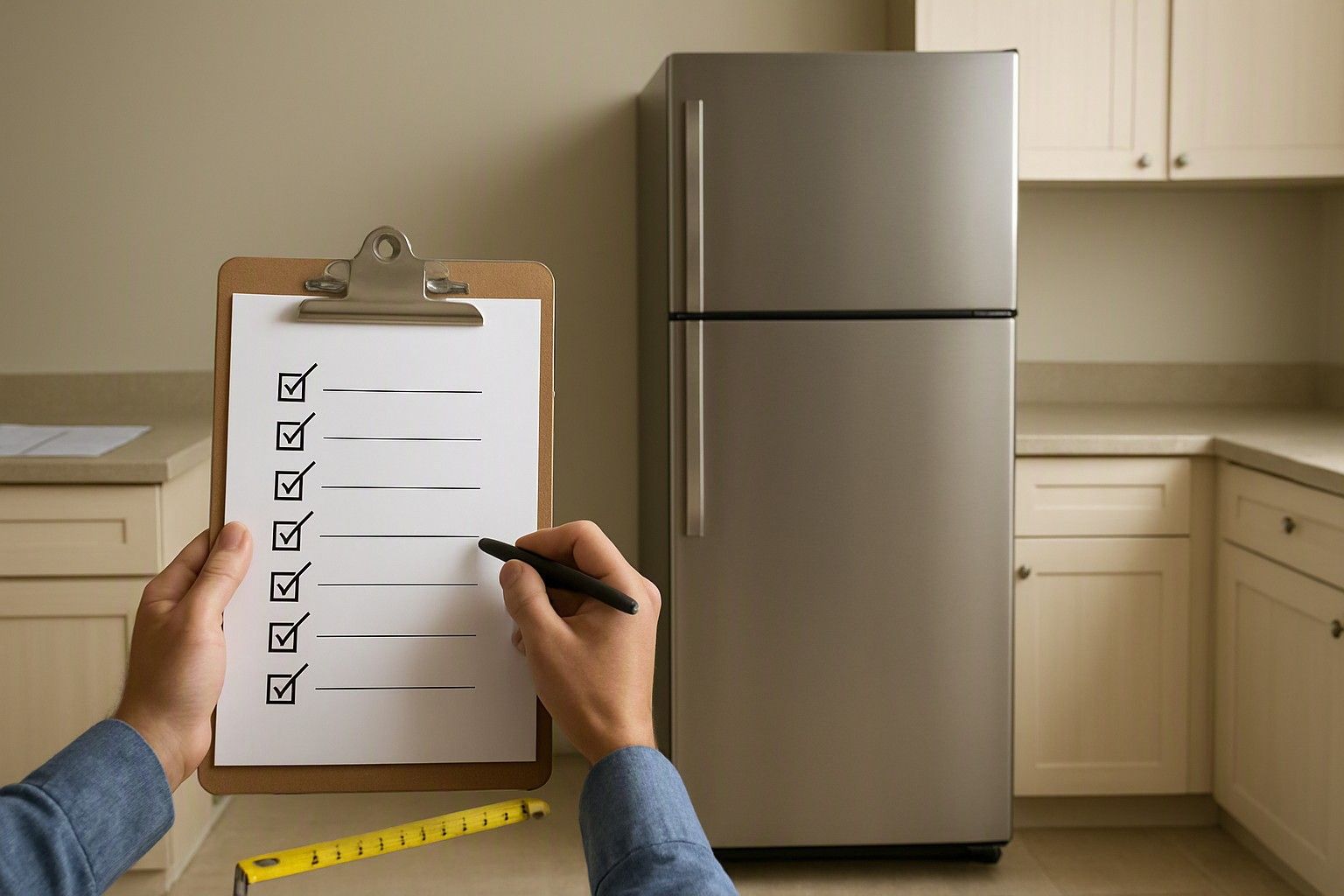
You've picked a refrigerator and you're close to paying, but the real risk now isn't choosing wrong — it's a mismatched spec sheet, a transit dent, or a warranty that gets fudged at handover. This checklist walks through exactly what to verify before you hand over money and while the delivery crew is still in your house, so nothing slips through in the last mile.
Specs to Confirm Before You Pay
Before any payment is made, match the invoice line by line against what was actually quoted to you — model number, capacity in litres, door type, star rating, and colour. Retailers sometimes bill a different variant of the same model family, and the price difference isn't always obvious unless you check the exact model code printed on the box or the energy label. If you're buying online, the confirmation email or app order summary is your reference point; if you're buying in-store, ask for the model number to be written on the bill itself, not just the general product name.
Also confirm the star rating and annual energy consumption figure match what was displayed at the point of sale — a lower-rated unit swapped in at the same price is a common way margins get recovered on discounted deals. Check whether accessories like extra ice trays, egg holders, or a stabiliser are included as promised, and get them listed on the invoice so a missing item has a paper trail. Finally, confirm the exact delivery address, floor, and any installation charges upfront — these get added as "extra" surprisingly often if not settled before payment, and disputing them after the fact is far harder than settling them before you pay.
Measuring Door Clearance and Ventilation Gaps
A refrigerator that doesn't fit through your door or stairwell, or one that ends up jammed against a wall with no breathing room, causes problems that show up months later as poor cooling or a jammed door. Before delivery day, measure your main entrance door width and height, any turns in the corridor or staircase, and the final spot in the kitchen where the unit will sit — refrigerators are boxy and don't bend around corners the way furniture sometimes can.
At the placement spot, leave at least a few inches of clearance on the sides and back for air to circulate around the compressor and condenser coils; a refrigerator pushed flush against a wall or boxed into a tight cabinet niche will run its compressor harder and shorten its own working life. Also check the door swing radius — most refrigerator doors need enough space to open fully for the crisper drawers to slide out, and if your kitchen layout only allows a partial swing, ask about reversible door hinges before you buy, not after. Ceiling height matters too if you're going for a taller double-door or side-by-side unit, since some models sit close to standard false-ceiling limits. None of this is complicated, but it has to be checked with a tape measure, not eyeballed.
Inspecting for Transit Dents and Cooling Faults
Refrigerators in India mostly travel by road on open trucks or in shared transport, and rough handling shows up as dents, scratches, or misaligned doors that aren't always visible until you look closely. Before signing the delivery acknowledgment, inspect the exterior panels under good light, run a hand along the door seals for gaps or tears, and open and close both the main door and freezer compartment to check they sit flush and latch properly without forcing.
Ask the delivery team to power the unit on before they leave, if your power point allows it — a compressor that starts and runs quietly within the first several minutes is a reasonable sign it's working, though full cooling takes a few hours to establish. Check that interior shelves, glass panels, and drawers are intact and not cracked, since packaging sometimes shifts in transit even when the outer carton looks fine. If you spot any damage, note it on the delivery receipt itself before signing — a verbal complaint after the crew leaves carries far less weight than a written note at the point of handover, and most replacement or repair claims move faster with that paper trail in place.
Red Flags in Deals That Look Too Cheap
Refrigerator prices in the Indian market genuinely span from about ₹8,500 at the low end to roughly ₹1,50,000 for large premium models, with the bulk of everyday buying clustering around an average near ₹26,000. When a deal looks unusually far below what a comparable model normally sells for, it's worth pausing rather than rushing to grab it — the gap is often explained by an older model being cleared out, a missing warranty card, a refurbished unit sold as new, or a display piece with hidden wear.
Before committing, it helps to sanity-check the offer against normal price bands so you know whether a price sits within the usual under-₹10,000, ₹10,000-to-₹22,000, or ₹22,000-to-₹45,000 range for that type of unit, or well outside it. Ask directly why the price is lower than expected — a legitimate seller will have a straightforward answer, whether that's an end-of-model clearance or a bundled installation cost already included. Be especially cautious with cash-only deals, sellers who won't provide a proper GST invoice, or listings where the warranty card is described as "available on request" rather than included by default. None of these are automatic disqualifiers, but each one is a question worth asking before you pay, not after.
Confirming Warranty Terms at Handover
The single most common gap between what a buyer expects and what they actually get is warranty coverage — most refrigerators carry a shorter general warranty on the whole unit alongside a much longer cover specifically on the compressor, and these two periods are frequently confused at the point of sale. At handover, don't rely on what the salesperson said verbally; check the physical warranty card or digital registration confirms the same durations you were told, with the brand's name and the correct model number printed on it.
It's worth taking the time to know the compressor and service cover before signing, since the terms vary meaningfully between brands and even between models from the same brand, and this is the point where any confusion is cheapest to resolve. Confirm whether warranty registration needs to be done separately through an app, call centre, or website, and do it the same day rather than leaving it for later — unregistered units sometimes face delays if a service claim comes up before registration is complete. Also ask what the extended warranty options cost and cover if you're offered one at handover, since these are usually optional add-ons and shouldn't be bundled into the price without your clear agreement.
Using This Checklist Alongside Your Research
This checklist is deliberately narrow — it's about the last mile of a purchase you've likely already researched on capacity, type, and features. It works best as a final pass, not a replacement for that earlier homework, so if you haven't already worked through the bigger decisions, it helps to tie these final checks back to your overall decision and confirm the model you're about to pay for still matches what you actually need. Treat delivery day as the point where research turns into a real, working appliance in your kitchen — worth a careful look, not a rushed signature.
Run through these checks in order — specs on the invoice, clearances at home, the unit itself at delivery, the price against normal bands, and the warranty paperwork — and there's very little left to go wrong once the refrigerator is plugged in. The goal isn't to slow down a purchase you've already decided on, it's to make sure the decision you made on paper is exactly what lands in your kitchen.
Comments
Be the first to comment.