Refrigerator Price Tiers in India: What Each Budget Buys
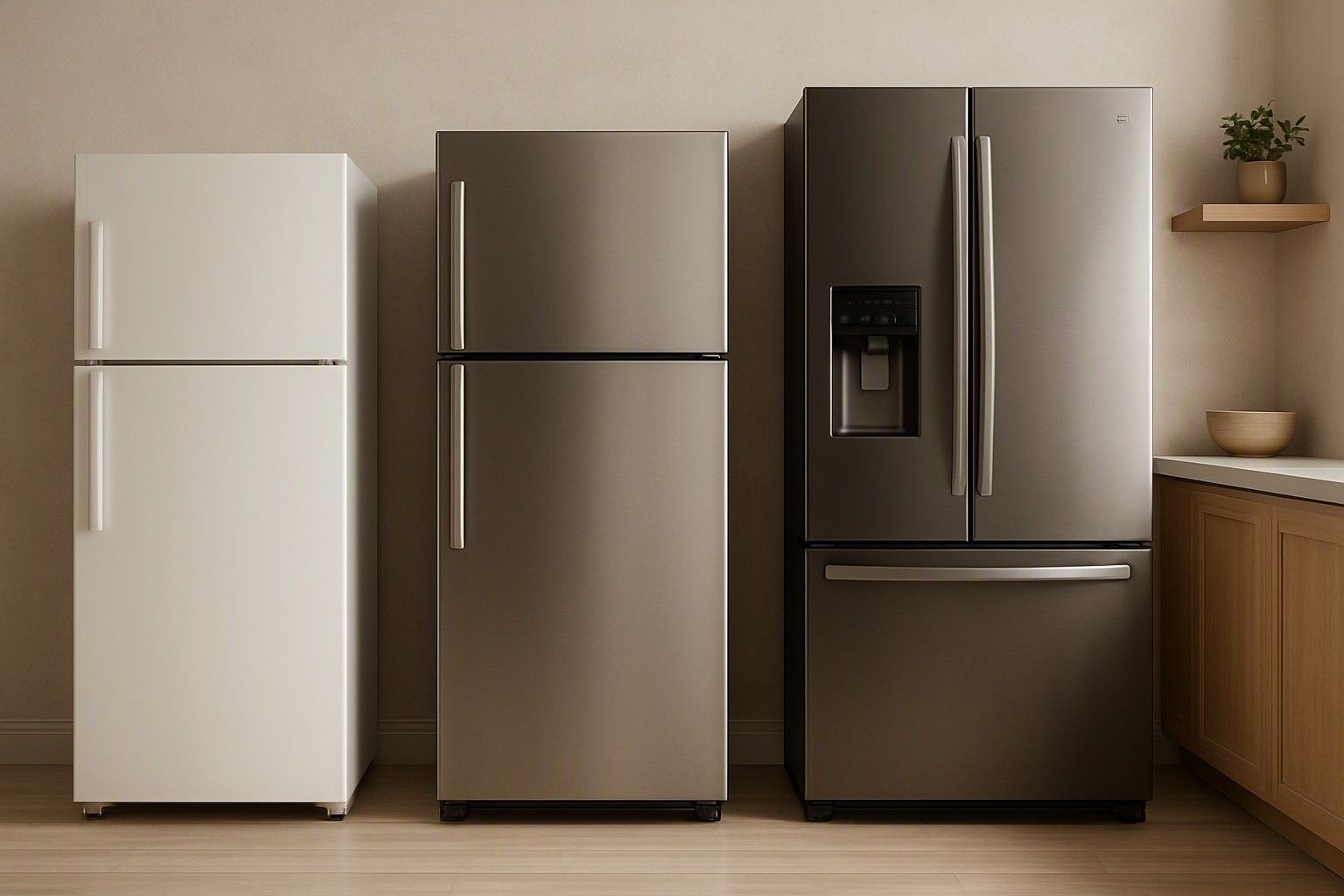
You've got a number in mind, and the real question is what that number gets you. Refrigerator prices in India stretch from ₹8,500 to ₹1,50,000, and the difference between one tier and the next isn't cosmetic — it shows up in capacity, compressor type, cooling technology and how long the fridge is likely to serve you. This article breaks the market into its natural budget bands so you know exactly what to expect at your price point, and whether the price you're looking at right now is reasonable.
Entry Fridges Under ₹10,000
Below ₹10,000, you're almost always looking at a direct-cool single-door refrigerator, usually in the smaller capacity range meant for one or two people, a bachelor setup, or a second fridge for a room upstairs. These models skip frost-free technology, so you'll manually defrost every couple of weeks — a real chore, but one that keeps the machine simple, repairable, and cheap to run. Build quality at this tier tends to favour fewer bells and whistles: basic thermostat dials instead of digital displays, a single interior light, and shelving that's mostly fixed rather than adjustable. Insulation is thinner, so these units work a little harder in peak summer, which shows up marginally on the electricity bill compared to costlier models. What you're paying for here is core refrigeration and nothing else, and for a lot of Indian households — a student flat, a home office pantry, a small kitchen with limited counter space — that's genuinely enough. The trade-off is capacity and features, not reliability of basic cooling, which is usually solid even at this entry point. If your household is larger than two people or you store a lot of fresh produce and leftovers, you'll likely outgrow this tier fast, and it's worth checking the next band before you commit.
Mid-Range Models in the ₹22,000 Band
The ₹22,000 band is where the Indian refrigerator market really opens up, and it's also where most families end up buying. This is the tier where frost-free double-door refrigerators become the norm rather than the exception, meaning no manual defrosting and generally better temperature consistency across the cabinet. Capacities here comfortably serve a family of three to five, and you start seeing genuinely useful conveniences: separate vegetable crispers with humidity control, adjustable shelving, and often a dedicated dairy or deli compartment. Energy ratings improve noticeably in this range too, since better insulation and more efficient compressors become standard rather than a premium add-on. Some models toward the upper end of this band introduce inverter compressors, which run quieter, handle voltage fluctuations better, and tend to last longer under continuous Indian household use. You'll also find more finish options — better door handles, toughened glass shelves instead of plastic, and sturdier hinges. This is the tier to focus on if you want a fridge that will handle daily family cooking, festival-season stocking, and occasional bulk grocery runs without feeling cramped. It's also where the gap between a mediocre buy and a genuinely good one starts to matter, since features vary a lot even within the same price band.
Premium and Large Formats in ₹45,000
Once you're spending in the ₹45,000 range, you're generally choosing between large-capacity double-door models, side-by-side configurations, or French-door and multi-door formats aimed at bigger households or heavier entertaining. Inverter compressors are close to universal here, and you'll typically get more sophisticated cooling zones — separate compartments that hold different humidity and temperature levels so vegetables, dairy, and frozen goods each get treated properly instead of sharing one generic cold zone. Convenience features multiply too: larger ice-making sections, sometimes a dedicated water or beverage zone, better door alarms, and noticeably quieter operation. Build quality steps up in ways you can feel rather than just read about — heavier doors, better door seals that hold cold air in more effectively, and interior layouts designed for real grocery hauls rather than minimal storage. This tier also tends to include stronger stabiliser-free operation, which matters in areas with unreliable grid voltage. The honest trade-off is that you're paying for headroom — capacity and features you may not use every single day — so this band makes the most sense for larger families, joint households, or anyone who cooks and entertains often enough that a smaller fridge would mean constant restocking runs to the market.
Where the ₹26,000 Average Sits and Why
The average price across the Indian refrigerator market sits at ₹26,000, and it's worth understanding why the number lands there rather than closer to either end of the ₹8,500 to ₹1,50,000 spread. Most buyers gravitate toward mid-capacity, frost-free models that comfortably serve a typical family without paying for side-by-side or multi-door formats they don't need — and that demand pulls the average toward the upper end of the ₹22,000 band rather than the entry tier. It also reflects how the category is structured: there are simply more distinct models and configurations competing in the mid-range than at the very bottom or very top of the market, since manufacturers concentrate their volume there. If the fridge you're considering is priced well above ₹26,000, that's not automatically bad value — it usually means you're buying into a larger capacity, an inverter compressor, or a more advanced multi-zone cooling design, all of which cost more to build. If it's priced well below the average, check what's been left out before assuming you've found a bargain; it's often a smaller capacity or a direct-cool cooling system rather than an actual discount on the same specification.
Judging Whether Today's Price Is a Good Deal
Once you know which tier fits your needs, the next question is simpler than it feels: is the specific price you're seeing today reasonable for that tier, or not? The most reliable way to answer this isn't guesswork — it's reading price history from ₹8,500 to ₹1,50,000 for the model or category you're considering, which shows you where a current price sits relative to its actual historical range rather than relative to a marked-up "original" price that may never have been charged in practice. A refrigerator priced near the lower end of its own historical band, within a tier that already matches your household size and feature needs, is a reasonable buy today — there's no meaningful advantage in waiting, since prices in this category don't follow a predictable seasonal dip you can time reliably. What you should watch for instead is a price sitting unusually high against its own history, which is a signal to compare a few alternatives in the same tier rather than assume it's the going rate. Treat the tier as your filter for features and the price history as your filter for fairness — used together, they tell you almost everything you need to know before paying.
Which Type Fits Which Budget
Budget and body style move together more than most first-time buyers expect, and it helps to know how body style shifts as you move up price bands before you fix on a number. Single-door direct-cool units dominate the under-₹10,000 space simply because they're the cheapest configuration to manufacture and run. As you cross into the ₹22,000 band, double-door frost-free formats take over almost entirely, since the added cost of a frost-free system and a second door becomes justifiable at that spend. Side-by-side, French-door, and larger multi-door formats are concentrated almost exclusively in ₹45,000 and above, because the extra doors, zones, and internal partitioning genuinely cost more to engineer well. This isn't a strict rule — you'll occasionally find a compact double-door fridge priced just under ₹22,000, or a larger single-door model stretching toward it — but the general pattern holds strongly enough that knowing your budget tier already tells you most of what body style to expect. If a listing shows a body style well outside what its price tier normally offers, that's worth a second look rather than an assumption of good fortune.
Turning a Budget Into a Confident Decision
A budget number on its own only tells you what you're willing to spend — it doesn't tell you what to actually pick, and that's where it helps to connect your budget to every other buying factor like capacity, compressor type, and household size together rather than in isolation. The tiers laid out here give you a realistic starting map: under ₹10,000 for compact, no-frills cooling; ₹22,000 for the frost-free family workhorse most Indian households end up choosing; and ₹45,000 for larger formats and the conveniences that come with more space. Match that tier to your household size and cooking habits first, then check the specific price against its own history before you pay, and you've covered both halves of the decision — what to buy and whether now is a fair time to buy it.
Between the tier breakdown and the price-history check, you now have a straightforward way to answer the question you started with: what your budget buys, and whether the number in front of you is a fair one. Pick the tier that matches your household, not just your wallet, and let the price history confirm you're paying a reasonable rate for it — that's a decision you can make today without second-guessing it later.

Comments
Be the first to comment.