Robot Vacuum Buying Mistakes and Red Flags to Avoid
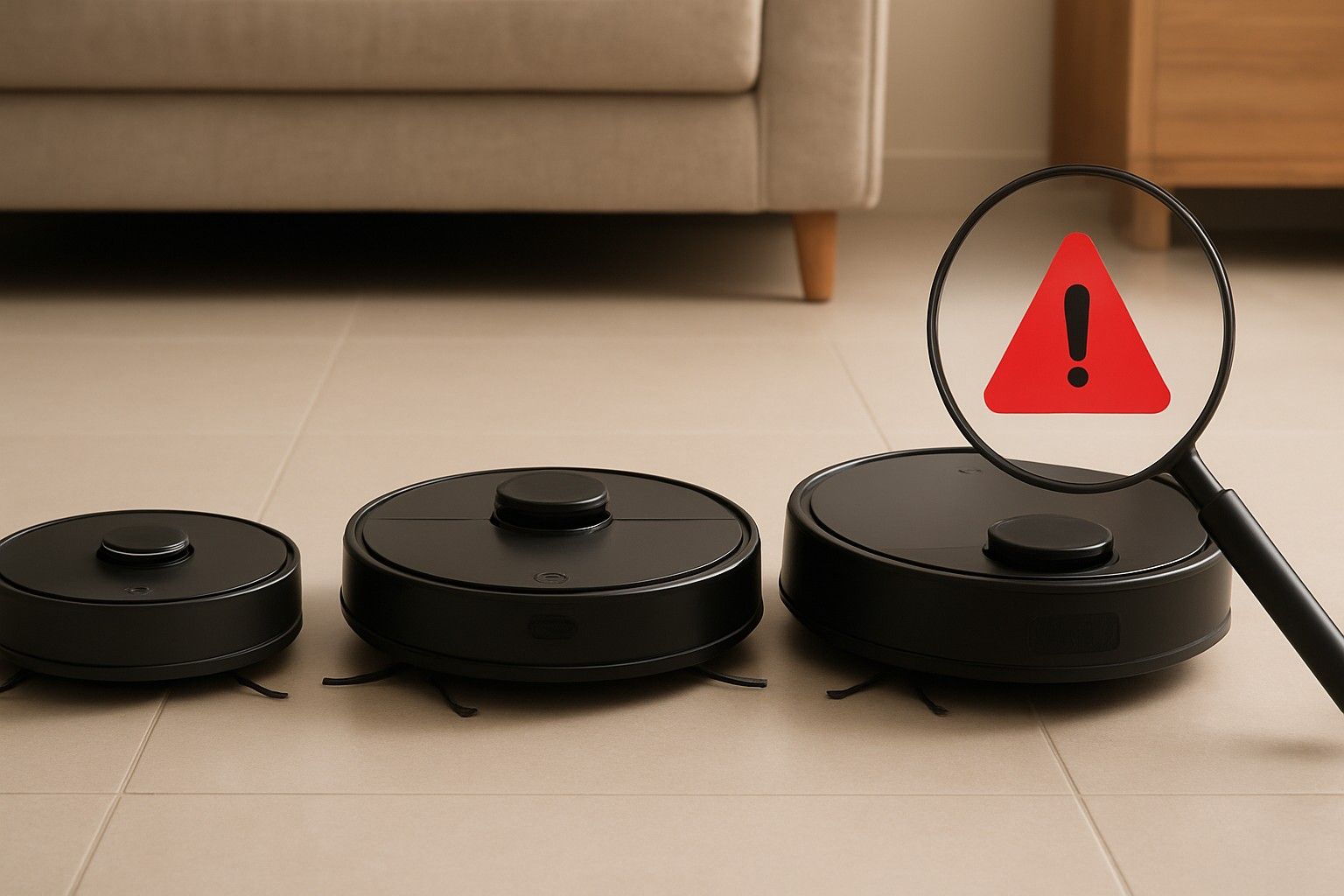
You've done the research, shortlisted a few options, and you're close to paying — this is exactly when avoidable mistakes happen. Most robot vacuum regrets in India don't come from picking the "wrong" brand, they come from overpaying for specs you'll never use, ignoring service reality, or assuming the machine will handle your home exactly as it is. This article walks through the last checks worth making before checkout.
Overpaying for Suction You Don't Need
The single most common mistake is treating suction power as the main scoreboard and paying a premium for a number that won't change your day-to-day cleaning result. Suction matters for pulling embedded dust out of carpets and rugs, but on hard floors, tile, and marble — which make up most Indian homes — a mid-range suction rating cleans just as well as a flagship one, because the limiting factor is usually navigation and dustbin capacity, not raw pulling power. Buyers with a single-bedroom or two-bedroom apartment, mostly hard flooring, and no pets often end up paying deep into the ₹25,000-₹50,000 bracket for suction specs designed for thick carpets and pet hair, when a unit priced closer to ₹25,000 would have done the job. Before you pay extra for a suction number, ask what floor type and dirt load you're actually dealing with — a home with low-pile rugs and hard floors rarely needs the same suction as one with thick carpeting and shedding pets. It helps to first know which specs are worth paying for and which aren't, because navigation quality, mapping accuracy, and battery runtime often matter more to your actual experience than the suction figure printed on the box. Spend where it changes your outcome, not where it just changes the price tag.
Ignoring Service Network and Spare-Part Availability
A robot vacuum is a mechanical device with wheels, brushes, filters, and a battery — all of which wear out, and all of which need replacing or servicing at some point after purchase. The mistake many buyers make is focusing entirely on the purchase price and specs while never checking whether the brand has authorised service centres in their city or whether spare parts like side brushes, filters, and batteries are easy to source. This matters more in India than in many markets, because tier-2 and tier-3 city buyers often find that a great deal online comes from a brand with thin or no local service presence, meaning even a minor fault turns into weeks of shipping the unit back and forth. Before buying, it's worth doing a quick check: search whether the brand has a service centre listing for your city or pin code, and look at whether spare filters and brushes are sold independently online rather than only bundled with a new unit. A slightly higher price for a brand with a visible service network and easily available spares is often the better long-term decision than the cheapest option from a brand with an unclear after-sales presence, because the running cost of an unsupported robot vacuum can outweigh what you saved at checkout.
Buying the Wrong Type for Your Cleaning Needs
Robot vacuums aren't one uniform category — there are vacuum-only models, vacuum-and-mop combos, and self-emptying or self-cleaning-dock models, and buying the wrong type for your home is a very common and avoidable mistake. A vacuum-only unit near ₹10,000 or ₹25,000 is a reasonable pick for someone who just wants dust and hair picked up regularly, but it does nothing for daily mopping, so buyers who assumed it would replace their wet mopping routine end up disappointed. A combo unit that vacuums and mops handles both tasks but usually needs the water tank refilled and the mop pad cleaned manually after every run, which some buyers don't realise until after they've unboxed it. A self-emptying dock, usually found higher in the ₹50,000 range, is genuinely useful for larger homes or people who don't want to touch the dustbin often, but it's an unnecessary expense for a small apartment that gets cleaned every day anyway. Match the type to how you actually want to interact with the machine — how often you're willing to empty a bin, refill a tank, or clean a mop pad — rather than buying the most feature-loaded type on the shelf and assuming more automation always means less effort on your part.
Assuming It Will Handle Every Threshold and Rug
A frequent source of buyer's remorse is assuming a robot vacuum will glide over every doorway threshold, rug edge, and floor transition in an Indian home without getting stuck — many won't. Most robot vacuums can climb a threshold of a certain low height, but Indian homes often have marble-to-tile step-ups, raised bathroom thresholds, or thick door strips that exceed what an entry-level or even mid-range model can climb, leaving the robot stuck at the same doorway every single cleaning cycle. Thick or long-pile rugs cause a different problem: some robots get their wheels caught in the fringe, or their brush roll tangles in loose threads, while others simply can't generate enough traction to move across a plush rug at all. Before buying, walk through your home and note every threshold height, rug type, and floor transition the unit will need to cross, and compare that against the climbing height and rug-handling notes for the models you're considering rather than assuming any robot vacuum can handle any home layout. If your home has multiple raised thresholds or several thick rugs, it's worth checking those details specifically instead of assuming a listing photo of a robot near a rug means it was tested on one like yours.
Falling for Inflated 'Discount' Pricing
Festive sales and flash deals are where robot vacuum buyers most often get misled — not through outright fraud, but through inflated 'original' prices that make a routine markdown look like a rare bargain. A listing showing a steep percentage off a price that was quietly raised days before the sale isn't actually offering you anything, and the only way to tell the difference is to look at where the current price sits against the product's real historical range, from ₹8,000 at the low end to ₹90,000 at the top of the market. If a unit is being offered near or below its typical range for that tier, that's a genuinely fair price regardless of what percentage-off badge is displayed next to it. Rather than reacting to the size of a discount badge, it's more useful to check the price against its history before you believe a discount, so you can tell whether today's price is actually good or just dressed up to look that way. This isn't about waiting for a better deal to show up later — it's about confirming that the price in front of you right now is a fair one before you commit, since a fair price rarely needs a countdown timer to justify it.
A Final Checklist Before You Pay
Before you complete the purchase, run through a short mental checklist rather than relying on excitement about a good-looking deal. Confirm the floor types and dirt load in your home actually justify the suction rating you're paying for, rather than paying a premium for a spec built for a different kind of home. Check that the brand has a visible, reachable service network and that spares like filters and brushes are sold separately, not just bundled with a new unit. Be honest about which type — vacuum-only, mop-combo, or self-emptying — actually matches how much manual upkeep you're willing to do each week. Walk through your home's thresholds and rugs and compare them against the specific unit's climbing height and rug handling, rather than assuming it will manage. And finally, check the current price against the product's real range, from ₹8,000 to ₹90,000, so you know whether the number in front of you is fair before you pay it. For one last pass covering all of these factors together, it's worth going back to run through the complete buying guide one last time before you check out.
If you've gone through each of these checks — suction matched to your actual floors, a service network you can reach, the right type for your routine, thresholds and rugs accounted for, and a price that holds up against its real history — you're not guessing anymore. That's really what avoiding a bad robot vacuum purchase in India comes down to: not finding the flashiest deal, but confirming the one in front of you actually fits the home you're buying it for.
Comments
Be the first to comment.