Robot Vacuum Price Guide: Budget Tiers and Reading Today's Price
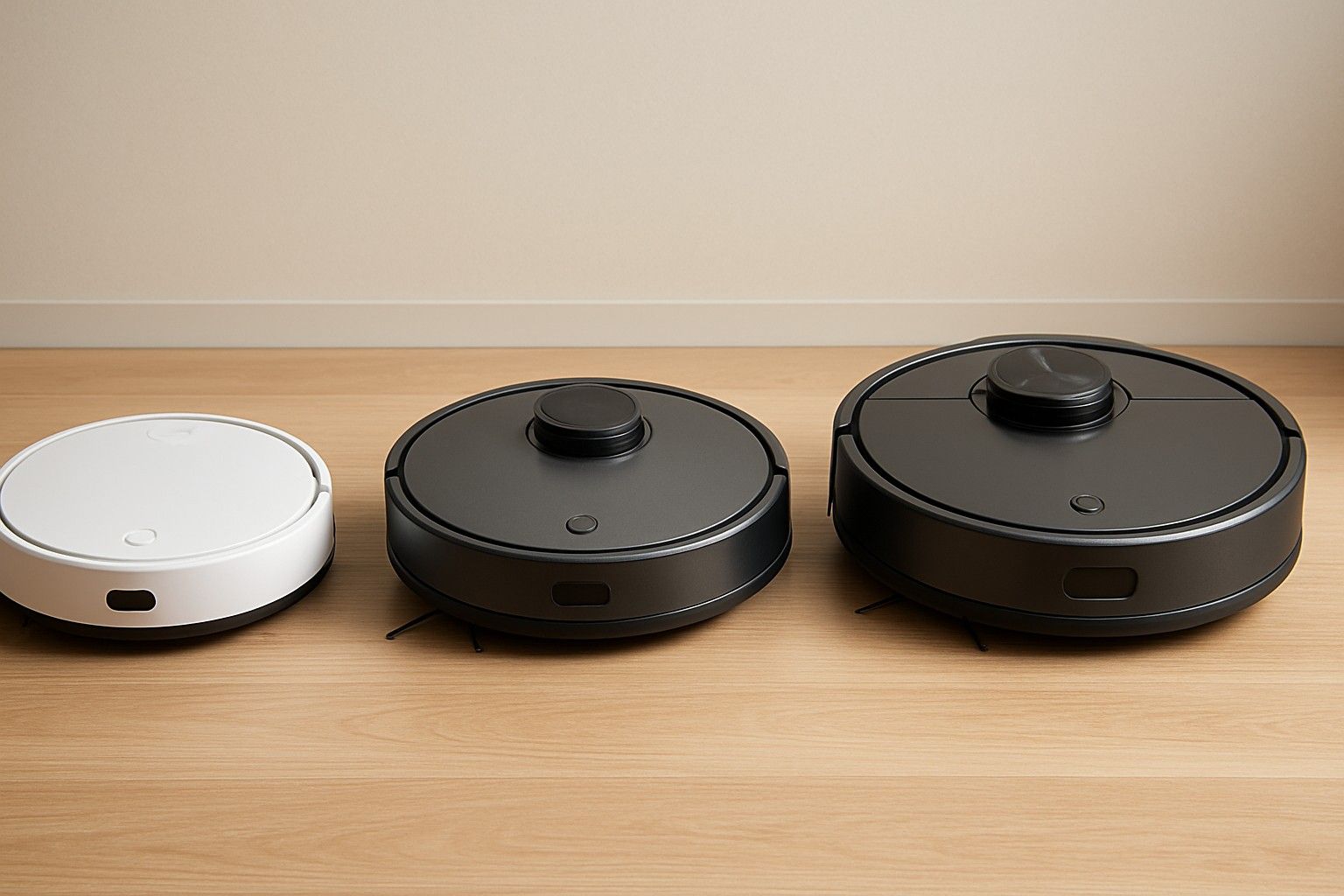
Robot vacuum prices in India span a huge range, and the number on the listing only makes sense once you know what it's buying you. This guide breaks down what each budget tier realistically delivers, why the gap between the cheapest and priciest models is so wide, and how to tell if the price you're looking at right now is actually a fair one.
What You Get Under ₹10,000
Under ₹10,000, you're buying basic, unattended floor cleaning and nothing more — and that's fine if your expectations match it. These machines almost always rely on random-bounce or gyroscope-assisted navigation rather than true mapping, so they clean by repeatedly crossing a room until coverage is statistically good enough, not by planning an efficient path. Suction is adequate for daily dust and loose debris on hard floors and thin rugs, but it will struggle with thicker carpets or heavy pet hair. Dustbins are small, meaning more frequent manual emptying, and there's typically no self-empty base at all. App control, if present, is usually limited to start, stop, and scheduling — don't expect room-specific cleaning or no-go zones. Mopping, when included, is a basic water-dribble attachment rather than a proper scrubbing system.
This tier suits a single small apartment, a first-time buyer testing whether a robot vacuum fits their routine, or a secondary machine for a specific room. If your home has multiple floors, pets, or carpets, the limitations here will show up quickly, and you'll likely find yourself intervening more than you'd like. It's an honest entry point, not a compromise-free one.
The ₹25,000 Sweet Spot for Most Homes
The ₹25,000 band is where robot vacuums stop being a novelty and start being genuinely useful appliances, which is why most Indian buyers end up shopping here. Navigation improves meaningfully at this level — you'll find models using camera-based or basic LiDAR mapping that actually remember your home's layout, let you set no-go zones, and clean room by room instead of wandering. Suction power steps up too, handling medium-pile carpets and pet hair with far less fuss than budget-tier machines. Battery life and runtime per charge also tend to be more consistent, so larger homes get fuller coverage in one go.
This is also the price band where combo units — vacuum and mop in one machine — start appearing alongside dedicated LiDAR navigation, and understanding the difference matters before you commit, since this tier is where combo and LiDAR models start appearing and the two decisions (how it navigates, whether it mops) aren't the same thing. Some models here include a basic self-empty dock, though full auto-empty-and-wash stations are still rare at this level. For a typical 2-3BHK Indian home with a mix of tile, carpet, and some pet or dust load, this tier offers the best ratio of capability to spend — you're not paying for features you won't use, but you're not missing the ones that actually matter day to day.
Premium Robots in the ₹50,000 Range
Once you move into the ₹50,000 range, you're paying for precision and convenience rather than basic function. Navigation here is typically full LiDAR or advanced structured-light mapping with obstacle avoidance sharp enough to route around cables, shoes, and pet bowls without getting stuck. Suction is strong enough for thick carpets and heavy shedding, and mopping systems in this range often include vibrating or spinning mop heads that genuinely scrub rather than drag a damp cloth across the floor.
The bigger shift at this tier is the base station. Many models here include self-emptying dustbins, automatic mop washing, and even mop drying to prevent odour — features that turn the robot into a largely hands-off system for weeks at a time rather than something you're topping up every few days. Multi-floor mapping, voice assistant integration, and finer app controls like cleaning intensity per zone are common too.
This range makes sense for larger homes, households with multiple pets, or buyers who specifically want to minimise manual upkeep rather than just automate the vacuuming itself. If your priority is coverage and mopping quality with minimal hands-on maintenance, this is where you'll find it — but it's worth being honest about whether your home actually needs that level of automation before paying for it.
Why Prices Span from ₹8,000 to ₹90,000
The distance between ₹8,000 and ₹90,000 looks extreme until you break down where the money actually goes. Two components drive most of the gap: navigation and the base station. A machine with basic bump-and-turn navigation costs far less to build than one with LiDAR sensors, cameras, and the processing power to build and store a live map of your home — and this single difference alone accounts for a large chunk of the spread, since navigation and station features explain most of the price gap more than motor strength or brand positioning do.
The second driver is the dock. A basic charging base is inexpensive; a self-empty, self-wash, self-dry station is essentially a second appliance built into the package, with its own pump, heater, and waste bag mechanism. Add mopping hardware — pads versus spinning brushes versus vibrating scrubbers — and battery capacity for larger runtimes, and the price differences stop looking arbitrary. Software also plays a role: multi-floor memory, room-specific scheduling, and finer obstacle recognition all require more onboard processing, which adds cost. None of this means the expensive end is automatically the better buy for you — it means the price is buying specific, identifiable features, and the right amount to spend depends entirely on which of those features your home actually needs.
Is Today's Price Good? Judging It Against the ₹25,000 Average
With an average price of ₹25,000 across the category, you now have a useful yardstick for judging any specific listing you're looking at. If a model with ₹25,000-level features — mapping navigation, room-specific cleaning, decent suction — is priced at or below the ₹25,000 average, that's a solid indicator you're getting fair value for the category, not an inflated price riding on brand name alone. If a similarly-specced model is priced well above the average, it's worth checking exactly what's different: a better base station, stronger suction, longer warranty, or simply a premium brand markup.
The average also helps you sanity-check the extremes. A listing near ₹8,000 should come with correspondingly basic navigation and no self-empty base — if it's promising LiDAR mapping and a full auto-empty dock at that price, treat it with some scepticism. Similarly, a price near ₹90,000 should be justified by a genuinely loaded feature set, not just a well-known name.
The most useful habit here isn't waiting for a lower number to appear — it's checking where today's price sits relative to that model's own historical range and the category average, and buying with confidence once it lines up with the features you're getting. A price at or near the average, for the feature set you need, is a good price today, not a reason to hold off.
Fitting Price into Your Final Decision
Price is the clearest, most comparable number you have, but it's not the whole decision. A robot vacuum priced well within the ₹25,000 band might still be wrong for your home if it can't handle your flooring mix or your pet's shedding, while a ₹10,000 machine might be exactly right if your needs are genuinely simple. The tier breakdowns above tell you what a given price realistically buys; whether that matches what your home needs is a separate question.
That's why price works best as one input alongside the others — floor type, home size, pet presence, and how much manual maintenance you're willing to do. Once you combine price with every other factor in the buying guide, you'll have a shortlist that's realistic on both budget and function, rather than one that just looks good on a spec sheet. Treat the price data as confirmation once you know what you need — not the starting point on its own.
You now have a clear map of what ₹8,000 to ₹90,000 actually buys, tier by tier, and a straightforward way to check any specific listing against the ₹25,000 average before you commit. That's the price question answered — the next step is matching it to the rest of your home's specific needs.

Comments
Be the first to comment.