Vacuum vs Mopping vs 2-in-1 Robot: Which Type Should You Buy?
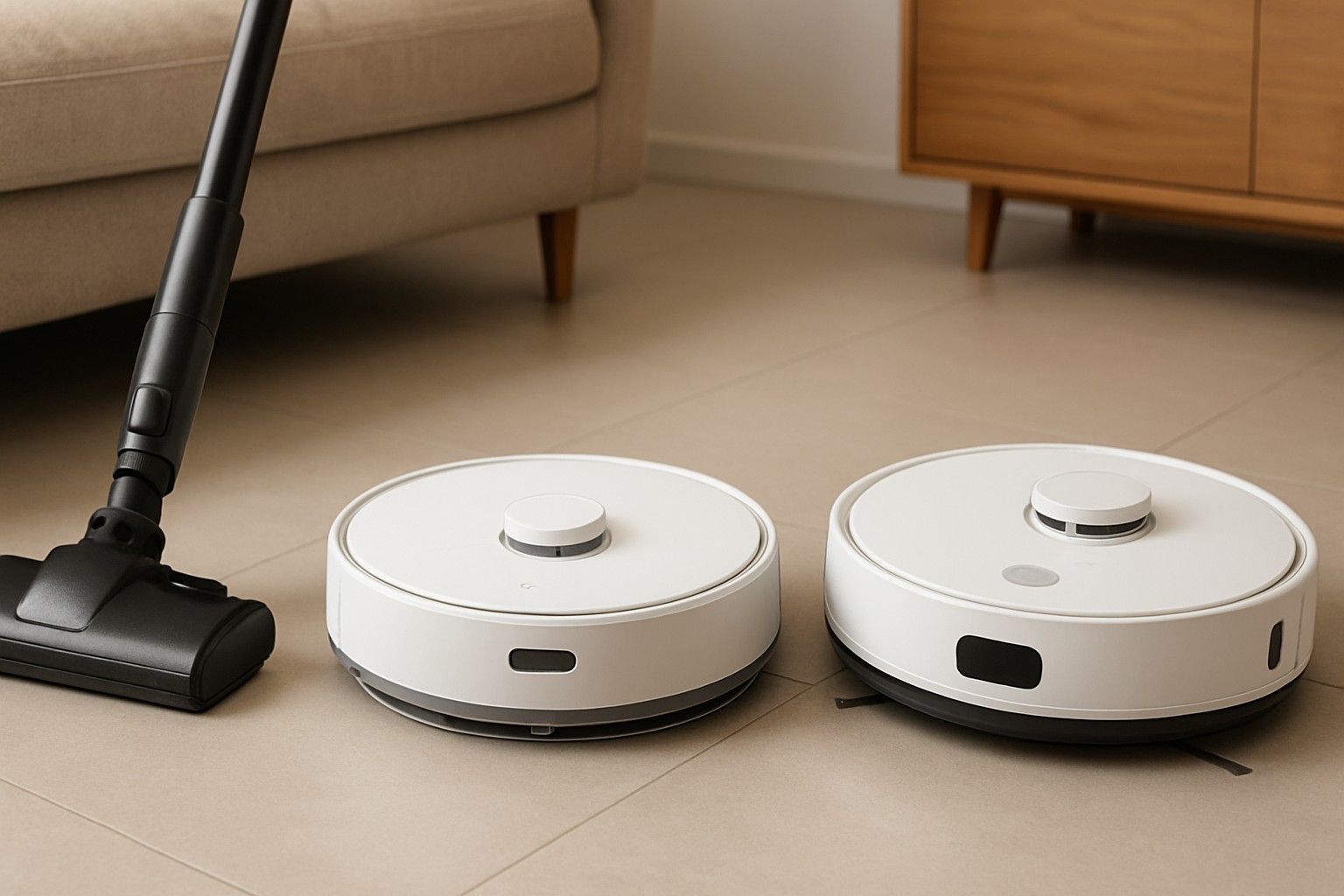
Before you look at any brand or feature list, you need to answer one question: do you want a robot that lifts dust, one that wipes floors the way a daily poocha does, or one machine that tries to do both? This decision shapes everything else you buy, so it's worth settling first. Below is how each type actually performs in Indian homes, not just on a spec sheet.
Dry Vacuum-Only Robots: Strengths and Limits
A dry vacuum-only robot is built to do one job well: pick up dust, hair, crumbs and loose debris from floors and low-pile rugs. In Indian homes, where dust blows in constantly through open windows and balconies, this is the single biggest daily cleaning task, and a dedicated vacuum robot handles it without the added complexity of water tanks or mop pads. These robots are mechanically simpler, which usually means fewer parts to maintain, less risk of water damage on wooden or laminate flooring, and a lower entry price than combo machines with similar suction and navigation quality.
The limit is obvious once you think about how Indian floors are actually cleaned. Vacuuming alone does not remove the sticky residue from spilled chai, cooking oil splatters near the kitchen, or the fine grime that settles on tile and marble in humid weather. If your household relies on a wet mop pass every day or two, a vacuum-only robot leaves that job entirely to you or your domestic help, which defeats part of the reason for buying a robot in the first place. It's the right pick if your main pain point is dust and pet or human hair, and you're either fine mopping manually or don't need daily wet cleaning at all.
Mopping-Only Robots and Why Indian Homes Need Daily Poocha
Mopping-only robots exist because a huge share of Indian households already have a daily or near-daily wet-mopping habit, usually called poocha, that vacuuming alone can't replace. Tile, marble, granite and vitrified flooring are common across Indian homes, and these surfaces show dust, footprints and stickiness fast, especially in kitchens and entryways. A mopping-only robot is designed to move across these floors with a damp pad, refreshing water from an onboard tank, to keep up with that habit without you bending over a bucket every evening.
What these robots don't do is lift heavy dust, hair or debris the way a vacuum does. Dragging a wet pad over loose dust and hair often just smears it into streaks rather than collecting it, so a mopping-only robot works best as a second layer on floors that are already reasonably free of loose debris, or in homes where dust accumulation is genuinely light. They're also a poor fit for homes with carpets or rugs, since wet mopping isn't meant for soft flooring at all. If your floors are mostly hard surfaces and your real daily frustration is the mopping chore rather than dust, this category answers your primary_buyer_question directly: buy the tool built for the task you actually repeat most often.
2-in-1 Vacuum and Mop Combos: Real Convenience or Compromise?
A 2-in-1 robot vacuums first, then either swaps to or simultaneously runs a mopping module, aiming to replace both the dry cleaning and the wet cleaning pass in a single trip around your home. For many Indian households, this is genuinely the more practical answer, since it matches how floors are actually maintained here: a quick daily dust pickup followed by a mop pass on hard flooring. Buying one machine instead of two also means one set of navigation sensors, one app, and one docking station to manage, which simplifies daily use considerably.
The compromise shows up in execution quality rather than concept. Combo robots typically carry both a dustbin and a water tank, which adds weight and complexity, and many models handle vacuuming better than mopping or vice versa, since engineering both functions well into one chassis is harder than optimizing for one. Some combo robots also can't tell the difference between a carpet and a tile floor without help, so they may drag a wet pad onto a rug unless you've marked no-mop zones in the app. This category suits buyers who want one device covering both jobs and are comfortable spending toward the middle of the price range for it, rather than those chasing the absolute best performance in either vacuuming or mopping alone.
Self-Wash and Self-Dry Mop Stations Explained
Higher-end mopping and combo robots increasingly come with a base station that rinses the mop pad after use and sometimes dries it with warm air, instead of leaving you to pull out and hand-wash a grimy pad every day. This matters more in Indian conditions than it might seem, since a damp mop pad left sitting in humid weather can start smelling within hours, and manually cleaning it daily is exactly the chore many buyers are trying to avoid by getting a robot in the first place.
The trade-off is that these stations pull the purchase price up noticeably and add ongoing running costs of their own. Self-wash stations use extra water and detergent per cycle, self-dry functions add to your electricity use, and the station itself brings additional parts, like the water tanks and drying filters, that eventually need cleaning or replacing. Before choosing a model with this feature, it's worth understanding that these stations add to running costs you should plan for, since the sticker price is only part of what you'll spend over the machine's life. If daily hands-off convenience matters more to you than upfront savings, this feature earns its cost; if you're fine emptying and rinsing a pad yourself occasionally, you can skip it and save.
Which Type Fits Your Cleaning Routine and Budget
The right type follows directly from your actual daily routine, not from which robot has the longest feature list. If your home is mostly carpeted or rugged, or your main issue is dust and hair on hard floors, a vacuum-only robot covers your need without paying for mopping hardware you won't use. If you already mop daily and your floors don't accumulate much loose dust, a mopping-only robot fills that specific gap efficiently and at a lower price than a combo. If you want one robot handling both jobs and are willing to accept some compromise in peak performance on either task, a 2-in-1 combo is the practical middle path for most urban Indian households.
Budget maps to this fairly predictably, since each type sits in a different budget tier. Simple vacuum-only or mop-only robots are common in the ₹10,000 and lower end of the ₹25,000 range, while capable 2-in-1 combos with better navigation and larger tanks tend to sit in the upper ₹25,000 to ₹50,000 range. Combos with self-wash and self-dry stations push toward the top of the market, closer to ₹90,000, against an overall category average of ₹25,000 and a floor of ₹8,000 for the most basic models. None of these price points are a reason to wait for a better deal; they reflect a stable, well-understood range you can plan a purchase against right now.
Where Each Type Fits in the Bigger Buying Picture
Choosing between vacuum-only, mopping-only and combo is the first fork in the road, but it isn't the last decision that shapes whether a robot actually suits your home. Suction power, navigation and mapping technology, obstacle handling, battery runtime, and how well a model manages Indian flooring transitions like thresholds between tile and rugs all interact with the type you pick. A combo robot with weak navigation, for instance, wastes its dual-function advantage by missing spots or bumping into furniture, while a vacuum-only robot with strong mapping can still outperform a poorly designed combo on the one job it's built for.
Rather than treating type as an isolated choice, it helps to see how type choice connects to every other decision you'll make while shortlisting a robot vacuum, from room size and floor type to how much daily maintenance you're willing to do. Getting the type right first narrows your options meaningfully and makes every subsequent comparison, on price, features or specific use cases, much faster and clearer.
Whichever way your household leans, the type decision comes down to matching the machine to the chore you actually repeat most: dust pickup, wet mopping, or both. Settle that first, and the rest of your shortlisting, on price, features and brand, becomes a far more focused search rather than an overwhelming one.

Comments
Be the first to comment.