Is a Robot Vacuum Cleaner Worth It for Indian Homes?
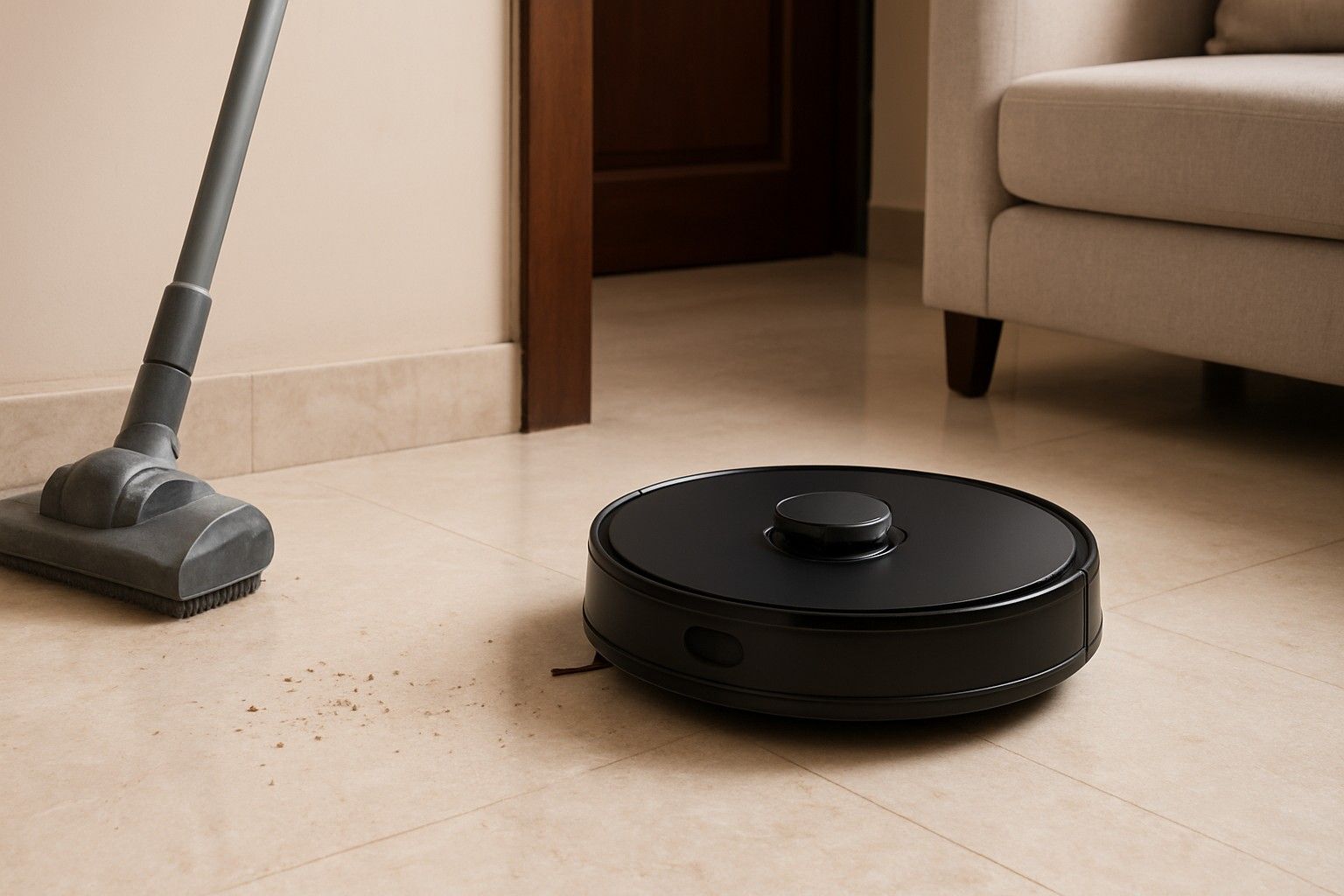
If you've stood in an electronics store or scrolled through listings wondering whether a robot vacuum can really keep up with Indian dust, construction sand tracked in from outside, and floors that go from marble to rugs in three steps, you're asking the right question before spending money. The honest answer is: it depends on your home, your floors, and what you expect it to do — and that's exactly what this article works through, without the sales pitch.
How Robot Vacuums Handle Indian Dust, Sand and Pet Hair
Indian homes generate a specific kind of mess that most robot vacuum marketing doesn't talk about directly — fine construction dust that settles daily even with windows shut, sandy grit tracked in from balconies and gardens, and loose hair from pets or long-haired family members that wraps around brush rollers. Robot vacuums are genuinely good at the first two. Their suction and rotating side brushes are built to lift fine particulate dust and sandy grit off hard floors, and because they run on a schedule, they catch this buildup daily instead of letting it accumulate for a week between manual cleaning sessions. That daily consistency is the real advantage over a broom or an upright vacuum used occasionally — dust simply doesn't get the chance to settle into a thick layer.
Pet hair is a slightly different story. Robot vacuums with decent suction handle short pet hair without much trouble, but longer hair can tangle around the brush roller and require manual removal every few runs, especially on models at the lower end of the price range. This isn't a dealbreaker, but it does mean the maintenance routine looks different in a home with a shedding dog versus a home without pets. If your main concern is everyday dust and sandy floors rather than heavy pet shedding, a robot vacuum will genuinely reduce the manual sweeping you do — that's the core value proposition for Indian households, and it holds up in practice.
Marble, Tile, Wood and Rugs: Do They Clean Indian Floors Well?
Indian homes rarely have one flooring type throughout — marble in the living room, tile in the kitchen, maybe a wooden-finish bedroom and a couple of rugs scattered around. Robot vacuums generally do well on hard, flat surfaces like marble, vitrified tile and laminate wood, gliding across them without much resistance and picking up dust effectively because there's no fibre for particles to hide in. Rugs are where things get more variable. Thin, flat-weave rugs are usually fine, but thick-pile or shag rugs can confuse a robot's height sensors, cause it to get stuck, or simply reduce suction effectiveness because the brush can't make full contact with the base of the fibres.
Door thresholds, uneven transitions between rooms, and slightly raised marble borders — common in a lot of Indian flooring layouts — can also trip up a unit with poor obstacle clearance. This is exactly why the outcome depends less on the robot vacuum as a category and more on your specific floor plan: the type of flooring, the height of thresholds, and how many rugs are involved. Rather than assume every home will behave the same way, it's worth understanding that your home's floors and layout decide how well it performs, because a unit that glides beautifully through an open-plan tile apartment can struggle in a home with multiple rugs and high marble borders between rooms.
What a Robot Vacuum Can and Cannot Replace
A robot vacuum is not a replacement for a full manual clean — it's a replacement for the daily or every-other-day quick sweep that most Indian households already do to manage dust. It handles loose surface debris, fine dust, and light daily grime on open floor area well. What it cannot do is deep-clean corners tightly packed with furniture, get under low cots and cabinets with limited clearance, climb stairs between floors in a duplex, or handle heavier debris like food spills with solid chunks, string, or wrapper scraps that can jam the brush or wheels.
It also can't clean what it can't reach — homes with a lot of loose cables, footwear left on the floor, kids' toys scattered around, or low furniture with minimal ground clearance will see the robot either get stuck or simply skip those areas entirely, meaning someone still needs to do a quick tidy-up before each run. Mopping-capable variants add a layer of wet cleaning, but they still won't tackle sticky spills or heavily soiled patches the way a manual mop with pressure and elbow grease will. Think of it as handling 70-80% of the routine floor maintenance workload on hard, open surfaces, while manual cleaning still covers edge cases, deep cleans, and anything requiring real reach or pressure. That's a meaningful reduction in daily chore time, but it's not full automation of home cleaning.
Time Saved vs Effort of Daily Prep and Emptying
The time a robot vacuum saves is real but not free — it comes with its own small recurring effort that buyers often underestimate. Before each run, floors need a quick pre-tidy: pulling in loose cables, picking up footwear, moving light chairs, or clearing scattered items so the unit doesn't get stuck or push things around. After the run, the dustbin needs emptying, and depending on the model, filters need periodic cleaning or replacement to keep suction effective. None of this takes long individually, but across a week it adds up to a few minutes of hands-on involvement most days.
What you're trading is roughly 15-20 minutes of manual sweeping or vacuuming a few times a week for roughly 2-5 minutes of prep and emptying most days, plus a slightly deeper cleaning session yourself every week or two for the spots the robot can't reach. For households where both adults work full-time, or where an elderly resident is doing the cleaning themselves, this trade is usually a clear win — dust doesn't accumulate for days waiting for someone to have free time. For households with domestic help already handling daily floor cleaning, the time-saving argument is weaker, since the labour is already covered; the appeal there shifts more toward consistency and convenience on the help's day off rather than pure time saved.
Who Should Buy One and Who Should Skip It
A robot vacuum makes strong sense for apartments and homes with mostly open, hard flooring, minimal thick rugs, low furniture clearance issues, and residents who want daily dust control without daily manual effort — this covers a large share of urban Indian homes, particularly newer flats with tile or marble throughout. It also suits households without domestic help, working couples, elderly residents who find bending and sweeping physically taxing, and homes with pets that shed but don't produce excessive long hair. Across the price data, units are available from ₹8,000 up to ₹90,000, with the average sitting around ₹25,000 — so there's a genuine entry point at the ₹10,000 tier for someone testing the category, not just at the premium end.
It makes far less sense for homes with thick-pile rugs throughout, multi-level duplexes without a unit on each floor, households that already have full-time domestic help managing floors daily, or homes with a lot of ground clutter that would need constant pre-tidying to make the robot usable. It's also not the right fit for someone expecting it to replace deep cleaning entirely — if that's the expectation, disappointment is likely regardless of price paid. If none of these skip-conditions apply to your home and the daily dust problem is real, if you decide it's worth it, the next step is picking the right type, since a vacuum-only, mopping-capable, or combo unit will suit different homes very differently.
Is the Spend Justified? Read the Full Buying Guide
Whether the spend is justified comes down to matching your specific home conditions against what these machines are actually built to do, not chasing a feature list. With prices spanning ₹8,000 to ₹90,000 and clear budget bands at ₹10,000, ₹25,000 and ₹50,000, there's room to start modestly and see how the category fits your routine before committing to a higher tier. The current spread of prices reflects genuine differences in capability across floor types and home layouts, not artificial inflation, so there's no real reason to wait for prices to shift before deciding — the data supports acting on today's range with confidence.
If you want the complete picture before making a decision, it helps to walk through the complete decision process for Indian homes, which ties together floor suitability, maintenance realities, and budget tier into one structured decision rather than isolated considerations.
So, is a robot vacuum worth it for an Indian home with all its dust? For open, mostly hard-floored homes without heavy rug coverage or constant floor clutter, yes — it earns its place by handling daily dust and grit consistently, in exchange for a few minutes of prep and emptying most days. For homes with thick rugs, tricky layouts, or existing full-time help already managing the floors, the case is weaker, and that's a fair reason to skip it rather than force the fit. Either way, the decision now rests on your specific floors and routine, not on guesswork.

Comments
Be the first to comment.