Will a Smart Lock Fit Your Door? Indian Door and Frame Compatibility Guide
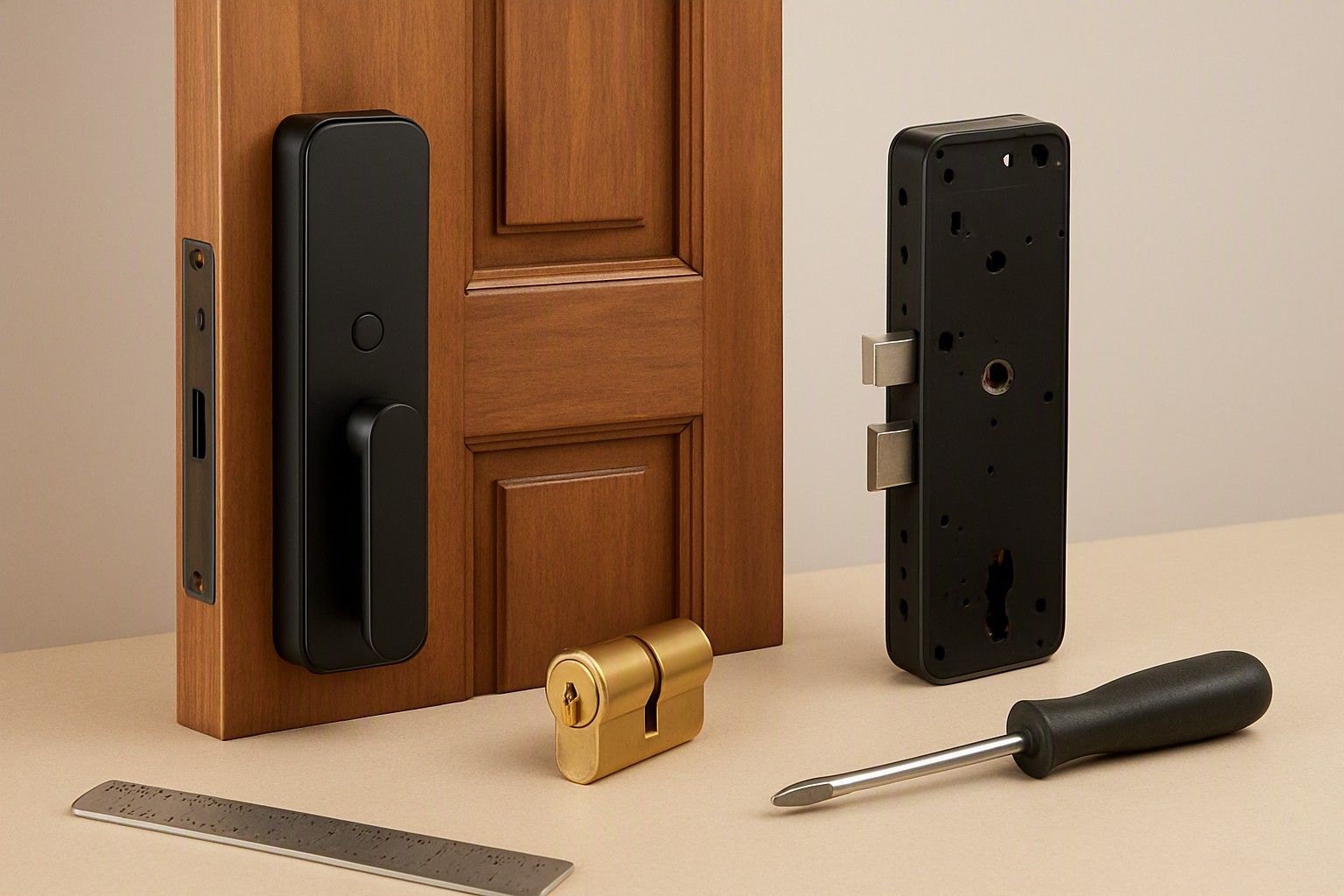
Before you compare features or prices, one question decides whether a smart lock will work at all in your home: does it physically fit your door and frame? A lock that looks perfect online can be unusable if your door thickness, material or existing lock body doesn't match — so this guide walks through exactly what to check, door type by door type, before you spend anywhere from ₹2,500 to ₹28,000.
Measuring Your Door Thickness and Handing
Every smart lock is built for a specific door thickness range, usually somewhere between 30mm and 55mm, and this is the single most common reason an order gets returned. Measure your door at the spot where the lock body will sit, not just at the edge, since many Indian doors are thicker near the lock rail than elsewhere. If your door falls outside the stated range, some manufacturers sell extension kits or spacer plates, but not all do, so check this before assuming a fix exists.
Handing matters just as much as thickness. A door's handing describes which side the hinges are on and which way it swings — left-handed, right-handed, inward-opening or outward-opening. Many mortise-style smart locks are handing-specific and need to be ordered or configured correctly, while some modern designs are reversible and adjust on installation. Stand outside your door, facing it, and note which side the hinges are on and whether it pushes or pulls open; that's the information you'll need when checking a lock's listing or asking a dealer.
Also measure the backset — the distance from the edge of the door to the centre of the existing handle or lock hole — since this determines whether a retrofit body will line up with your current cutout. Getting these three measurements (thickness, handing, backset) sorted first saves you from discovering a mismatch after installation has already begun.
Wooden Doors: The Most Common Indian Fit
Solid wooden doors are the default in most Indian homes, and they're also the easiest fit for smart locks because the vast majority of products on the market are designed around wood as the primary use case. Wood is forgiving to drill and chisel into, which means installers can adjust a cutout slightly if a lock body doesn't align perfectly with your existing hardware — something that's far harder on metal or uPVC.
That said, not all wooden doors are equal. Flush doors with a hollow or particle-board core behave differently from solid teak or sal wood doors. A hollow-core door may not hold screws as securely over time, especially for heavier motorised lock bodies, and can develop play at the strike plate if the internal frame isn't reinforced. If your wooden door is older or has been repainted multiple times, check for softness or moisture damage near the lock area before installing anything, since a lock is only as secure as the wood holding it.
Most mortise locks sold in India are designed specifically for the thickness and grain of standard wooden doors, which is part of why mortise remains the dominant lock body style here. If you have a solid wooden door in reasonably good condition, compatibility is rarely the blocker — your main decisions will be about features and budget rather than whether the lock fits at all.
Metal, uPVC and Glass Doors: What Changes
Move away from wood and the compatibility conversation changes quickly. Metal doors, common in apartment main entrances and some grilled doors, often already have a factory-cut mortise slot sized for a specific lock body, and not every smart lock's mortise unit will match that cutout without modification. Drilling fresh holes into metal is harder and less forgiving than wood, so it's worth confirming the exact cutout dimensions of your existing lock before ordering a replacement.
uPVC doors, increasingly used for balconies and utility doors, typically use multi-point locking mechanisms rather than a simple single mortise. Many smart locks aren't built to integrate with multi-point uPVC systems at all, and forcing a standard lock body onto a uPVC door frame can damage the frame's internal channel. If you have a uPVC door, check specifically for locks marketed as uPVC-compatible or multi-point compatible rather than assuming a general-purpose lock will work.
Glass doors are the most restrictive case. Frameless or semi-frameless glass doors generally need a specialised glass door lock designed for that purpose, since there's no wood or metal body to mortise into. Very few smart locks in the ₹4,000 to ₹10,000 range are built for glass at all, so this is a smaller, more specific shopping category rather than something every product line covers. If your entry door is metal, uPVC or glass, treat compatibility as the first filter in your search, well before you look at features.
Mortise vs Rim vs Deadbolt Lock Bodies Explained
The lock body type determines how the smart lock physically integrates with your door, and the three you'll encounter in India are mortise, rim, and deadbolt. A mortise lock sits inside a cavity chiselled into the door's edge, so the whole mechanism is recessed and only the handle and keyway show on the face. This is the standard for Indian wooden doors and is what most mid-range smart locks, typically in the ₹10,000 bracket, are designed around.
A rim lock mounts on the surface of the door rather than inside it, usually on the inner face, with a strike catching on the frame. Rim locks are easier to retrofit since they don't require deep internal carpentry, making them a common choice for doors where you don't want to cut a fresh mortise cavity, but they tend to sit more visibly on the door surface and can look bulkier.
A deadbolt is a separate bolt-only mechanism, often installed alongside an existing handle rather than replacing it, and is more common as an added layer of security than as a standalone smart lock format in India. Some smart lock kits combine a mortise or rim body with a motorised deadbolt function, so when you're comparing products, check whether the "smart" part refers to the entire lock body or just an added bolt attachment — the two behave very differently when it comes to what you can retrofit onto an existing door.
Retrofit Locks vs Full Replacement
A retrofit smart lock is designed to fit onto or into your existing lock cutout with minimal change to the door itself, often reusing the same mortise cavity and sometimes even the existing key cylinder alongside the new smart mechanism. This is the faster, less invasive route and is usually the cheaper one too, with several options available even in the ₹4,000 range. It's also the safer choice if you're not certain you'll want the same lock permanently, since it leaves the door mostly reversible to its original hardware.
A full replacement means removing the existing lock body entirely and fitting a new one sized to the smart lock's requirements, which may involve enlarging or re-cutting the mortise, patching the door face, or adjusting the strike plate position on the frame. This gives you more choice of lock since you're not constrained by an existing cutout, and it's often necessary if your current lock is a non-standard size or badly worn. It costs more in labour and carries some risk of visible patchwork on the door if the new lock body doesn't fully cover the old cutout.
Which route makes sense depends heavily on whether you own the property outright or not, which is exactly why retrofit options matter especially for renters — a tenant generally can't justify cutting a fresh mortise into a landlord's door, while an owner planning a longer stay may prefer a full replacement that fits their preferred lock properly rather than working around an old cutout.
Compatibility Checklist Before You Order
Before placing an order, run through a short set of checks rather than relying on a product photo looking similar to your door. First, confirm your door thickness against the lock's stated range, measured at the lock rail rather than at the door edge. Second, confirm handing — left or right, inward or outward opening — since a mismatch here can mean the latch faces the wrong way entirely. Third, identify your door material and, if it's metal, uPVC or glass, check explicitly for compatibility rather than assuming a general-purpose lock will work.
Fourth, note your backset and existing cutout dimensions if you're retrofitting, so the new lock body actually lines up with the holes already in your door. Fifth, decide whether you're retrofitting or doing a full replacement, since that affects both the products you can consider and the installation cost on top of the lock's own price, which across the market runs from ₹2,500 up to ₹28,000, averaging around ₹9,000.
Finally, keep in mind that fit and installation are connected decisions, not separate ones, so you should factor this into your installation planning before you commit to a specific lock. A lock that's a perfect fit on paper can still involve carpentry work, frame adjustment, or an electrician's visit depending on your door's condition, and knowing that upfront avoids surprises after the product has already arrived at your doorstep.
Fit isn't a feature you can compare later — it's the filter that decides which locks even make your shortlist. Once you know your door's thickness, handing, material and existing lock body, you've already answered the harder question of whether a smart lock will work in your home at all; everything from there — features, price tier, brand — is a much simpler decision.

Comments
Be the first to comment.