Smart Door Lock Price in India: Budget Tiers and Is Today's Price Fair
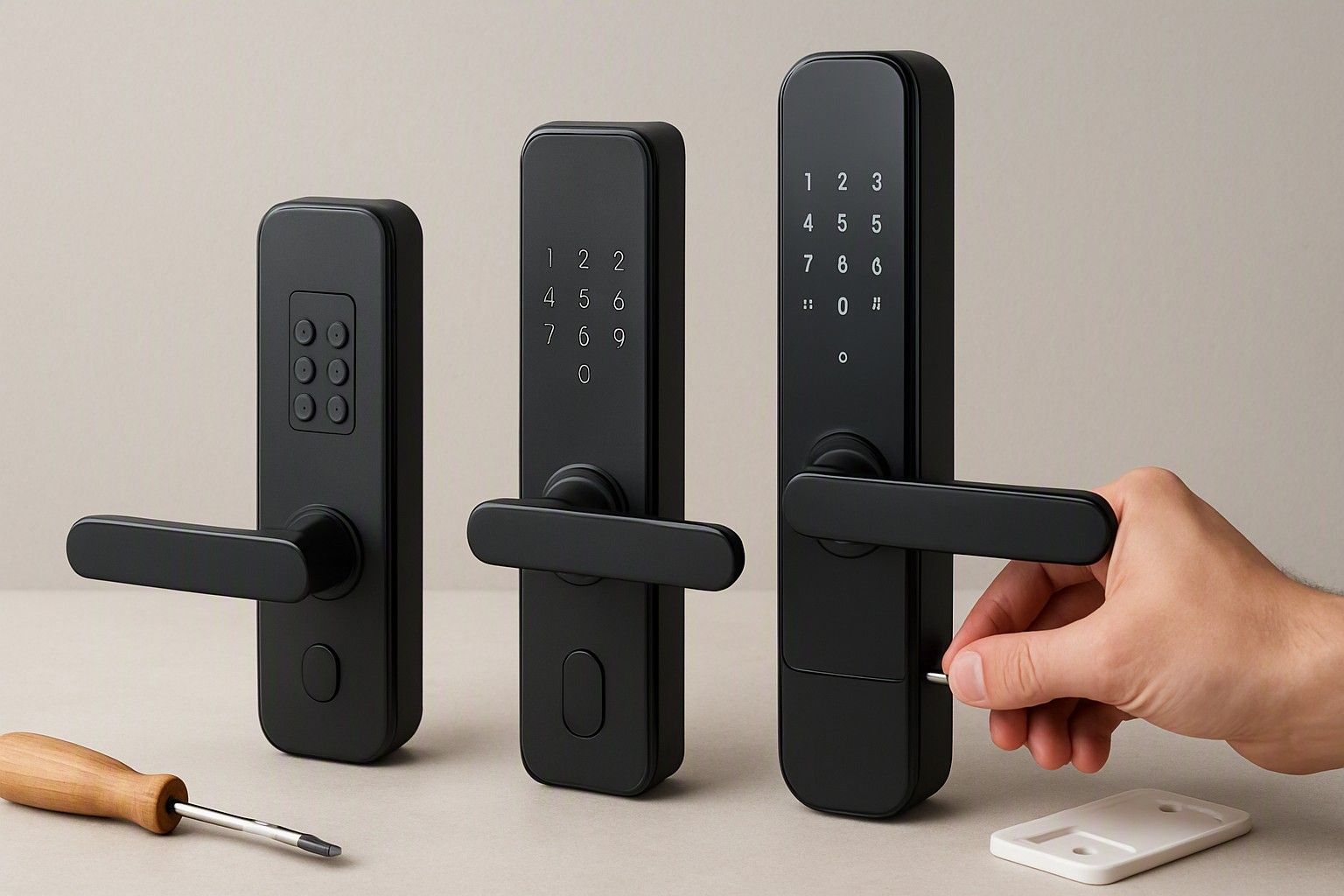
If you're staring at a smart lock listing and wondering whether the number on screen is reasonable, you're asking the right question at the right stage. This guide breaks down the entire price band, what separates a budget lock from a premium one, and how to read price history so you can decide with confidence rather than guesswork.
The Full Price Range: From ₹2,500 to ₹28,000
Smart door locks sold in India stretch from ₹2,500 at the entry end to ₹28,000 for the most loaded models, which is a wider spread than most home security products. That gap exists because a smart lock isn't one product category — it's several, bundled under one name. At the low end, you're paying for a keypad or app-based bolt that replaces a standard mortise lock with minimal added electronics. At the top end, you're paying for multiple biometric sensors, app connectivity that survives Wi-Fi drops, tamper alarms, and build quality that holds up to daily use for years without the motor or sensor degrading. Understanding where a specific listing falls in this ₹2,500 to ₹28,000 range tells you more than the price tag alone ever will. A lock priced near the ceiling isn't automatically better for your home, and one near the floor isn't automatically a compromise — it depends entirely on which features you'll actually use daily, like fingerprint access for a family of five versus a single OTP-based backup for a bachelor flat. The rest of this guide walks through what each slice of that range actually delivers, so you can match your spend to your household instead of picking a number that sounds safe.
What You Get Under ₹4,000
Locks priced under ₹4,000 are the entry point into smart access, and it helps to be clear-eyed about what that entry point includes. Most locks in this band offer a single unlock method beyond the mechanical key — usually a numeric keypad — with basic app support that may or may not work reliably over a home Wi-Fi network. Build quality varies a lot at this tier since manufacturers are cutting costs somewhere to hit the price point, and that's usually in the motor, the battery backup, or the weatherproofing of the external panel. For a low-traffic door, like an internal room or a secondary entry that isn't exposed to rain, this tier can genuinely do the job without overspending. For a main entrance that sees daily wear from multiple family members, a lock under ₹4,000 often lacks the redundancy you want — there's typically no fingerprint option, and the battery alerts that warn you before a lockout can be basic or delayed. This tier suits buyers who want the convenience of keyless entry without paying for features they won't use, but it's worth going in knowing you're trading some reliability and feature depth for the lower number. It is not the tier to pick if security is the primary reason you're upgrading from a traditional lock.
The Mainstream ₹10,000 Sweet Spot
The ₹10,000 band is where most Indian households actually end up buying, and for good reason — it's the price range where manufacturers stop cutting corners on the core unlock experience. Locks here typically combine a keypad, an app, and at least one biometric method like fingerprint recognition, giving every family member a way in that suits them without everyone sharing one PIN. Build quality also steps up noticeably: better weatherproofing for main doors exposed to sun and rain, sturdier internal mechanisms, and battery backups that last longer between charges or swaps. Since this is also the band where brands compete hardest, most feature-rich unlock options sit in this band, which is worth checking closely before you commit, since two locks at similar prices in this tier can differ a lot in how many ways they let you in and how reliably each method works. If your main entrance sees regular traffic from kids, domestic help, or elderly parents who might struggle with a phone-based app, this tier gives you the flexibility to set up multiple access methods without pushing into premium pricing. For most main-door replacements in Indian homes, this is the range worth focusing your search on rather than defaulting to the cheapest or most expensive option available.
Premium ₹18,000 Locks: Are They Worth It
Locks priced in the ₹18,000 range and above push into territory where the added spend buys redundancy and polish rather than a fundamentally different unlocking experience. At this tier you typically get multiple biometric sensors working together, more robust tamper detection with audible or app-based alarms, sturdier hardware designed to resist forced entry attempts, and software that's been refined enough to avoid the app lag or missed notifications that cheaper locks sometimes suffer from. Whether this is worth it depends on what's behind your door and how much you value that redundancy. For a large independent house, a ground-floor entrance, or a home where security is a genuine concern rather than just convenience, the extra spend on tamper alerts and sturdier build can be justified. For a mid-floor apartment in a gated society with existing security, paying premium prices mostly buys smoother software and a longer feature list you may rarely use in full. It's not that premium locks in this band are overpriced — the engineering and components genuinely cost more to source — but the jump from the mainstream tier to this one delivers diminishing returns for an average household. Buy here because your situation demands the extra layer, not because a higher price feels like a safer default.
Where the ₹9,000 Average Sits and What It Buys
The category average of ₹9,000 lands inside the mainstream ₹10,000 band, which tells you something useful: most buyers in India are already gravitating toward locks with a keypad, app access, and at least basic biometric support rather than settling for the cheapest option or splurging on the premium tier. A lock priced around this average typically isn't stripped down, but it also isn't loaded with every sensor and alarm feature available at the top of the range. Treat ₹9,000 as a mid range budget for smart door lock and use it as an anchor point rather than a target to hit exactly — a listing priced somewhat below it isn't necessarily a lesser lock if it matches what you actually need for a low-traffic door, and one priced somewhat above it isn't overpriced if the extra features genuinely apply to your household. What matters more than matching the average exactly is understanding why a specific lock sits where it does relative to it. If a listing is priced well above ₹9,000 without offering the biometric redundancy or build quality that typically justifies that gap, that's a signal to look closer at the spec sheet rather than assume the higher number reflects higher quality automatically.
Using Price History to Judge if Now Is a Good Time
Once you know where a lock sits in the ₹2,500 to ₹28,000 range and how that compares to the ₹9,000 average, the next step is checking that specific listing's price history rather than judging the number in isolation. A price that looks high today might actually be sitting near its historical low if the category has generally trended upward, while a price that looks like a bargain might just be a temporary dip back to where it usually sits. The goal isn't to time a future drop — smart lock pricing in India doesn't follow a predictable seasonal pattern the way some other electronics do, and waiting on the chance of a lower price later means living without the security upgrade you've already decided you need. Instead, use the history to confirm the current price is within the normal range for that model rather than an inflated spike, which is a fair basis to buy now with confidence. Before finalizing, it's also worth taking a step back to factor in security checks before committing, since a fair price on a lock with a weak build or unreliable sensor isn't actually a good deal, no matter how it compares to its own price history.
Between the tier breakdown and the price-history check, you now have what you need to answer both halves of the original question: how much to spend based on your household and door, and whether the number in front of you is a fair one rather than an inflated ask. Match the tier to your actual usage, confirm the price against its own history, and you can move forward on a purchase today without second-guessing the decision.

Comments
Be the first to comment.