Smart Locks for Rented Flats, Owned Homes and Joint Families
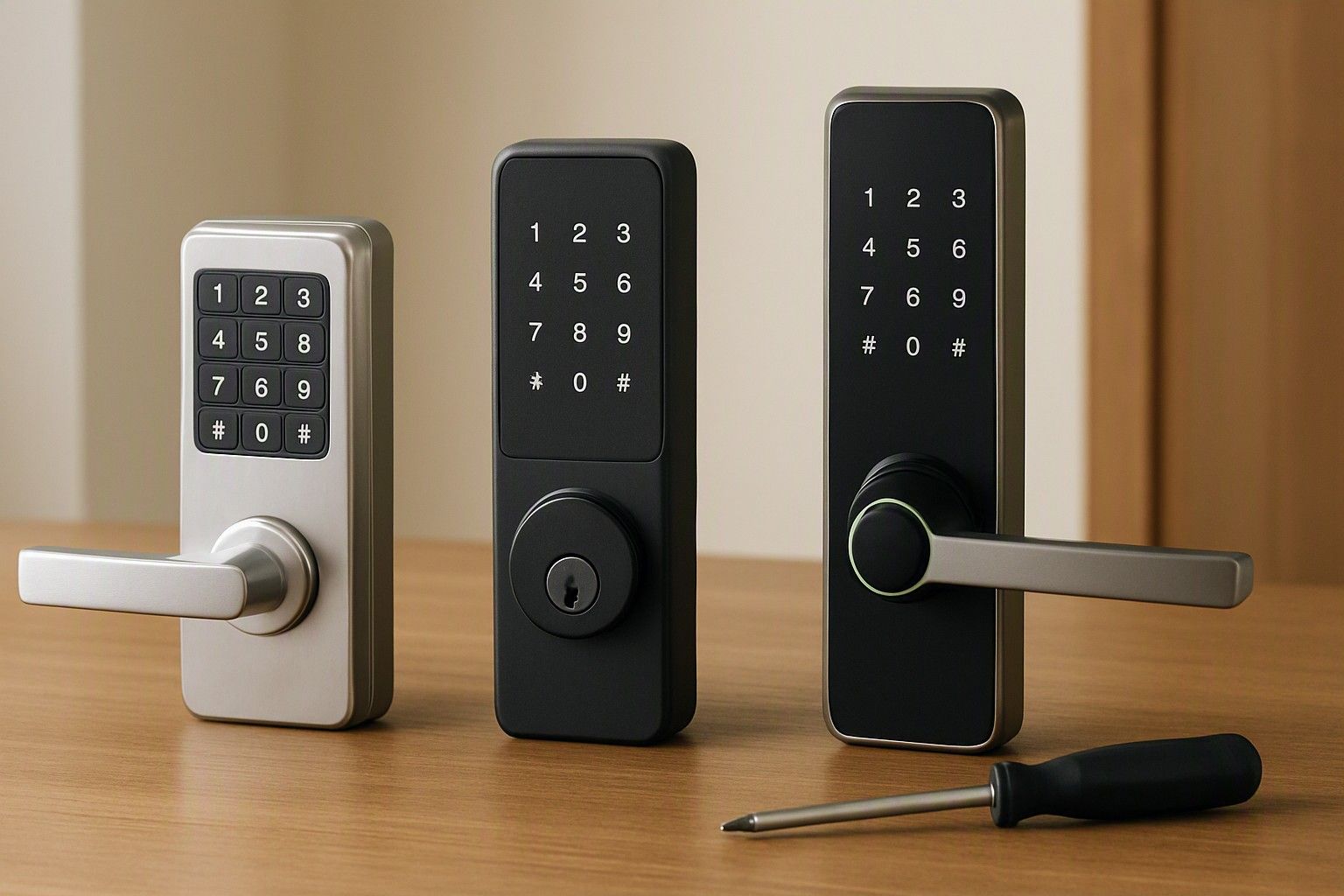
Not every household needs the same smart lock, and the biggest mistake buyers make is copying what a friend bought without checking if it fits their situation. A renter worried about the security deposit, a joint family with six adults needing separate access, and a homeowner planning to stay put for years are really asking three different questions even though they land on the same product category. This guide sorts smart locks by who's actually living behind that door.
Renters: No-Drill and Reversible Installation Options
If you're renting, the primary constraint isn't security tier or budget — it's whether you can restore the door to its original state when you move out. Most rental agreements in India either explicitly forbid drilling into the main door or make it a point of friction with the landlord over the deposit. This rules out mortise-style smart locks that replace the entire lock body and require carpentry work on the door slab.
What works instead are retrofit and clamp-on smart locks that mount over or around the existing lock rather than replacing it, along with battery-powered smart deadbolts designed to reuse the existing strike plate and drill points. Several models in the ₹4,000 and lower end of ₹10,000 range are built specifically with this reversibility in mind — they attach with minimal drilling, and what little hardware is added can be removed and the holes filled without leaving a visible retrofit scar. Before buying anything, it genuinely pays to check which door types allow retrofit locks, because a lock that's technically reversible on a flush wooden door may not sit properly on a paneled or glass-paneled door common in older rental flats.
It's also worth asking your landlord directly rather than assuming — some are fine with a small additional latch as long as the original lock stays intact and functional. That single conversation avoids buying a lock you can't actually install.
Joint Families: Managing Many Fingerprints and PINs
A joint family household — parents, adult children, their spouses, and sometimes live-in grandparents — has a genuinely different access problem than a nuclear family. The question isn't just "can this lock open the door" but "can this lock handle eight to twelve distinct users without turning into an administrative headache." This is where the specification sheet matters more than it does for a single-person flat: check the maximum number of fingerprints and PIN codes a model supports before buying, not after.
Budget locks in the ₹4,000 range often cap out at a handful of fingerprint slots, which sounds sufficient until you realize every family member, including teenage children, wants their own registered access rather than sharing one PIN. Locks in the ₹10,000 and ₹18,000 range typically support considerably higher user counts and let you assign individual PINs per person, which matters practically — if a code is ever compromised or a family member moves out, you can revoke just that one credential instead of resetting access for everyone.
There's a real everyday consideration too: fingerprint sensors used by ten-plus different people across a day see far more wear and misreads than in a two-person household, so a joint family benefits from a lock that offers a backup PIN or card option per user rather than fingerprint-only entry, so nobody gets locked out because a sensor didn't register a print on the first try.
Temporary Access for Maids, Cooks and Delivery
Most Indian households, whether renting or owning, rely on domestic help who need door access on a schedule that doesn't match the family's own routine — an early morning cook, a maid who comes twice a day, or a delivery executive during a specific festival week. Handing over a physical key or a shared permanent PIN for this is how codes end up floating around long after they're needed.
The better approach is a lock that supports time-bound or one-time-use PINs, letting you generate a code that only works within a set window, such as 7 to 9 AM daily, or a single-use code for a one-off visit. This feature has moved down the price ladder — it used to be limited to higher-tier locks, but a number of models even in the ₹10,000 range now offer scheduled or temporary codes through a companion app.
For households without a smartphone-literate elder managing the app, a simpler workaround is a dedicated PIN assigned only to the helper, which can be changed periodically without affecting anyone else's access. This is a lower-tech solution but it accomplishes the same core goal: nobody outside the family holds a permanent, unmonitored way into the home. Whichever route you pick, avoid the habit of sharing the family's own primary PIN with help staff — it defeats the entire purpose of having individual access control in the first place.
Owned Homes: Investing in Higher Security Tiers
Owning the home changes the calculation because the lock is no longer a temporary fixture — it's a long-term part of the property, and the cost of getting it wrong (a break-in, a failed mechanism at 2 AM, a lock that feels dated within a couple of years) falls entirely on you. This is the scenario where it makes sense to look past entry-level pricing and into the ₹10,000 and ₹18,000 bands, where prices in India run up toward ₹28,000 at the top end against an overall category average of ₹9,000.
What that higher spend actually buys is worth spelling out rather than assuming: sturdier build materials on the external face that hold up to weather exposure, more robust motor mechanisms that see less wear over years of daily use, additional unlock methods (fingerprint, PIN, card, and mechanical key backup all on one unit), and often a proper mortise body that's harder to force compared to a clamp-on retrofit design. For a home you own outright, a mortise-style smart lock installed as part of the main door itself is generally the sturdier long-term choice over a retrofit unit, since it's built into the door rather than attached on top of the existing hardware.
This doesn't mean the top of the price range is required — plenty of owned homes are perfectly well served by a solid ₹10,000 lock. But unlike a rental, there's no reason to hold back purely to preserve resale flexibility on a lock you're not planning to remove.
Multiple Doors and Main-Gate Considerations
Independent houses, builder-floor homes, and larger flats often have more than one point of entry that needs securing — a main door, a back or utility door, and in many cases a compound or main gate that's separate from the house door entirely. Treating all of these as one purchase decision is a common mistake; each has different exposure and different requirements.
The main door is where the higher security tier and full feature set (fingerprint, PIN, app control) earns its price. A back or utility door, used less often and usually by household staff, can reasonably run a simpler and cheaper lock from the ₹4,000 range, since the priority there is basic access control rather than a full smart feature set. A main gate is a different problem altogether — it's typically exposed to direct weather (sun, rain, dust) in a way an internal or covered main door isn't, so a lock rated for outdoor or heavy exposure use matters more here than the fingerprint count or app polish.
For households comparing spend across multiple doors, it helps to think in a total household budget rather than per-door pricing: given the category spans from ₹2,500 to ₹28,000, a common pattern is putting a ₹10,000 or ₹18,000 lock on the main door and a ₹4,000 lock on secondary doors, rather than spreading an equal budget across all of them.
Choosing Based on Who Lives With You
Strip away the marketing around any specific smart lock and the honest decision criteria come down to household composition: how many people need daily access, whether you own or rent the door itself, whether domestic help needs a separate schedule of entry, and how many doors actually need covering. A single renter, a joint family of ten, and a homeowner with a separate back door and gate are not shopping for the same product even if they end up on the same product page.
If you've read this far and still aren't sure which category of lock fits, it's worth stepping back to tie this back to your overall lock decision and working through the fundamentals of lock types, installation, and features from the ground up, since the household-specific guidance here builds on top of that foundation rather than replacing it.
Whichever situation matches yours — a rented flat where reversibility matters more than features, a joint family that needs individual credentials for everyone, or an owned home where a higher security tier is worth the spend — the right smart lock follows from who actually uses that door every day, not from chasing the highest-rated model on a shelf.
Comments
Be the first to comment.