How Smart Door Locks Work and Do You Really Need One in India
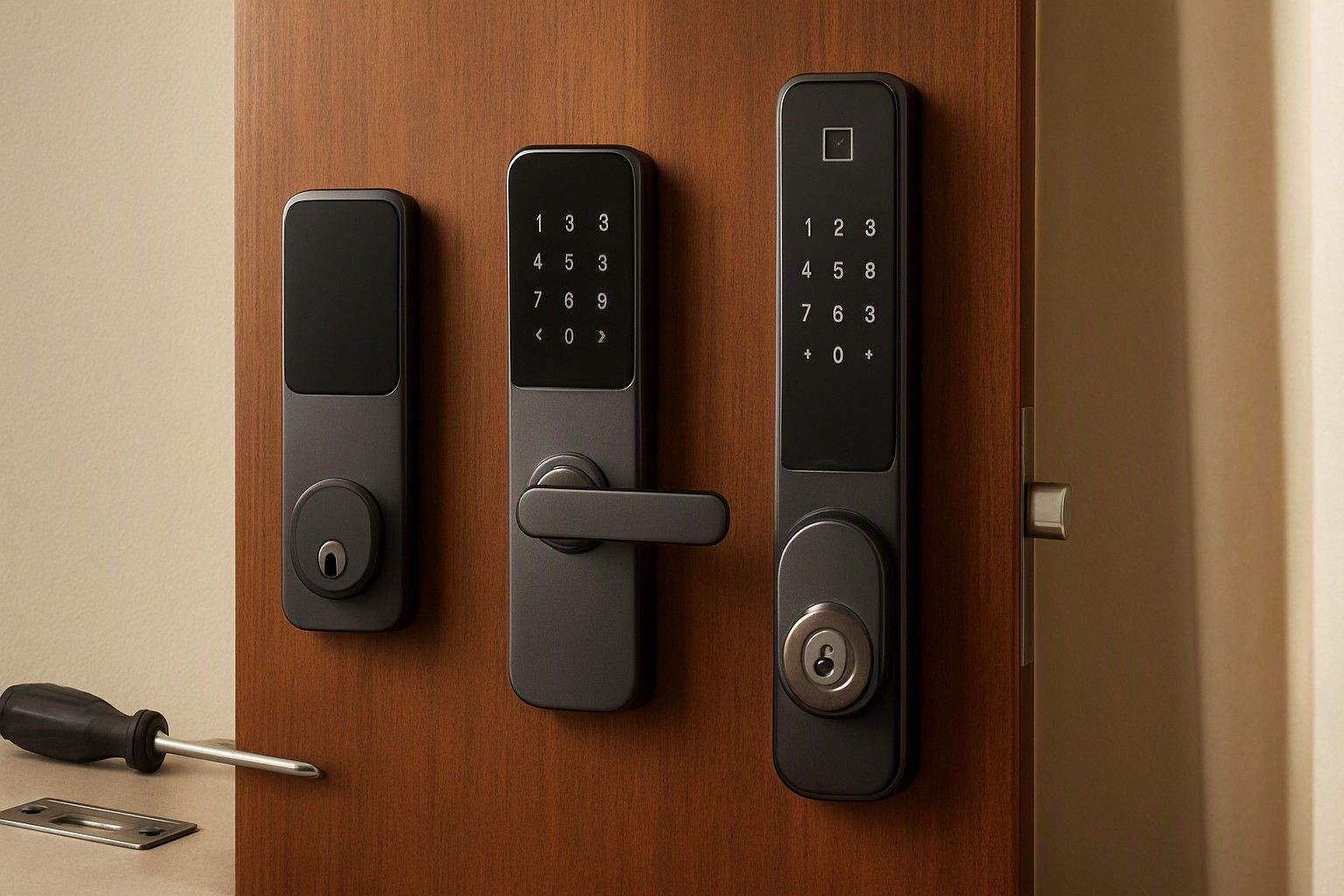
If you've ever fumbled for keys outside your door with grocery bags in hand, or wondered how your neighbour's door opens with just a fingerprint, you're already close to understanding why smart door locks exist. This article explains what's actually inside one, what problems it solves for an Indian household, and whether your home is the kind that benefits from making the switch.
What a Smart Door Lock Is and How It Differs From a Normal Lock
A traditional lock works on a single principle: a metal key turns a mechanism, and that's the only way in or out (barring a spare key or a locksmith). A smart door lock replaces or supplements that mechanism with an electronic system that can be opened through multiple methods — a PIN code, a fingerprint, an app on your phone, an RFID card, or in many models, still a physical key as backup.
The fundamental difference isn't just convenience, it's flexibility. A normal lock has one access method and no memory of who used it or when. A smart lock can grant different people different ways in, log every entry and exit, and be reconfigured in seconds without calling a locksmith to change a cylinder. If a house help resigns or a rented flat changes tenants, you delete their access instead of rekeying the door.
For Indian homes specifically, this matters because most households aren't single-key units — there's family, domestic help, sometimes a driver, occasional guests, and children who forget keys constantly. A smart lock is built around managing that complexity, while a normal lock assumes one key does it all. That's the core shift to understand before deciding if you need one.
The Core Technology: Motors, Sensors and Connectivity
Underneath the touchscreen or keypad, a smart lock is really three systems working together. The first is the locking mechanism itself — a motor that physically drives a bolt or latch, replacing the manual twist of a traditional lock. This motor is what actually secures the door; everything else is just a way of telling it to move.
The second is the sensing and input layer. This is the fingerprint scanner, keypad, or card reader that verifies who's asking to get in. Fingerprint sensors use a stored digital map of your print, PINs are matched against a code you've set, and RFID cards or fobs communicate over short-range radio signals. Most locks support at least two of these methods so you're not stranded if one fails, say, a wet finger not registering.
The third is connectivity, and this is the part that varies most between models. Some locks work purely offline through the keypad or fingerprint sensor with no app involvement at all. Others connect via Bluetooth to your phone for close-range unlocking, or via Wi-Fi for remote access and activity logs from anywhere. Connectivity is also where battery life becomes a real consideration, since Wi-Fi-enabled locks tend to draw more power than Bluetooth-only or fully offline ones. Understanding this layer matters because it directly decides how the lock fits into your daily routine, not just how it looks on a spec sheet.
Real Benefits for Indian Households (No More Lost Keys, Guest Access)
The most immediate benefit is the one every Indian household has lived through at least once: a lost key, a locked-out family member, or a spare key handed to a neighbour for emergencies. A smart lock removes the physical key as the single point of failure. You can't lose access to your own home because you misplaced a piece of metal.
Guest and staff access is where the benefit compounds. Instead of cutting spare keys for domestic help, or leaving a key under a mat (a habit most security advice actively warns against), you assign a PIN or fingerprint that works only for the hours or days you choose. When a cook's shift changes or a maintenance visit is scheduled, you set temporary access and it expires on its own, no key to collect back.
For extended families and elderly parents living alone, remote-capable locks let a son or daughter check whether the door was locked, or grant entry to a visiting doctor, without being physically present. This is a genuinely Indian use case, since multi-generational households and adult children living in different cities are common, and a lock that can be managed from another location addresses that specific gap. None of this is about novelty, it's about reducing the everyday friction of managing who gets into your home and when.
Common Situations Where a Smart Lock Genuinely Helps
Some households get far more day-to-day value from a smart lock than others, and it's worth being honest about which situations these are. Rental properties with rotating tenants are one: a landlord can reset access codes between tenants instead of changing the entire lock cylinder every time someone moves out. Homes with domestic help on fixed schedules are another, since time-bound access removes the trust question of a duplicated key floating around indefinitely.
Families with school-going children who come home before parents are a common case too — a fingerprint or PIN means no more hiding a spare key outside, which is a small but real security risk. Frequent travellers benefit from remote-capable models that confirm the door is locked after they've already left for the airport, removing that nagging doubt.
Apartment buyers renovating or moving in gradually also find value here, since access can be granted to painters, carpenters or delivery of furniture without a physical key changing hands multiple times. In all these cases, the benefit isn't abstract, it's tied to a specific recurring hassle the household already deals with. Beyond who gets access, though, the way you unlock it matters for daily use, since a fingerprint-first household and a card-and-PIN household will have very different everyday experiences with the same lock.
When a Traditional Lock Is Still the Better Choice
A smart lock isn't the right call for every home, and it's worth saying that plainly. If you live alone, rarely have guests or staff needing separate access, and your routine hasn't changed in years, a traditional lock does the job without adding anything to manage. Batteries dying, firmware updates, or an app not connecting are non-issues with a mechanical lock, and that reliability has real value for someone who wants a door that just works.
Homes with unreliable power backup are worth a second thought too. While most smart locks run on batteries rather than mains power, a household uncomfortable with any electronic dependency on a door, however minor, may simply prefer the certainty of a key that never needs charging or resetting.
Budget is a genuine factor as well. Entry-level smart locks in India start around ₹2,500, but a reliable traditional deadbolt or mortise lock can cost a fraction of even that, with no ongoing battery replacement. If your main goal is simply a secure, no-fuss door and none of the access-sharing or remote-monitoring benefits apply to your household, spending on a smart lock adds cost without addressing a problem you actually have. There's no compulsion to modernise a lock that isn't causing you any daily friction.
Deciding If a Smart Lock Fits Your Home
The decision comes down to matching the lock to a problem you actually experience, not to how modern it looks. If lost keys, spare-key handovers, or managing staff and guest access are a recurring hassle in your household, a smart lock addresses that directly and the cost, generally falling between ₹2,500 and ₹28,000 with an average around ₹9,000, is justified by the problem it solves rather than by novelty.
Budget tiers roughly map to how much of this you get: locks under ₹4,000 tend to cover basic keypad or card access without much else, the ₹10,000 range typically adds fingerprint recognition and app connectivity, and the ₹18,000 bracket usually brings in more robust build quality and multiple simultaneous unlock methods. None of these price points should be treated as a reason to wait for a better deal, since the range has been broadly stable and reflects genuine differences in features rather than temporary pricing.
If you've read through the technology and the use cases here and recognised your own household in more than one of them, the case for switching is real. For a complete rundown of every factor worth weighing, from door compatibility to installation and after-sales support, it helps to weigh it against the full list of buying factors before making a final call.
At this point the original question, whether a smart door lock is something you actually need, has a concrete answer: it depends on whether your home already deals with lost keys, shared access, or managing who comes and goes, not on how appealing the technology sounds. If those situations describe your household, the case is straightforward. If they don't, a traditional lock remains a perfectly sound choice, and there's no urgency pushing you either way beyond your own daily routine.

Comments
Be the first to comment.