Installing, Maintaining and Servicing a Smart Door Lock in India
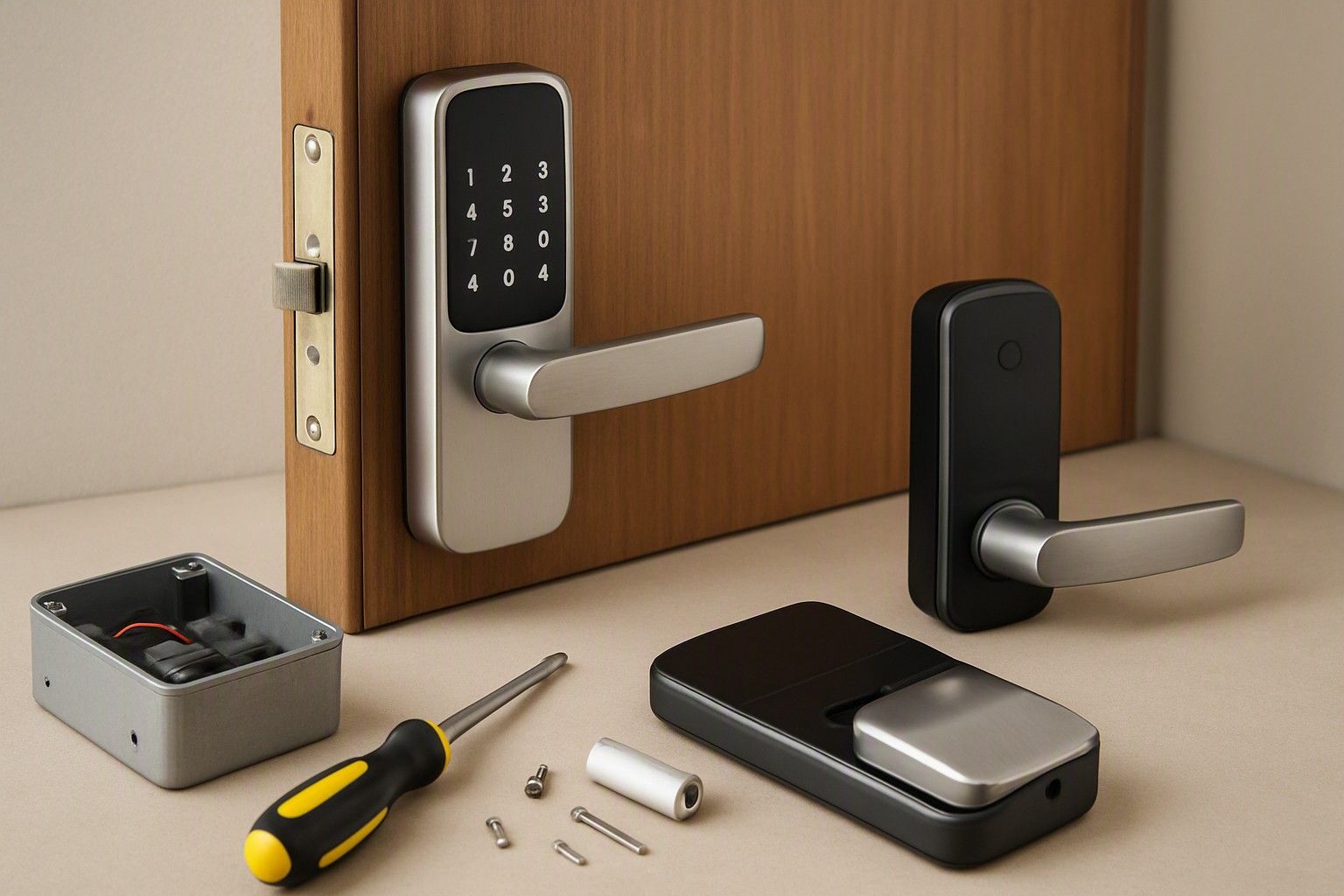
Once you've decided on a smart lock, the next real questions are practical: who fits it, what does that cost, and what will you keep spending on it after the box is opened. This guide walks through installation, cleaning, battery replacement, warranty gaps and the true multi-year cost of owning one, so you know exactly what you're signing up for beyond the sticker price.
DIY vs Professional Installation
Whether you can fit a smart lock yourself or need a professional largely comes down to your door and the lock's mounting design. Many mortise-style smart locks sold in India are built to replace an existing mortise body, which means aligning a new faceplate, motor unit and strike plate inside a cavity that was originally cut for a different lock. Get the alignment even a couple of millimetres off and the latch won't engage smoothly, the motor will strain, and you'll hear it in the form of grinding or delayed locking. This is why most brands and retailers strongly recommend, and sometimes insist on, professional installation for anything beyond a simple retrofit.
DIY is realistic mainly for add-on style locks that mount over an existing cylinder or deadbolt without altering the door itself. If you're comfortable with a screwdriver, a level, and following a printed manual, these can be fitted in under an hour. But retrofitting a full mortise smart lock into a wooden, flush, or older metal door is a different job entirely, often involving chiselling out wood, adjusting hinge alignment, or dealing with a door that's warped slightly over years of use. In these cases a technician isn't optional convenience, it's what keeps the lock functioning correctly and keeps your warranty valid, since many manufacturers void coverage on locks installed by unauthorised persons. Before deciding either way, it helps to understand that your door type decides how hard fitting will be, since a flush door, a panelled wooden door and a glass door each demand a completely different installation approach.
Typical Installation Charges in Indian Cities
Installation charges for smart locks in India aren't usually bundled into the product price the way they might be for, say, a modular kitchen appliance. Most brands either include one free installation visit within a certain radius of a service centre or charge separately based on distance, door type and whether carpentry work is needed. Basic locks in the ₹4,000 range typically ship with simpler installation requirements since they're often designed as direct cylinder replacements, so the labour involved is minimal and sometimes free with purchase.
Mid-range locks priced between ₹10,000 usually involve a mortise body swap, and here installation charges start becoming a real line item, particularly if the technician needs to correct for a door that wasn't originally prepared for a smart lock. Premium locks in the ₹18,000 bracket almost always include installation as part of the purchase, since these are typically sold through dealers who handle site visits, door assessment and fitting as one package. Outside metro cities, expect to pay a bit more for the technician's travel, and expect longer waiting windows since authorised installers aren't as densely spread as in Delhi, Mumbai, or Bengaluru. If a listing looks unusually cheap at the ₹2,500 end of the market, it's worth checking whether installation is included at all or whether that cost will show up separately once you've committed to the purchase.
Cleaning Sensors and Keeping the Lock Working
A smart lock's biggest enemy isn't theft attempts, it's dust, humidity and the general wear of daily use on external doors, especially in Indian conditions where monsoon moisture and dust from open windows or construction nearby can build up fast. Fingerprint sensors are the most sensitive component here. Grease, sweat and dust film on the sensor surface are the number one reason people report the lock failing to recognise a registered fingerprint after a few months of otherwise normal use. Wiping the sensor with a dry microfibre cloth every week or two, and avoiding harsh cleaning liquids that can seep into the seams around the sensor, keeps recognition accuracy stable.
Keypad buttons and touchscreens need similar light care, since oily residue from repeated finger contact can make numbers harder to read or, on capacitive touch models, cause misreads. For the mechanical side, the latch and strike plate benefit from an occasional check to ensure nothing is obstructing smooth movement, particularly after monsoon season when wooden doors can swell slightly and throw off the alignment that installation originally set. None of this requires professional servicing on a routine basis; it's closer to the kind of upkeep you'd give any frequently touched electronic device at home. Skipping it entirely, though, is what usually leads to an unnecessary service call for what turns out to be a simple sensor cleaning issue.
Battery Replacement and Consumable Costs
Batteries are the one ongoing cost every smart lock owner will face regardless of price tier, and it's worth budgeting for rather than treating as a surprise. Most locks run on standard AA batteries, and depending on usage frequency, family size and whether the lock uses power-hungry features like a large touchscreen or frequent Bluetooth pairing, a set typically lasts anywhere from four months to close to a year. This is a recurring cost measured in a few hundred rupees a year at most, not a significant expense against the lock's purchase price, but it does mean you should know your lock's low-battery warning behaviour before you're caught out.
A well-designed lock gives repeated audible or app-based alerts once battery levels drop, and includes a backup access method, whether that's a physical key override or an external power port, for the scenario where the battery dies completely before you've replaced it. Cheaper locks at the ₹4,000 end sometimes skimp on early warning systems, giving you less runway to notice a low battery before you're locked out. Before buying, it genuinely helps to understand battery behaviour and backup first, since the difference between a lock that warns you gracefully and one that dies without notice is entirely about how the manufacturer engineered this one detail, not about price alone.
Warranty Coverage and What It Excludes
Warranty terms on smart locks in India vary more than most buyers expect, and reading the fine print before purchase saves real frustration later. Most locks come with a standard warranty period covering manufacturing defects in the motor, circuit board and sensor components. What it typically does not cover is physical damage from incorrect installation, water ingress on locks not rated for outdoor exposure, damage from using non-recommended batteries, or issues arising from unauthorised repair attempts. This last exclusion matters more than it sounds, since a warranty can be voided entirely if you or a local locksmith opens the lock body to troubleshoot instead of going through the authorised service channel.
Another common gap is that warranty coverage on the mechanical latch and strike plate is sometimes shorter than coverage on the electronic components, since these parts see more physical wear. It's also worth checking whether the warranty is pan-India or tied to the city you purchased in, since some smaller brands rely on regional service partners and getting a replacement part processed if you've since moved cities can take considerably longer. Locks toward the ₹18,000 end of the market generally offer longer and more comprehensive warranty terms, partly because they're sold through more established dealer networks that can actually honour a longer commitment.
Long-Term Ownership Cost Compared to a Normal Lock
A traditional mechanical lock has almost no ongoing cost beyond the rare rekeying or lock replacement after years of wear, which is the comparison every smart lock buyer should hold in mind honestly. A smart lock, even a well-chosen one, carries battery replacement every several months, occasional sensor cleaning, and a real possibility of a paid service visit once the warranty period ends, particularly if the motor or circuit board develops a fault. Across a purchase price ranging from ₹2,500 to ₹28,000, with an average around ₹9,000, the ownership cost over several years adds up to noticeably more than a standard lock, but it's buying something a mechanical lock simply can't offer: remote access logs, temporary codes for guests or house help, and the ability to know who entered and when.
Whether that trade-off is worth it depends on what problem you're actually solving. If convenience and access control genuinely matter to your household, the added cost is proportional to the value delivered. If you're mainly drawn to the idea of a smart lock without a specific use case, it's worth being honest that you're paying an ongoing premium for a feature set you may use rarely. Either way, this ownership picture is one piece of a larger decision, and it's worth pairing with the rest of the factors covered when you return to the main buying checklist.
Installation, upkeep and warranty terms aren't footnotes to a smart lock purchase, they're a real part of what you're buying, and now you have a concrete sense of what fitting will cost, what routine care looks like, and where the ongoing expenses actually sit against a normal lock. With that picture in hand, deciding whether to buy today comes down to whether the convenience justifies the maintenance, not whether you've missed some hidden cost waiting to surface later.
Comments
Be the first to comment.