Smart Lock Security Red Flags and Certification Checks Before Buying
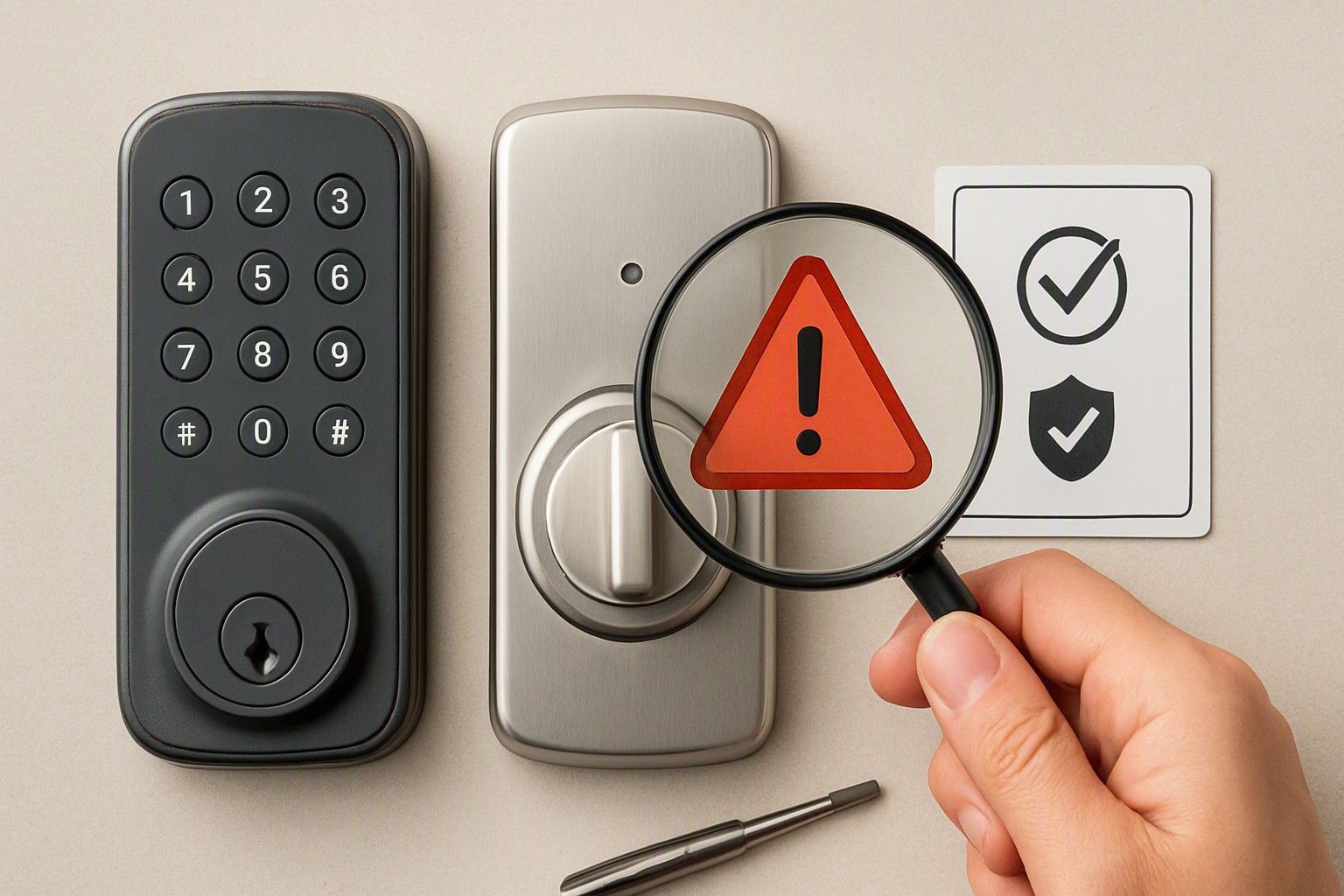
A smart lock is only as good as the security engineering hidden behind its touchscreen or fingerprint pad, and a sleek app or a shiny finish tells you nothing about whether it can actually be picked, bumped, or hacked. If you're trying to figure out how to tell a genuinely secure lock from a cheap unsafe one before you commit money to it, this is the checklist to work through before checkout.
Certifications and Standards Worth Looking For
Certifications exist precisely because you can't inspect a lock's internal cylinder, motor, or circuit board yourself before buying, so they're the closest thing to an independent check on quality. At a minimum, look for a stated fire safety or electrical safety compliance mark on the packaging or product listing, since this tells you the internal battery and wiring have been tested against basic short-circuit and overheating risks, which matters a lot on a device that sits on your front door around the clock. Beyond that, credible listings will usually mention some form of ingress protection rating if the lock is meant for an exposed main door or gate, since Indian weather, especially monsoon humidity and coastal salt air, is genuinely harder on electronics than most buyers assume. A lock brand that publishes clear numbers for these things, rather than vague marketing phrases like 'bank-grade security' with no standard named, is signalling that it has actually been tested rather than just assembled. When a listing has no certification information at all, that absence is itself informative, and you should treat it as a reason to dig further rather than assume the omission is harmless. This is especially true at the lower end of the market, where cutting corners on testing is one of the easiest ways to shave cost off a product.
Anti-Tamper, Anti-Pick and Forced-Entry Alarms
A smart lock's digital features are almost beside the point if its physical mechanism can be defeated with a screwdriver or a strong tug, so this is where you should spend real attention. Ask specifically whether the lock has an anti-pick cylinder design that resists manipulation through the keyway, since many budget locks still ship with a mechanical override key that uses a basic pin-tumbler design offering little real resistance. Separately, check for tamper alarms that trigger an audible alert or app notification when someone repeatedly enters the wrong code, tries to pry the faceplate, or attempts to force the bolt, because this feature actively deters a break-in attempt rather than just recording it after the fact. A forced-entry alarm that sounds loudly on the door itself is particularly valuable in Indian residential buildings and societies, where a loud noise draws immediate attention from neighbours or security guards in a way that a silent app notification on your phone, which you might not see for hours, simply cannot. Also worth checking is whether the lock disables itself temporarily after several consecutive wrong-code attempts, since this closes off brute-force guessing as an attack method. None of these features are visible in a product photo, so you genuinely have to read the specification list or ask the seller directly before buying, rather than assuming a modern-looking lock has them by default.
App and Data Security Concerns With Cheap Brands
A smart lock's app is effectively a second door, and if that software is poorly built, the physical lock's quality barely matters. The most basic check is whether the app requires a genuine account login with a password rather than a shared default code, since locks that rely on a static factory PIN or a weak default credential are far easier to compromise remotely. Also worth confirming is whether firmware updates are pushed regularly, because a lock manufacturer that has stopped updating its app or firmware has effectively stopped patching any security holes discovered after launch, leaving the device exposed indefinitely. Cheaper, lesser-known brands are more likely to cut corners here, sometimes routing data through servers with unclear data-handling practices or offering no update history at all once the initial sale is made. This matters practically in the Indian context because many of these locks connect over Wi-Fi to control access remotely for family members, domestic help, or delivery access, so a compromised app isn't a hypothetical risk, it's a direct route into who can open your front door. Before buying, it's worth searching for the app by name in the app store and checking its review history and last update date, since a stale, poorly rated companion app is one of the clearest signs that the physical lock behind it is being run on equally thin engineering support.
Warning Signs of a Poor-Quality Lock
Some red flags show up before you've even installed the lock, and they're worth learning to spot at the listing stage. A product page with stock photography that doesn't match the actual unit, vague spec sheets that avoid naming a battery type or backup power method, or reviews that mention the app disconnecting frequently are all signs worth taking seriously rather than dismissing as isolated complaints. Pay attention too to how the lock handles power failure: a well-designed unit will have a clearly stated mechanical key override or an external battery terminal for emergency power, while a poor one leaves you locked out entirely if the internal battery dies, which is a real problem given how often Indian households deal with irregular power supply. Price is a genuine signal here as well, and an unusually low price can be a warning in itself, particularly when a lock is priced well under the ₹4,000 range without any brand history, certification detail, or after-sales presence to justify it. That doesn't mean everything in the lower tiers is unsafe, since plenty of budget locks in the ₹2,500 to ₹4,000 range from established sellers perform reliably, but a lock with no verifiable track record at an implausibly low price relative to the ₹9,000 category average deserves extra scrutiny before you trust it with your front door.
Brand Support and After-Sales Reliability in India
Security hardware fails eventually, whether it's a battery that won't hold charge, a motor that starts sticking, or a firmware bug that locks you out, and how a brand handles that moment matters as much as how the lock performed on day one. Before buying, it's worth checking whether the brand has a service network reachable in your city, a clear warranty period stated upfront, and a support channel that actually responds, rather than just a generic customer care number buried in the manual. This is where many lesser-known or import-only brands fall short in the Indian market: the lock itself may function fine initially, but replacement parts, technician visits, or even basic troubleshooting support can be difficult to get once the initial sale is done. It's worth directly comparing what happens if the lock stops working eighteen months in, since a locked-out household at that stage needs a fast, local fix, not a ticket sent to an overseas email address. Before finalising a purchase, you should check what warranty and servicing you get, including whether installation is covered, whether spare parts like batteries or handles are sold separately, and how long the brand has actually been active in India, since a longer local track record is generally a better predictor of ongoing support than marketing claims made at the time of sale.
Pre-Purchase Security Checklist
Bringing all of this together, here's what's worth confirming before you finalise any smart lock: a stated safety certification for the electronics rather than vague marketing language, a genuine anti-pick mechanical cylinder alongside a forced-entry or tamper alarm that sounds audibly, an app that requires proper login credentials and shows a recent firmware update history, a clearly documented backup power option such as a key override or external battery terminal, and a seller or brand with verifiable local service support and a stated warranty period. Run through this list against the specific lock you're considering, whatever its price point across the ₹2,500 to ₹28,000 range, rather than assuming a higher price alone guarantees all of these boxes are ticked, since some expensive locks skip basics while some mid-range ones in the ₹10,000 bracket get the fundamentals right. If you're still weighing this decision against other factors like installation type, connectivity, or which features actually matter for your home, it may help to go back to the full buying guide and work through the other pieces of the decision alongside this security checklist.
Once a lock clears these certification, alarm, app, and after-sales checks, you're no longer guessing about its security, you're buying with actual evidence behind the decision. That's the real answer to whether a lock is trustworthy or just cheaply made: it's rarely about brand recognition alone, and almost always about whether these specific details were built in from the start.
Comments
Be the first to comment.