Display, Build and Battery Life for Indian Conditions
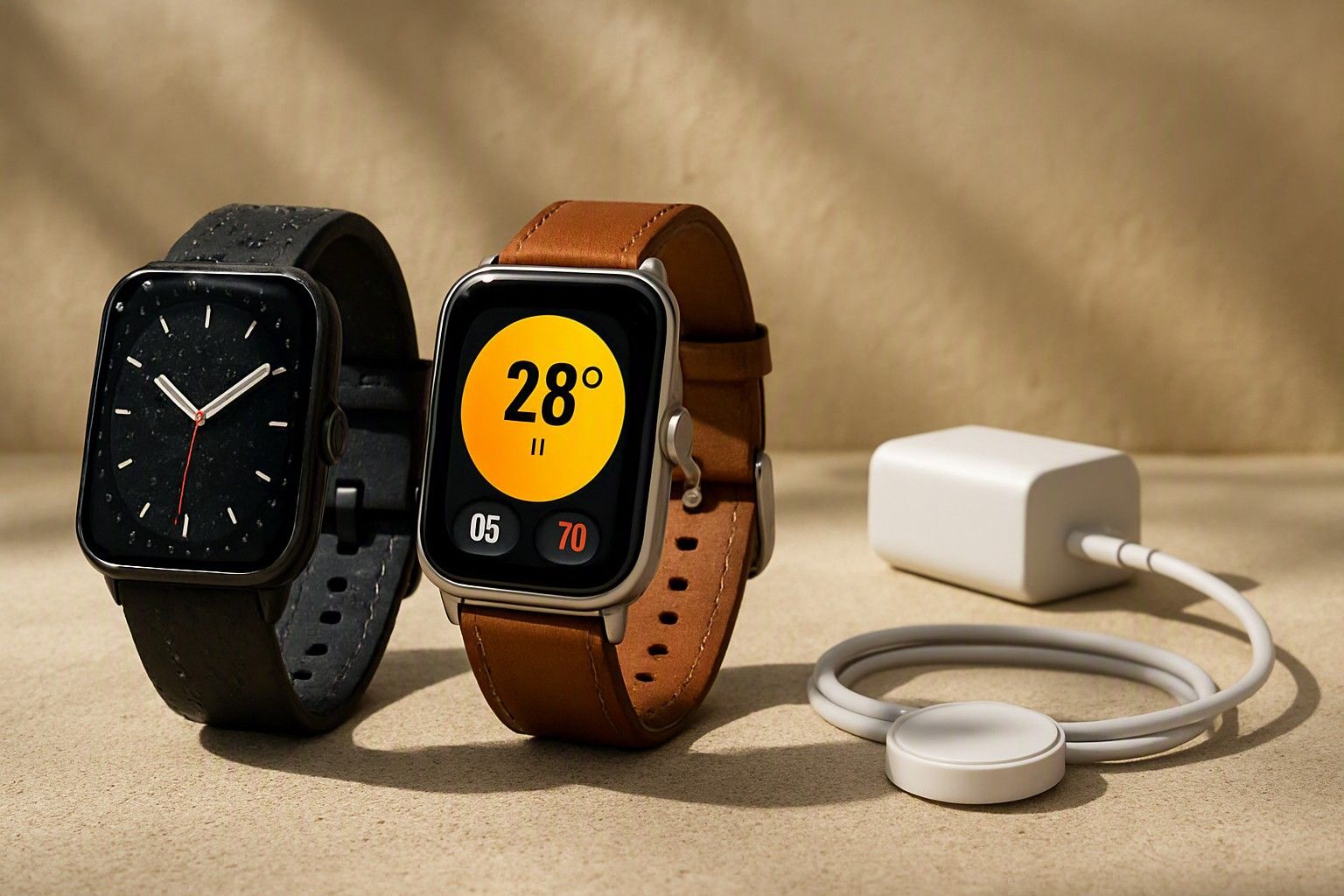
Ask most spec sheets about a smartwatch and you get brightness numbers and battery claims that mean little once you're stepping out into actual Indian sun, sweating through a commute, or leaving the watch on charge overnight in a humid room. This article looks at display, build and battery through that lens: which combinations actually survive daily Indian use, and which just look good on paper. If your real question is whether a watch will still be legible, dust-free and running by evening, read on.
Screen Visibility in Bright Indian Sunlight
Screen technology matters more in India than in cooler, less sun-drenched markets, because a watch here spends hours facing direct overhead sun on a bike ride, a walk to the market, or a construction site. Watches priced under ₹2,000 typically use basic LCD panels with fixed brightness levels, and these wash out badly under harsh sun — you end up tilting your wrist or shading the screen with your hand to read the time. Once you move into the ₹5,000 range, most watches offer AMOLED or improved LCD panels with higher peak brightness and better auto-brightness sensors, which cope far better outdoors, though not always instantly — some lag a second or two before adjusting when you step from shade into full sun.
Above ₹15,000, you generally get AMOLED displays with genuinely high peak brightness plus anti-glare or oleophobic coatings that cut reflection, making the screen readable even in the punishing midday sun common across most of the country for a large part of the year. If you spend a lot of time outdoors — deliveries, fieldwork, running, cycling — sunlight legibility should weigh as heavily as resolution or refresh rate, because a sharp screen you can't read outside is not actually useful to you.
Water, Sweat and Dust Resistance Ratings
Indian conditions throw three separate challenges at a watch's build: monsoon rain, everyday sweat from heat and humidity, and dust from roads and construction-heavy cities. These are not the same stress, and a watch rated well for one isn't automatically fine with the others. Sweat resistance is the most basic requirement and even watches near the ₹999 mark usually manage light sweat exposure without issue, since it's a lower bar than full water resistance.
Dust resistance becomes more relevant if you're often outdoors on unpaved roads or in a workshop environment — dust ingress around buttons and strap lugs is a common failure point on cheaper watches, showing up as a gritty feel in the crown or a slightly loose button after some months. Full water resistance, the kind that survives a monsoon downpour, a hand wash, or a swim, is inconsistent below ₹5,000 and becomes dependable mostly from ₹15,000 upward, where sealing around the charging pins and buttons is better engineered. A watch that's merely 'splash resistant' is a different, weaker claim than one rated for submersion, and the difference matters a lot during a proper Indian monsoon rather than an occasional light shower.
How Long Battery Really Lasts With Always-On Display
Manufacturer battery claims almost always assume the always-on display is switched off, which is not how most people actually want to use a smartwatch — glancing at your wrist without a tap defeats half the point of wearing one. Turn always-on display on, and battery life on most watches drops sharply, sometimes to less than half the quoted figure, because the screen is now drawing power continuously instead of only on wake.
Budget watches under ₹2,000 often don't offer a true always-on mode at all, which paradoxically means their battery life claims are more honest — you're comparing wake-on-tap figures against wake-on-tap figures. In the ₹5,000 and ₹15,000 ranges, always-on display becomes common, but the real-world gap between advertised and actual battery life widens here too, especially with GPS tracking or continuous heart-rate monitoring running alongside, its worth keeping in mind when figuring out how much to pay for a smartwatch that actually suits your battery expectations. If all-day battery matters more to you than a permanently visible screen, keeping always-on display switched off and relying on the wrist-raise gesture will get you far closer to the number printed on the box, and that trade-off is worth deciding on deliberately rather than discovering it after a week of disappointing battery drain in Indian humidity, which itself can marginally affect battery performance over time.
Charging Speed and Charger Types
Charging habits in India tend to follow a pattern: charge overnight or during a shower, and expect the watch to last through a full day of heat and sweat without a top-up. Most watches near ₹999 use basic magnetic pin chargers that take several hours for a full charge, which is fine if you're consistent about plugging in daily but leaves little buffer if you skip a night.
Watches in the ₹5,000 and ₹15,000 bands increasingly support faster charging, getting a usable amount of battery back in fifteen to thirty minutes rather than requiring a long uninterrupted session — useful on a morning when you're rushing out the door. It's worth noting that proprietary charging pucks and cables are the norm rather than universal USB-C docking, so losing the charger that came in the box usually means sourcing a specific replacement rather than grabbing any cable lying around the house. If you travel often or share chargers within a household, checking whether the charging pin layout is common to other watches you or family members own can save you from carrying an extra cable just for one device.
Straps and Comfort for Long Wear
A watch that scores well on display and battery still fails as a daily wearable if the strap turns uncomfortable within a few hours, which matters more in Indian heat where wrists sweat more and skin irritation from cheap materials shows up faster. Silicone straps are the most common material across almost every price point because they handle sweat and humidity well and are easy to wipe clean, but the quality of silicone varies — cheaper straps near ₹999 can feel stiff and trap moisture underneath, leading to a slightly damp, itchy feeling on long summer days.
Softer, more breathable silicone or hybrid fabric straps show up more consistently from ₹5,000 upward, and these flex better against the wrist and dry faster after a sweaty commute or workout. Strap width and buckle type also affect comfort over a full day — a strap that's slightly too wide for your wrist size can dig in, especially in humid weather when skin swells marginally. If you wear the watch to sleep for tracking purposes, comfort matters even more, since a stiff or poorly ventilated strap can genuinely disturb sleep quality, undermining the very tracking the watch is meant to provide.
Balancing Battery, Display and Durability
None of these factors — screen brightness, water resistance, always-on battery drain, charging speed, strap comfort — can be maximised at once without pushing price upward, so the real decision is which trade-off suits how you actually live and work. Someone doing fieldwork in direct sun all day should weight display brightness and dust resistance above all else, even if it means a shorter battery life between charges. Someone who forgets to charge devices regularly should prioritise raw battery endurance and fast charging over having always-on display switched on permanently.
Prices for smartwatches in India span from ₹999 to ₹65,000, with the average sitting around ₹5,000, and that spread exists precisely because these trade-offs get engineered differently at each tier rather than because higher-priced watches are simply 'better' across the board. To understand exactly how much of this durability and battery performance you gain — or give up — as you move between price bands, it helps to see how these trade-offs shift between budget and premium watches, which maps the same factors against the wider price ladder in more detail.
Whether a smartwatch holds up in Indian conditions comes down to how its screen, seals, battery and strap behave under heat, sweat and sun — not to a single headline spec. Matching those factors against your own routine, rather than chasing the biggest battery number or brightest screen in isolation, is what actually answers whether a given watch will hold up for you.
Comments
Be the first to comment.