Smartwatch vs Fitness Band: Which Should You Buy
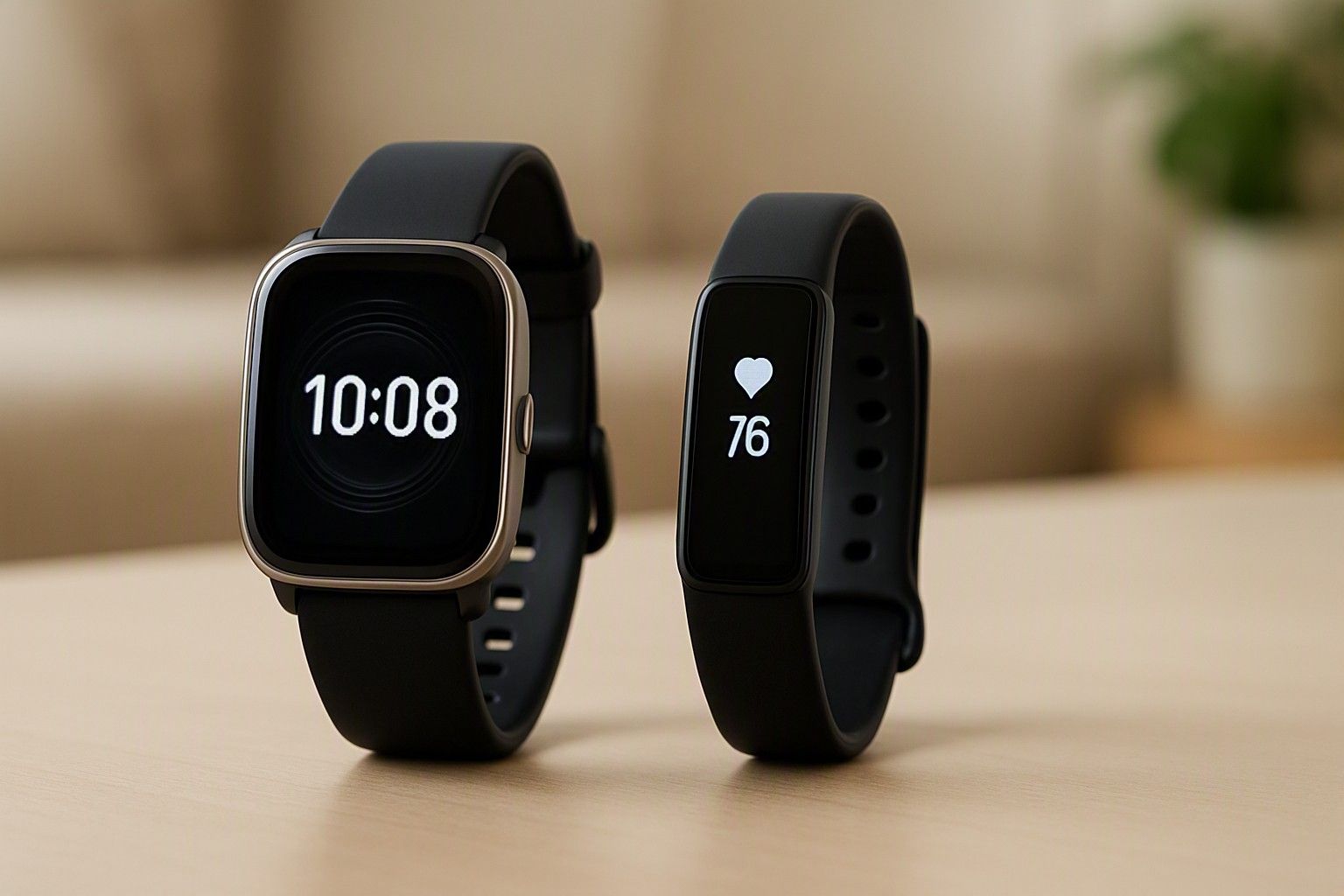
If you're standing between a smartwatch and a fitness band, the real question isn't which is "better" — it's which one matches how you actually want to use it on your wrist every day. A fitness band covers the basics for a lot less money, while a smartwatch adds a screen full of features you may or may not need. This article walks through exactly where the two overlap, where they split, and which one fits your use case and budget.
What a Fitness Band Does That a Smartwatch Also Does
Most of what people actually check day to day — step count, heart rate, sleep tracking, calorie estimates, and basic workout modes like walking, running, or cycling — is covered equally well by a fitness band and a smartwatch. Both categories now use similar sensor packages at the entry level, so a band costing a fraction of a watch's price can still log your steps and resting heart rate with comparable accuracy. If your daily habit is checking last night's sleep score or seeing how many steps you've clocked by lunchtime, a band does this job without asking you to charge, pair, or navigate anything extra.
Bands also handle notifications in a limited way — a buzz on your wrist for calls, texts, and app alerts, even if you can't read or reply to a long message comfortably. Water resistance, basic SpO2 readings, and menstrual cycle tracking have also trickled down into budget bands, so the health-tracking core that used to justify a smartwatch purchase is no longer a strong differentiator on its own. If your primary_buyer_question is really about fitness tracking and casual notifications, a band already does that job, and paying more for a smartwatch buys you very little extra value in this specific area.
Where a Smartwatch Pulls Ahead: Apps, Calls and Bigger Display
The gap opens up once you move past tracking and into using the device actively through the day. Smartwatches carry larger, sharper displays that make maps, music controls, and detailed workout stats genuinely readable, whereas most bands use narrow strips that are fine for a glance but frustrating for anything more. Bluetooth calling, now common even in mid-range smartwatches, lets you answer or dial without pulling out your phone — a feature bands almost never offer with any real usability.
Smartwatches also run actual apps: third-party watch faces, on-device payments, voice assistants, offline music storage, and in some cases GPS that doesn't depend on your phone being nearby. This matters if you're someone who runs without a phone, wants to reply to messages from your wrist, or simply prefers a device that can stand in for a phone for short stretches. None of this is about tracking fitness better — it's about the device doing more independently. If your daily routine already involves juggling calls, apps, and notifications on the go, this is the point where a fitness band's simplicity starts to feel limiting rather than efficient, and the extra spend on a smartwatch starts paying off in daily convenience rather than in fitness accuracy.
Price Difference Between Bands and Watches in India
This is where the decision often gets made in practice, because the price gap between the two categories is real. Fitness bands typically sit in the ₹2,000 range, sometimes stretching toward the lower end of ₹5,000 for models with color displays or SpO2 sensors, while smartwatches start around ₹5,000 and run well into ₹15,000 and beyond for models with calling, AMOLED displays, and built-in GPS. Across the category as a whole, prices span from ₹999 at the entry level to ₹65,000 for premium smartwatches, with the average purchase landing around ₹5,000 — a number that reflects how many buyers end up in the mid-range smartwatch bracket rather than staying at band-level pricing.
This spread isn't a reason to wait for a better deal; it's a map of what you get at each rung. Spending near ₹999 buys you band-level tracking regardless of whether the device is labelled a smartwatch, while spending toward ₹5,000 and above is where you start reliably getting calling, better displays, and app support. If you want a clearer picture of what each budget tier actually unlocks feature by feature, it helps to see how the two categories map onto different budget tiers before you commit to either one.
Battery Life: Why Bands Often Last Longer
Battery life is one of the clearest practical trade-offs between the two, and it comes down to what each device is doing with its power. A fitness band's small display — usually monochrome or a basic color panel — combined with fewer background processes means many bands comfortably run for a week or more on a single charge, some stretching to two weeks with lighter use. Smartwatches, especially ones with AMOLED always-on displays, Bluetooth calling, and app processing, tend to need a charge every one to three days, and heavier use of calling or GPS can shorten that further.
This isn't a flaw in smartwatches so much as a direct consequence of doing more. A brighter, larger screen and constant app-readiness draw more power than a band's simpler design, so the trade-off is consistent: more capability generally means more frequent charging. If you travel often, forget to charge devices regularly, or simply find charging a wearable every night annoying, this is a legitimate point in favor of a band, independent of price. It's worth weighing this against how much you'd actually use the extra features a smartwatch offers, since a feature-rich watch left uncharged on your nightstand delivers less value than a band that's reliably on your wrist tracking data every single day.
Who Should Pick a Band and Who Should Pick a Watch
If your needs are limited to step counts, heart rate, sleep tracking, and simple notification buzzes — and you'd rather not think about charging often or spending more than necessary — a fitness band answers your primary_buyer_question directly: buy the band, save the difference, and you lose almost nothing on the fitness-tracking front. This is especially true if you're buying your first wearable and aren't sure yet how much you'll actually use extra features like calling or apps.
A smartwatch makes sense once you can point to a specific reason beyond fitness tracking: you want to take calls without reaching for your phone, you rely on GPS for outdoor runs, you want a display good enough to read texts and maps comfortably, or you simply want a device that can replace some of what your phone does during the day. It also makes sense if you're the kind of user who'll actually use these features regularly rather than let them sit unused — paying more for capability you don't touch is the real waste, not the price itself. Once you know which side of this you fall on, it's worth going a step further and work through how to choose the right smartwatch for your needs so the specific model you pick actually matches the reason you upgraded in the first place.
Whichever way this lands for you, the choice isn't about which device is objectively superior — it's about whether you need what a smartwatch adds on top of what a band already does well. If your daily use stays within tracking and simple alerts, a band gets you there for less; if calls, apps, and a proper display matter to your routine, a smartwatch earns its higher price. Either way, you now have enough to decide without waiting for a better deal to show up.

Comments
Be the first to comment.