Which Smartwatch Health Sensors Are Accurate and Which Aren't
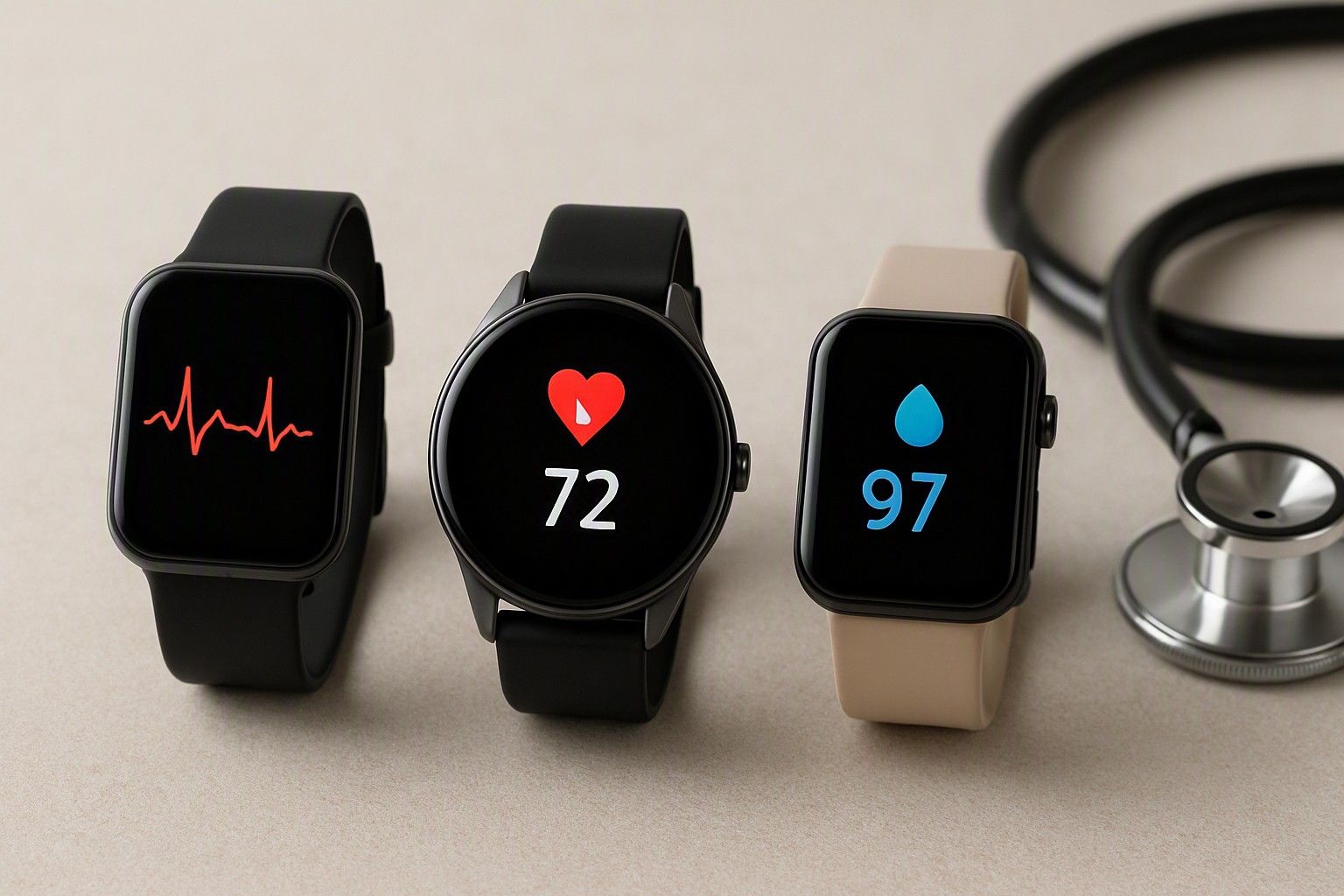
If you're buying a smartwatch mainly to keep an eye on your health, the honest answer is: some sensors are trustworthy enough to act on, and some are closer to a rough estimate dressed up as a number. This article breaks down each sensor — heart rate, SpO2, blood pressure, ECG, sleep, stress, steps and calories — so you know which readings to rely on and which to treat as a general trend rather than a medical fact. Price tier is often the first clue to how reliable those sensors are, which is worth checking through this smartwatch price guide before you judge any single reading too harshly.
Heart Rate Monitoring: How Reliable Is It Really
Heart rate is the sensor smartwatches do best, and it's the one you can lean on most confidently. Almost every watch, from an entry-level band to a premium model, uses an optical sensor (photoplethysmography, or PPG) that shines light through your skin and measures blood flow changes. During steady-state activity — sitting at your desk, walking, a light jog — this technology is genuinely accurate, usually within a few beats per minute of a chest-strap monitor or clinical device. Where it struggles is during sudden intensity changes, like sprinting or interval training, and with looser fits on wrists with tattoos, darker skin tones, or a lot of hair, all of which can scatter the light signal and throw off readings. Cheaper watches also tend to sample less frequently, so they may miss short spikes or dips that a premium model with continuous monitoring would catch. For everyday purposes — knowing your resting heart rate trend, seeing if a workout pushed you into a target zone, spotting an unusually high reading that's worth a doctor's visit — heart rate tracking on almost any smartwatch is reliable enough to trust. Just wear it snug, above the wrist bone, and don't expect second-by-second precision during erratic movement.
SpO2 and Blood Oxygen: What to Expect
SpO2 (blood oxygen saturation) is where expectations need the most adjusting. The sensor works on the same optical principle as heart rate, but oxygen readings are far more sensitive to motion, skin contact, ambient light, and even wrist temperature. In practice, this means a smartwatch's SpO2 reading is reasonably indicative when you're sitting still with the watch snug against your skin, but it's not a substitute for a clinical pulse oximeter, especially at the margins — the difference between 94% and 97% matters medically, and a wrist-based sensor may not reliably distinguish between them. Most manufacturers quietly acknowledge this by labelling SpO2 as a "wellness" feature rather than a medical one, which is the right way to think about it. Use it to notice patterns — a consistent dip during sleep, for instance, might be worth flagging to a doctor — rather than as a one-off diagnostic number. It's also worth knowing that budget watches often estimate SpO2 with less consistency than mid-range or premium ones, since accurate readings need more sensors and better signal processing working together. Treat every SpO2 reading as a rough indicator, take multiple readings if a number looks off, and never use it alone to rule in or out a health concern.
Blood Pressure and ECG Claims: Reading the Fine Print
This is the category where marketing and reality drift furthest apart, and it's worth being skeptical by default. Blood pressure on a smartwatch is almost never measured directly — most watches estimate it using heart rate and pulse wave data run through an algorithm, and that estimate typically needs to be calibrated against a real cuff-based BP monitor to mean anything at all. Even after calibration, the numbers should be treated as a trend indicator, not a replacement for an actual BP check, especially for anyone managing hypertension. ECG (electrocardiogram) features are a step more credible in principle, since some watches use actual electrical sensors rather than optical estimation, but the feature is only as useful as how consistently you can get a clean reading, and single-lead wrist ECGs are designed to flag irregular rhythms for further checking, not to diagnose anything on their own. If blood pressure or ECG monitoring is the actual reason you're buying a smartwatch, go in with the expectation that these are screening aids at best. They can nudge you to get a proper test done, but they shouldn't be the basis for any decision about medication, activity, or when to see a doctor. Read the product's fine print carefully — many brands explicitly state these features are not intended for medical diagnosis, which is the clearest signal of what they actually deliver.
Sleep and Stress Tracking Accuracy
Sleep tracking on smartwatches relies on a mix of motion sensing (accelerometer data) and heart rate variability, and it's reasonably good at the broad strokes — total sleep time, roughly when you fell asleep, and whether your night was restless or settled. Where it gets shakier is in the fine detail: distinguishing light sleep from deep sleep from REM is still an inexact science even on premium devices, because that classification is normally done with brainwave monitoring in a sleep lab, not a wrist sensor. Treat the sleep stages breakdown as a directional estimate rather than a precise log. Stress tracking is even softer — it's usually derived from heart rate variability patterns and translated into a score, and while it can reflect genuine physiological changes, it can't tell the difference between stress from a work deadline, a tough workout, or simply an uncomfortable sleeping position the night before. Neither sleep nor stress tracking should be dismissed outright, though — used consistently over weeks, they're genuinely useful for spotting patterns, like a stretch of poor sleep coinciding with a busy period. The mistake is expecting a single night's or single day's number to mean much in isolation.
Step Count and Calorie Estimates
Step counting is one of the oldest and most mature sensor functions in a smartwatch, and it shows — accuracy here is generally solid, typically within a small margin of error during normal walking. It gets less accurate with non-walking arm movement, like pushing a trolley or cooking, which can inflate counts, or when the watch is loose on the wrist. Calorie estimates are a different story and deserve more caution. These are calculated using your step count, heart rate, and personal details like age, weight, and height fed into a formula, and formulas vary in quality across brands and price points. The result is a reasonable ballpark for comparing one day against another on the same watch, but not a number precise enough to plan a calorie deficit around, especially since basal metabolic rate estimates themselves carry meaningful error. If weight management is a real goal, use the calorie figure as a relative trend — more active days versus less active ones — rather than a figure to subtract from your diet tracking app. Step counts, on the other hand, are dependable enough to set daily targets around and trust the number you see.
How Sensor Quality Scales With Price
Sensor accuracy doesn't scale perfectly with price, but there is a real relationship worth understanding before you buy. In the ₹2,000 range, you're mostly getting a single optical sensor doing heart rate and a basic accelerometer for steps — SpO2, if present at all, is often the least reliable version of the feature. Move into the ₹5,000 band and you typically see better sensor calibration, more consistent SpO2 readings, and sometimes stress tracking added in. The ₹15,000 tier and above is where you start seeing multi-sensor setups, actual electrical ECG sensors instead of purely optical estimation, and generally tighter algorithm tuning that reduces the gap between the watch's number and a clinical device's number. Given that prices in this category span from ₹999 to ₹65,000, with the average sitting around ₹5,000, it's fair to say you get meaningfully better sensor consistency as you move up, but you also hit a point of diminishing returns — a premium watch won't turn a wellness-grade SpO2 sensor into a medical device. For a fuller breakdown of exactly which components and features change at each price step, it helps to compare how sensors differ between budget and premium models.
What to Prioritise if Health Tracking Is Your Main Reason to Buy
If health tracking is the actual reason you're buying a smartwatch — not a side benefit — prioritise in this order: heart rate accuracy first, since it's the most reliable sensor and the foundation most other metrics (calories, stress, some sleep data) are built on; step tracking second, since it's mature and dependable across nearly every price point; and SpO2, BP, and ECG last, understood clearly as wellness indicators rather than diagnostic tools regardless of what the marketing copy implies. Don't pay a premium purely for a BP or ECG feature unless you've confirmed through reviews or specifications that it's calibration-based and clinically validated, because an unvalidated version adds cost without adding trustworthy data. Instead, put your budget toward sensor consistency and comfortable, snug-fitting hardware, since a well-fitted watch with a mediocre sensor often outperforms a loose-fitting watch with an advanced one. This decision doesn't sit in isolation, though — sensor accuracy is only one factor alongside battery life, display, and build quality, so it's worth folding this into the wider decision using the smartwatch buying guide before you finalise anything.
So, can you trust the heart rate, SpO2, and BP readings on a smartwatch? Heart rate and steps, yes, with confidence. SpO2, sleep, and stress, yes as trends over time, not as one-off diagnoses. Blood pressure and ECG, treat as screening nudges rather than medical results unless clearly stated otherwise. Knowing which is which lets you buy the right watch for the right reason, instead of paying for a feature you'll end up not trusting anyway.

Comments
Be the first to comment.