Smartwatch Buying Mistakes and Red Flags to Avoid
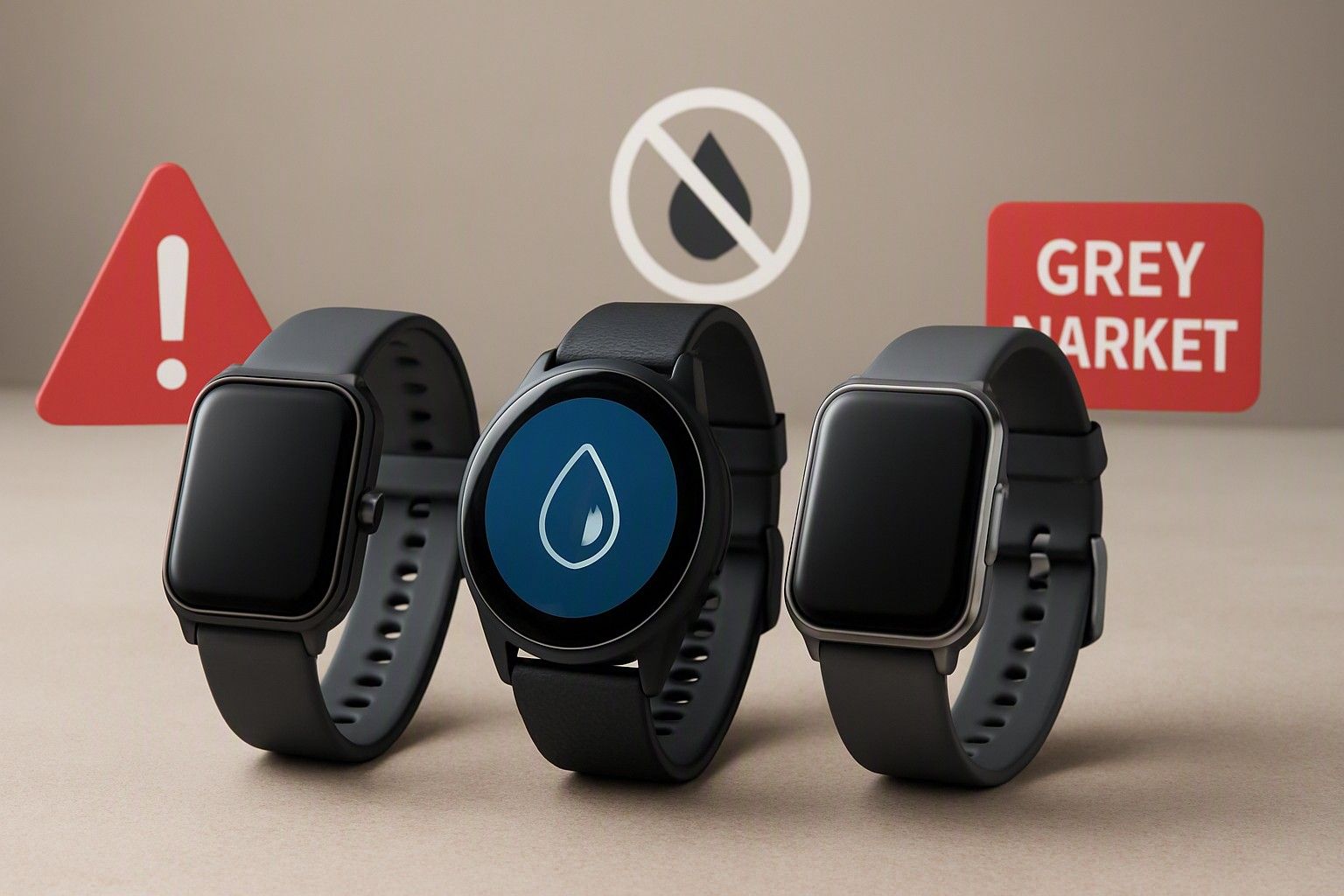
If you're about to buy a smartwatch and want to make sure you're not being sold on exaggerated claims or a unit that leaves you stranded without support, this is the checklist to run through first. Most smartwatch complaints in India trace back to a handful of avoidable traps — inflated health readings, water ratings that don't hold up, and no real service backup once something goes wrong. Go through each of these before you finalise a purchase, not after.
Overhyped Health Claims to Be Skeptical Of
A lot of listing pages lean hard on words like "medical-grade," "clinically accurate," or "doctor-recommended" next to features like SpO2, ECG-style readings, and stress tracking. Treat these claims with caution. Wrist-worn optical sensors, regardless of price, are built for trend-spotting and general wellness nudges, not diagnosis. A watch that promises pinpoint blood oxygen or blood pressure numbers without any clinical validation attached is simply making a marketing claim, not a medical one. This matters more than it sounds, because buyers sometimes make a purchase decision specifically because a listing implies medical-level precision, then feel misled when readings drift or don't match a proper device. Before you let a health feature swing your decision, it's worth taking a step back and separating what's genuinely useful day-to-day tracking from what's just copy written to sound impressive. The most reliable way to do this is to cross-check exaggerated claims against how accurate sensors actually are, so you know what heart rate, sleep, and SpO2 tracking can realistically deliver at the price you're paying, rather than what the product page wants you to assume. Buy for the tracking you'll actually use consistently, not the feature list that sounds the most advanced.
Fake or Exaggerated Water Resistance Ratings
Water resistance is one of the most casually misrepresented specs on Indian smartwatch listings. Terms like "waterproof" or "swim-ready" get used loosely, sometimes with no rating disclosed at all, and sometimes with a rating that doesn't match how the watch is actually built or sealed. A genuine rating is expressed as an IP number or an ATM figure, and it tells you something specific: whether the watch can handle sweat and a splash, a hand wash under a tap, or a proper swim. If a listing only says "water resistant" with no number attached, assume it means light splash protection at best and nothing more. This distinction matters in daily Indian conditions — monsoon commutes, washing hands, working out, or wearing it in the shower are all different stress tests, and a watch rated for light splashes will fail long before one rated for submersion. Don't rely on marketing images showing a watch underwater as proof of anything; that's a design choice for the photo, not a certification. Look for the actual rating number in the specification sheet, not the headline description, and treat any watch that avoids stating a number as one you should assume has no meaningful water protection at all.
Warranty, Service Centres and After-Sales Support in India
A smartwatch that stops charging, has a screen fault, or develops a strap or button issue is only as good as the support behind it, and this is where a lot of buyers get caught out after the fact. Before paying, check whether the brand has an active service network in India, not just a contact email or a generic "raise a ticket" page. Brands with a genuine presence usually list authorised service centres or at least a clear repair and replacement process with defined turnaround times. Read the actual warranty terms rather than assuming a standard one-year cover applies uniformly — some sellers only warranty the unit itself and exclude the strap, charger, or battery degradation, and some third-party sellers on marketplaces offer no real backing beyond what the platform's return window allows. Keep your invoice and box, since many warranty claims in India get rejected without proof of purchase from an authorised channel. If a listing is unusually vague about who honours the warranty, or the seller is not a recognised retailer or the brand's own store, that's a signal to slow down. After-sales support is invisible until you need it, and by then it's too late to shop around for a better option.
Grey Market and Imported Units: The Risks
Grey market and parallel-imported smartwatches show up often at prices that look too good to pass up, but the savings usually come with hidden costs. These units typically aren't sold through the brand's official Indian channel, which means the manufacturer's warranty frequently doesn't apply here even if the box says otherwise. Software can be another problem: some imported units ship with region-locked apps, missing local language support, or firmware that never receives updates meant for the Indian market. Spare parts and repairs become harder too, since authorised service centres in India are often instructed not to touch units that weren't sold through official channels, leaving you dependent on the same grey-market seller for any future fix. There's also no reliable way to confirm the unit hasn't been refurbished, is genuinely new, or matches the specifications advertised, since you're relying entirely on the seller's word with no manufacturer backing to fall back on. If a deal seems significantly below what similar watches are going for elsewhere, that gap is rarely free money — it's usually the warranty, the support, or the authenticity that's been quietly removed to make the number smaller.
Judging Whether the Current Price Is Actually a Good Deal
Once you've ruled out the red flags above, the last question is simply whether what you're being asked to pay is reasonable for what you're getting. Smartwatches sold in India span a wide range, from ₹999 at the very bottom to ₹65,000 at the premium end, with the overall average sitting around ₹5,000 — a spread wide enough that the same-looking feature list can be priced very differently depending on brand, build, and sensor quality. Rather than judging a price in isolation, place it against the budget tier it's actually competing in: watches under ₹2,000 are built for basic notifications and step tracking, the ₹5,000 band is where sensor quality and app support start improving noticeably, and ₹15,000 is where you should expect more dependable health tracking and sturdier build. A watch priced well above its tier's norm needs to justify that gap with something concrete — a better sensor, a documented water rating, real brand support — not just marketing language. This is also where it helps to compare the asking price against the right budget tier, so you're judging the number against what similar watches in that band actually deliver, rather than against a discount percentage that may not mean much on its own. A fair price is one that matches its tier's real capability, not one that simply looks like a bargain on the page.
A Quick Pre-Purchase Checklist
Before you complete the purchase, run through this quickly:
- Health claims: are SpO2, heart rate, or stress features backed by any real explanation, or just marketing language with no substance behind it?
- Water rating: is there an actual IP or ATM number listed, not just the word "waterproof" with nothing to back it?
- Warranty: is the seller an authorised retailer or the brand's own store, and do you know exactly what the warranty covers and excludes?
- Origin: is this a unit sold through the brand's official Indian channel, or a grey-market import with no local support?
- Price fit: does the price match what similar watches in its budget tier deliver, or is it priced above its tier without a clear reason?
- Paperwork: will you get a proper invoice and retain the box, in case you need to make a warranty claim later?
If you can answer all six confidently, you're not just buying a smartwatch — you're buying one with backup, and that's the real difference between a good purchase and a regretted one. For a broader walkthrough of how all these factors fit together, it's worth taking a moment to finish by reviewing the complete smartwatch buying guide before you check out.
Between the sensor hype, the water-rating guesswork, the warranty fine print, and the lure of a grey-market discount, the traps in smartwatch buying are all avoidable once you know where to look. Run the checklist, confirm the price fits the tier, and buy with the confidence that you're not leaving anything to chance on the things that actually go wrong after the sale.
Comments
Be the first to comment.