How Much to Spend on a Smartwatch: Price Tiers Explained
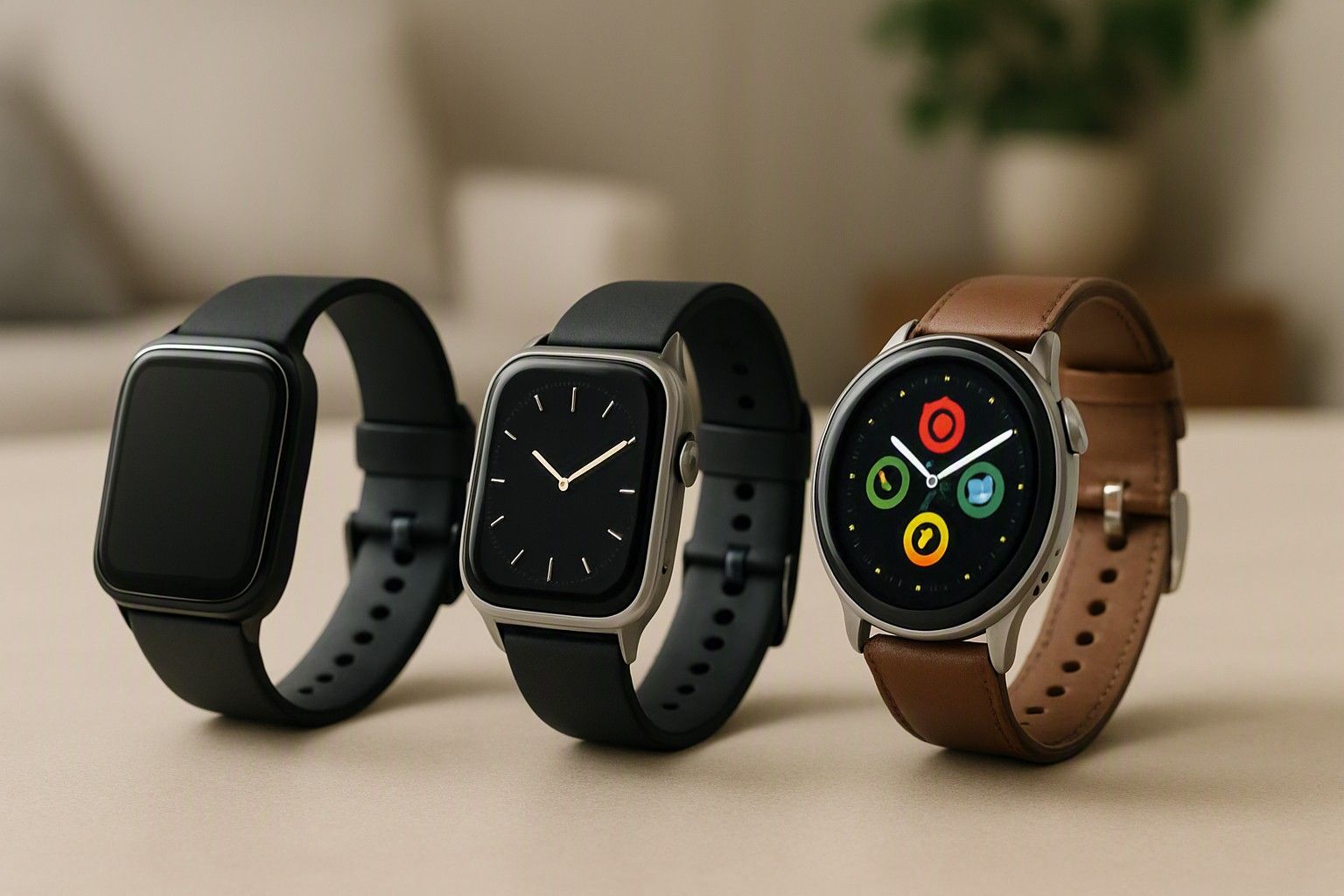
If you're staring at smartwatch listings wondering why one costs ₹999 and another costs ₹65,000, the honest answer is that price maps fairly predictably to features once you know the tiers. This guide breaks down exactly what you get at each price band in the Indian market, so you can decide how much to spend without overpaying for capability you won't use or underspending on something that will frustrate you in a month.
Entry Smartwatches Under ₹2,000
At under ₹2,000, you're buying a basic activity tracker with a watch face on top, not a smart device in any real sense. Expect a standard LCD or basic touch display, step counting, a heart rate sensor that's serviceable rather than accurate — worth checking which smartwatch health sensors are actually accurate before you assume this tier can be trusted for anything health-related — sleep tracking of variable reliability, and simple notification mirroring from your phone. Build quality is the main compromise here — straps crack, buttons feel loose, and the display often struggles in direct sunlight. Battery life tends to be a genuine strength at this tier, since there's little else drawing power, so you can often expect a week or more between charges.
This tier makes sense for a specific type of buyer: someone who wants a phone-notification-and-step-count device, a first watch for a teenager, or a backup unit. It does not make sense if you plan to rely on it for workout tracking, sleep insights you'll actually act on, or anything resembling accurate health data. The GPS, if present, is usually connected (borrowing your phone's location) rather than built-in, so don't expect standalone tracking on a run without your phone nearby. If your buying question is purely "do I need a smartwatch at all," this tier is a low-risk way to find out before committing more money.
Mid-Range Options in the ₹5,000 Band
The ₹5,000 band is where a smartwatch starts behaving like one. Displays move to AMOLED or better-quality LCD panels with noticeably improved brightness and colour, sensors get more consistent (though still not medical-grade), and you start seeing useful additions like SpO2 monitoring, stress tracking, multiple sport modes, and voice assistant integration. Build quality improves too — better strap materials, tighter tolerances, and displays that survive daily knocks without the scratches showing up in a week.
This is also where software starts to matter as much as hardware. At this price, some brands run cleaner, more responsive interfaces while others cram in features that look good on a spec sheet but lag in daily use, so it's worth spending time with the companion app before buying rather than judging on sensor list alone. Battery life dips slightly from the entry tier because the always-on display and extra sensors draw more power, but a well-made watch here should still comfortably clear four to six days.
For most Indian buyers asking how much they need to spend for a "good enough" smartwatch, this band is the realistic answer. It covers daily fitness tracking, reasonably reliable notifications, and enough polish that you won't feel like you compromised, without paying for capability — like advanced GPS chipsets or cellular connectivity — that most people never actually use.
Feature-Rich Watches in the ₹15,000 Range
Moving into the ₹15,000 range is where you're paying for precision and depth rather than basic function. Built-in GPS becomes standard rather than a bonus, meaning accurate route tracking without your phone. Health sensors — heart rate, SpO2, and in some models ECG or skin temperature — are calibrated more carefully, and while none of this replaces a medical device, the data is consistent enough to actually track trends over weeks. Displays are almost always AMOLED, often always-on, and build materials shift to metal cases and better glass that resist scratches and daily wear far longer than lower tiers.
This is also the range where software ecosystems start to differentiate meaningfully. You'll find more third-party app support, better integration with phone operating systems, more detailed workout analytics, and in some cases cellular connectivity for calls without a paired phone. Battery life is the one place this tier sometimes trades backward — always-on displays and constant GPS logging can pull battery life down to two or three days on heavier use, though power-saving modes usually recover most of that.
Spending in this band only makes sense if you'll actually use what it adds. If you run seriously, swim with GPS tracking, or want a device that can function more independently of your phone, the jump from ₹5,000 is justified. If your actual use case is steps, sleep, and notifications, you're paying for headroom you won't touch.
What the ₹5,000 Average Price Actually Gets You
The ₹5,000 average price across the Indian smartwatch market sits solidly inside the mid-range band, and that's not a coincidence — it reflects where most buyers actually land once they weigh cost against features rather than buying the cheapest or most expensive option available. At this average price, you're typically getting an AMOLED or high-quality display, SpO2 and heart rate monitoring that's consistent enough to trust for trends, several days of battery life, and a build that holds up to daily wear without feeling fragile.
What the average price does not guarantee is built-in GPS, cellular connectivity, or clinical-grade health sensors — those still sit in the ₹15,000 range and above. So if you see a watch priced right around ₹5,000, treat that as a signal it's competing in the mainstream mid-range field, not the premium one, and check the spec sheet against what you actually need rather than assuming average price means average-plus features. Knowing this number matters less as a target to hit and more as a reference point — it tells you whether a specific listing is priced in line with what the broader market considers a well-equipped mid-tier watch, or whether it's asking a premium price for mid-tier hardware.
Reading Price History to Judge if Today's Price Is Fair
Once you know which tier fits your needs, the next question is whether the specific price you're looking at is actually reasonable for that tier, and price history is the most reliable way to answer that. A smartwatch listed at a price near the top of its tier's typical range isn't necessarily overpriced if that's where it has consistently sat for months; equally, a steep one-time discount doesn't automatically mean you're getting a deal if the listed price was inflated beforehand. The Indian market for smartwatches sees frequent short-term price movement around sale events, which makes a single snapshot price a poor basis for a buying decision.
Rather than trying to time a purchase around an expected drop, it's more useful to look at how a specific model or price point has actually moved across the ₹999 to ₹65,000 range the category spans, and judge today's price against that pattern. If a watch is currently priced at or below where it has typically traded, that's a reasonable basis to buy now with confidence, not a reason to wait for something better that may not come. Before finalising anything, it's worth taking the time to check the price history before deciding whether the current price is good, since that's where the specific red flags — like fake discounts and pre-inflated MRPs — are laid out in detail. Buying decisions get easier once you're comparing against real historical data instead of a single number on a listing page.
Matching Your Budget to the Right Features
Budget tells you the ceiling on what's realistically available to you, but it doesn't automatically tell you which features inside that ceiling actually matter for how you'll use the watch. Someone spending in the ₹5,000 band for daily notifications and step tracking needs a different feature checklist than someone spending the same amount who wants to train seriously, even though they're shopping the same price tier. The tiers in this guide tell you what's technically available at each price point; matching that against your actual use case — fitness intensity, how much you rely on standalone GPS, whether battery life or display quality matters more to your daily habit — is a separate step.
That's worth doing properly rather than guessing, because the gap between a watch that fits your needs and one that merely fits your budget is usually where buyer regret comes from. It's worth taking the time to line your budget up against everything else in the buying guide before finalising a purchase, since budget is only one filter among several that determine whether a specific watch is the right one for you. Price tells you what you can afford; the fuller guide tells you what you should actually prioritise once affordability is settled.
You now have a clear map of what ₹999 to ₹65,000 actually buys at each stop along the way, and where the ₹5,000 average price sits inside that range. The right amount to spend isn't the highest tier you can afford — it's the tier that matches what you'll actually use daily, checked against real price history rather than a single listing price.

Comments
Be the first to comment.