Choosing a Video Doorbell for Apartments vs Independent Houses
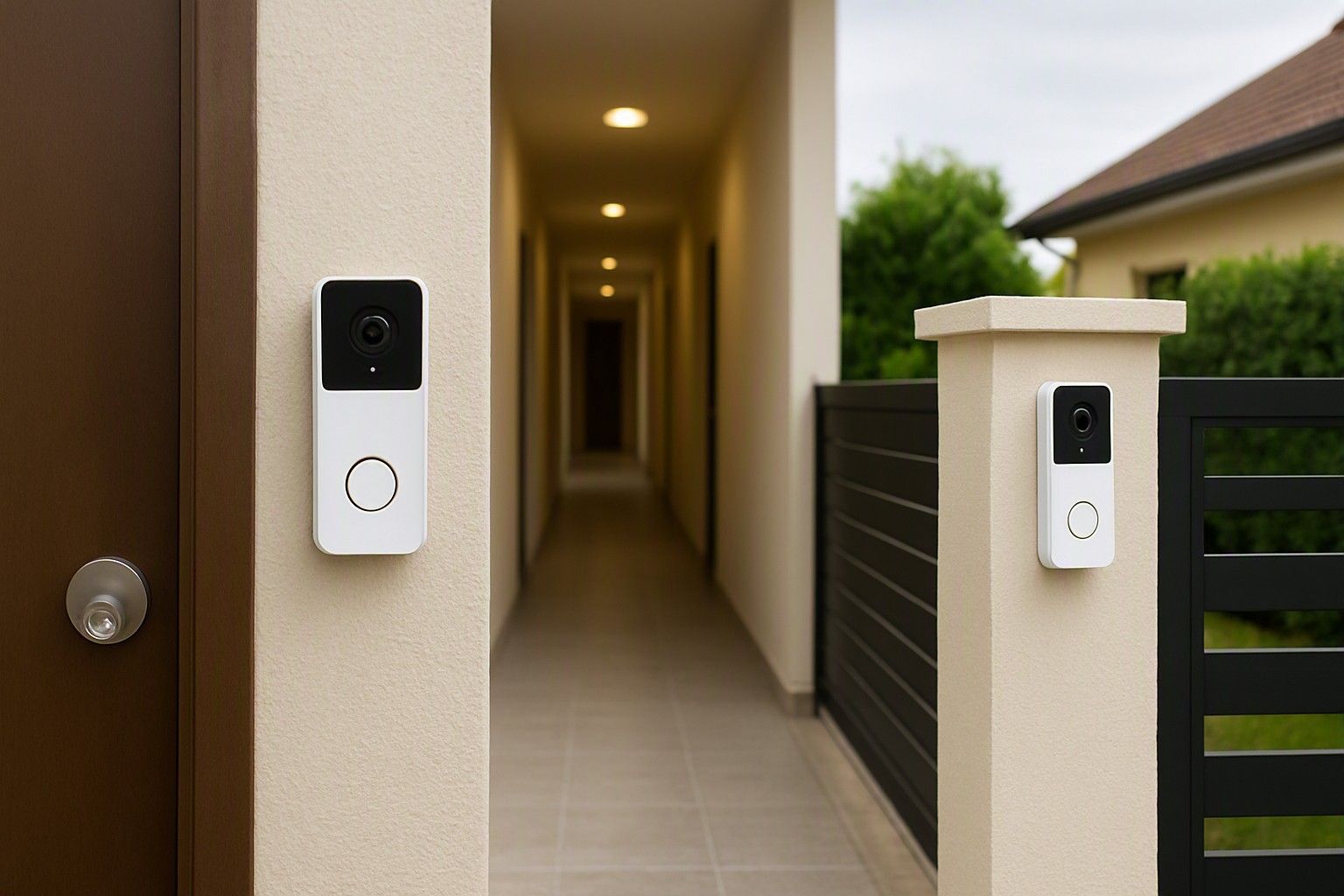
Whether a video doorbell actually works for you depends less on the device and more on where you live — a gated society flat, a standalone house with a boundary wall, or a rented place you can't drill into. This guide walks through each housing situation common in Indian cities so you know exactly what setup fits your door, your gate, and your Wi-Fi before you spend anywhere from ₹2,000 to ₹15,000.
Flats in Gated Societies: Corridor Doors and Society Permissions
If you live in a gated apartment complex, your video doorbell decision starts before you even pick a device — it starts with your society's rules. Most Resident Welfare Associations have restrictions on drilling into common-area walls, corridor doors, or shared frames, since these technically don't belong to any one flat owner. Before buying, check your society bylaws or ask the management committee whether exterior modifications to your door frame are allowed, and whether a battery-powered unit stuck with adhesive mounts is treated differently from a wired one that needs cabling through the wall.
Because corridors already have a security guard at the main gate and often CCTV covering common areas, a doorbell here is mainly for identifying who's actually at your door — delivery staff, domestic help, or visitors — rather than perimeter security. This makes a simple wireless, battery-operated model in the ₹5,000 or ₹8,000 price range of video doorbell perfectly adequate for most flats, since you're not trying to cover a large open area. Corridor doors also tend to be close together, so pick a doorbell with adjustable motion sensitivity or a narrower detection angle — otherwise you'll get constant false alerts every time a neighbour walks past. If your society allows only non-invasive installation, look specifically for models designed to sit on the existing door viewer hole or stick-on brackets rather than ones that assume a full wired setup.
Independent Houses: Main Gate vs Front Door Placement
Independent houses come with a decision apartments don't: do you monitor the main gate, the front door, or both? A typical Indian independent house has a boundary wall with a gate some distance from the actual front door, and a lot of activity — the milkman, courier drop-offs, guests waiting to be let in — happens at that outer gate, not at the door itself. If your gate and door are more than a few metres apart, a single doorbell at the front door alone will miss most of what you actually want to know about.
The practical approach is to think about which point matters more for your household. If your gate is kept locked and visitors must be let in personally, a doorbell at the gate lets you screen people before they even reach your porch, which matters more if you have elderly family members home alone through the day. If the gate is usually open and only the front door is secured, placing the doorbell there is enough. Independent houses also deal with direct sun, rain, and dust exposure that flats in corridors don't, so weather resistance matters more here — check this alongside the placement decision rather than treating it separately. Many households in independent houses eventually end up wanting coverage at both points, which is a call worth making at purchase time rather than adding a second unit later once you've already set expectations with the first.
Rented Homes: Non-Damaging, Removable Options
Renters face a different constraint entirely — not permissions, but permanence. Landlords in India are typically unwilling to allow drilling into door frames or running wires through rented walls, and most rental agreements deduct from the security deposit for any structural changes, visible or not. This rules out fully wired doorbells for most tenants, regardless of how good the video quality or power reliability might be.
The workaround is a battery-powered doorbell that mounts with strong adhesive tape or a removable bracket, leaving no drill marks when you move out. These are widely available in the ₹5,000 band and cover the basic need — seeing who's at the door and getting a notification — without any commitment to the property. A few things matter more for renters specifically: check that the mounting hardware is genuinely removable without paint damage, confirm the battery life is long enough that you're not constantly climbing up to recharge it, and avoid any setup that requires a dedicated wiring point since you won't have one. It's also worth choosing a doorbell you can genuinely carry to your next rental, since the whole value of a non-damaging setup is that it moves with you, not with the flat.
Distance From Your Router and Signal Reach
Every video doorbell, regardless of housing type, depends on Wi-Fi reaching the door reliably — and this is where flats and independent houses fail for different reasons. In apartments, the doorbell is usually close to the router since the whole flat is compact, but concrete corridor walls and metal door frames can still weaken the signal more than you'd expect over a short distance. In independent houses, the problem is usually distance itself — a gate at the boundary wall can be twenty or thirty metres from where your router sits inside the house, well beyond what most home Wi-Fi setups handle without a repeater.
Before you commit to a placement or a device, it's worth taking a step back and checking whether your Wi-Fi will reach the door, because a doorbell with weak signal will drop calls, delay notifications, and eventually stop recording clips reliably — problems that look like a bad product but are actually a bad signal path. This matters more for independent houses monitoring a gate than for flats monitoring a nearby corridor door, but it's worth checking in both cases before you finalise where the unit goes, since moving a router or adding a mesh extender is a cheaper fix than returning a doorbell that "doesn't work."
Covering Wider Gates and Multiple Entry Points
Wide gates on independent houses — the kind built for a car to drive through — create a coverage problem a single narrow-angle doorbell wasn't designed for. If your gate spans several metres, a doorbell mounted at one end will clearly see whoever rings it but may miss activity at the far end of the gate or along the boundary wall. Households with both a pedestrian gate and a separate vehicle gate face this doubly, since one camera simply cannot watch both unless it's mounted at a point with an unusually wide field of view.
The realistic options are to choose a single doorbell with the widest horizontal field of view you can find at your budget, positioned at the point most people actually use to enter, or to accept that full coverage means a second unit at the other entry point. This is less about buying a fancier device and more about being honest about your property's layout: a ₹6,500 doorbell covering the wrong fifteen degrees of your gate isn't doing its job, while a well-placed unit in the ₹8,000 range covering the actual walking path in and out of your property is doing exactly what it needs to. Flats rarely face this problem since a single corridor door has one obvious approach, which is one more reason gate coverage is a distinctly independent-house consideration.
Picking the Right Type for Your Home
By now the pattern should be clear: apartments generally lean toward simple, non-invasive, battery-powered doorbells because society rules and compact layouts don't demand more, while independent houses often need to think harder about placement, weatherproofing, and signal reach because they're covering a larger and more exposed area. Rented homes, regardless of whether they're a flat or a house, add the extra constraint of needing everything removable and undamaging to the property.
What ties all of this together is the same underlying decision — wired versus wireless — playing out differently depending on your walls, your permissions, and your distance from a power point. A flat owner with permission to drill might still prefer wireless for simplicity, while an independent house owner monitoring a distant gate might find wired power more reliable than depending on battery life alone. Rather than repeating that whole trade-off here, it's worth going back to revisit the wired versus wireless decision for your layout once you know which housing scenario above matches your situation, since that's where the actual power and installation trade-offs are laid out in full.
However your home is set up — a corridor flat, a house with a gate down the driveway, or a rented place you'll leave in a year — the setup that works isn't about finding the most capable doorbell on the market, it's about matching the device to your walls, your permissions, and your distance from the router. Once you've placed your situation in the scenarios above, you already know what kind of doorbell to look for and roughly what it should cost you.
Comments
Be the first to comment.