What Is a Video Doorbell and Do You Really Need One?
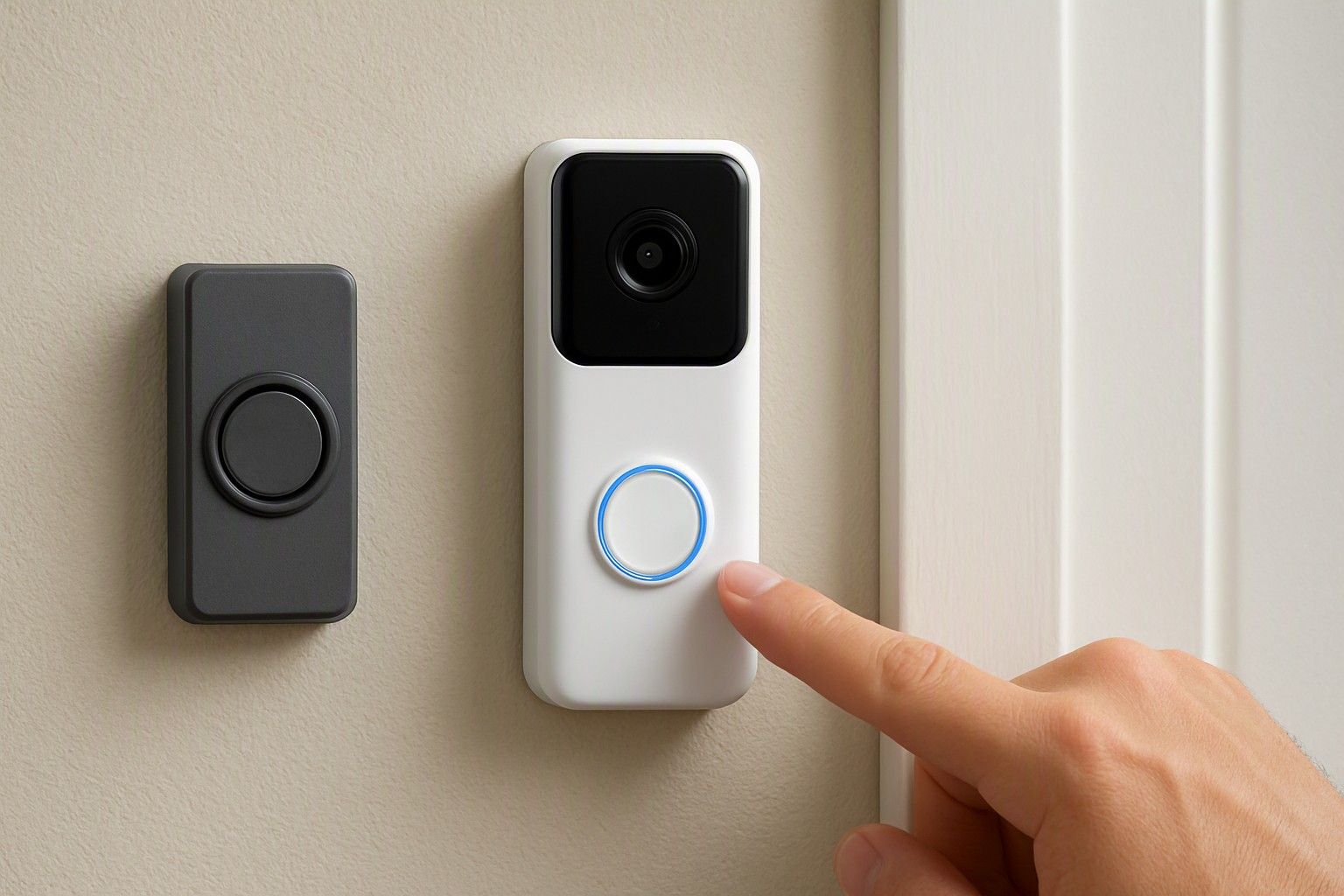
If you've seen a video doorbell at a neighbour's flat or on a shopping app and wondered whether it's just a fancier peephole, this is worth reading before you decide. A video doorbell is a small camera-and-speaker unit that replaces or sits alongside your existing doorbell, letting you see and speak to whoever's at the door from your phone, whether you're in the next room or at work. Whether you actually need one depends on how your household deals with visitors, deliveries and time away from home — and that's exactly what the rest of this article works through.
How a Video Doorbell Works: Camera, App and Two-Way Talk
At its core, a video doorbell is three things bolted together: a small camera pointed at your doorstep, a microphone-and-speaker pair, and a Wi-Fi radio that connects the unit to an app on your phone. When someone presses the button or walks into the camera's view, the doorbell sends a notification to your phone through the app, and you can open a live video feed to see who's there in real time. How reliably video doorbell connection works during power cuts or with weak Wi-Fi is another practical consideration, especially in Indian homes. Most units also let you talk back through the app using two-way audio, so you can tell a delivery person to leave the parcel at the door, or ask a visitor to wait, without ever opening the door or even being home.
Behind this, the doorbell is either hardwired into your existing doorbell wiring and transformer, or it runs on a rechargeable battery that you top up every few weeks depending on how much activity it records. Video is usually stored either on a memory card inside the unit or on a cloud subscription tied to the app, and most models will keep a short clip of each visit so you can check it later even if you missed the live notification. Motion detection is what triggers most of this — the camera doesn't record constantly, it wakes up when it senses movement or a button press, which is also how it manages battery life on wireless models.
What It Does That a Normal Doorbell or Peephole Cannot
A traditional doorbell or a peephole only works when someone is standing right behind the door, physically checking. It tells you that someone rang, not who they are, and it does nothing at all if you're not home. A video doorbell removes that dependency on being physically present — you see the visitor's face, and often a wider view of the doorstep, from wherever you are, on the same phone you already carry around.
The two-way talk is the other real difference. A peephole is one-way and silent; you can look, but you can't respond unless you open the door. With a video doorbell, you can have an actual back-and-forth with the person outside before deciding whether to unlock anything, which matters more than it sounds for households with elderly parents or children home alone after school. Recorded clips add a second layer normal doorbells simply don't have — if a visitor showed up while you were out, or a parcel went missing from your doorstep, you have footage instead of guesswork. That combination of remote visibility, remote conversation and a recorded record is the actual value a video doorbell adds over what a bell and a peephole have done for decades in Indian homes.
Real Situations Where It Helps: Deliveries, Maids, Visitors When You're Away
The clearest use case is deliveries. With online shopping and food orders now a daily habit for a lot of Indian households, a video doorbell lets you confirm a delivery arrived, guide the person to leave it at the door, or catch it on video if something goes missing afterward — useful evidence when a courier claims a parcel was handed over and it wasn't found.
Domestic help is another common scenario. Many homes have a maid, cook or driver who arrives at a fixed time whether or not someone is inside, and a video doorbell lets you unlock a smart lock remotely or simply confirm it's them before anyone opens the door, particularly useful if you're the only one home and want to see who's outside before answering.
The away-from-home case covers a lot of ground: elderly parents living alone who don't always hear the bell clearly, families who travel and want to see if anyone's shown up at the house, or simply checking who rang while you were in the shower or on a work call. In gated communities and apartment blocks, it also helps confirm a guard or society staff member is who they say they are before you buzz them in. None of these are dramatic security scenarios — they're the ordinary daily friction of not knowing who's at the door, which is exactly what the device is built to remove.
When You Might Not Need One
If you live in a flat with a security guard at the gate who already screens visitors, or in a building where deliveries and staff are checked before they reach your door, a lot of the value a video doorbell adds gets absorbed by that existing layer already. Similarly, if someone is reliably home most of the day, the core problem it solves — not knowing who's outside when you can't check yourself — simply doesn't come up often enough to matter.
It's also worth being honest about upkeep. Wireless models need charging, wired models need existing doorbell wiring or a compatible transformer, and either way you're relying on your home Wi-Fi holding up at the front door, which isn't guaranteed in every house depending on router placement and wall thickness. If cloud storage is part of the plan you choose, there may be an ongoing cost beyond the device itself. None of this makes a video doorbell a bad buy — it just means the reason to get one should be a real gap in your day-to-day routine, not the idea that any smart-home device is automatically worth adding.
Wired vs Battery Models at a Glance
Once you've decided a video doorbell fits your routine, the next real choice is power: wired or battery. Wired models draw current from your existing doorbell transformer, which means the camera is always on and never needs charging, but it also means installation depends on your home already having doorbell wiring in a usable state — not every Indian home does, especially older constructions or flats where the original bell was a basic buzzer with no separate low-voltage line. Battery models skip that requirement entirely, running on an internal battery you recharge every few weeks, which makes them far easier to install on any door but adds a small recurring task and, in some designs, slightly less consistent always-on recording since the camera manages power more conservatively.
Across the ₹₹2,000 to ₹₹15,000 range this category spans, both power types show up at every budget tier, so price alone won't tell you which to pick — the deciding factor is really your door and your patience for maintenance. If you want the fuller trade-off, including how each affects video quality, installation cost and long-term reliability, it's worth taking the time to look closer at the wired versus battery choice before you shortlist any specific model.
What to Learn Next Before You Buy
By this point you should know whether a video doorbell solves an actual problem in your home, and roughly which power type suits your door. What's left is the practical side: what features matter at what price, how much storage or subscription cost to budget for, and what to check before installation in an Indian flat or independent house. Prices in this category run from around ₹₹2,000 at the low end to ₹₹15,000 for feature-heavy models, averaging near ₹₹6,500, with clear tiers at under ₹₹5,000, ₹₹8,000, and ₹₹12,000 that roughly map to how much you actually need versus what's nice to have.
Rather than repeat that groundwork here, it's more useful to move on to the full buying checklist for Indian homes, which walks through exactly how to match a model to your budget tier, your door type, and the specific reasons you've identified above for wanting one in the first place.
You now have a straight answer to whether a video doorbell earns its place on your door: it's genuinely useful if deliveries, domestic help or time away from home create regular "who's that" moments you can't otherwise resolve, and less necessary if a guard, a housemate, or your own schedule already covers that gap. Either way, the decision doesn't hinge on waiting for a better price — the range from ₹₹2,000 to ₹₹15,000 has stayed fairly consistent, so it's really about matching the right model to your routine when you're ready.

Comments
Be the first to comment.