Wired vs Wireless Video Doorbell: Which One Should You Buy?
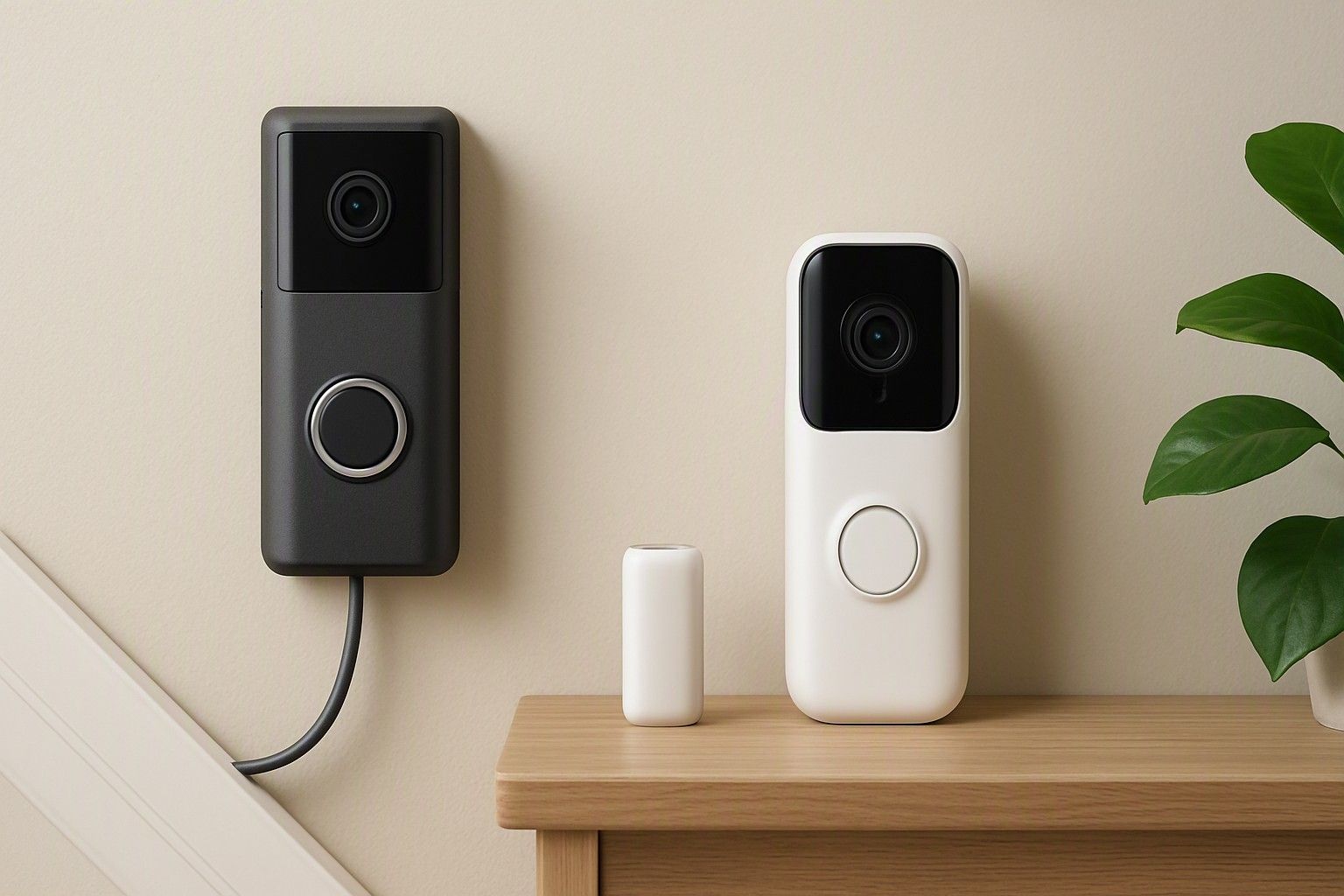
If you're trying to decide between a wired and a wireless (battery) video doorbell, the honest answer depends less on which is "better" and more on what your door, your building, and your patience for recharging can actually support. Most Indian homes weren't built with a low-voltage doorbell circuit in mind, which tilts this decision more than people expect before they start shopping. Read through the trade-offs below and you'll know which type suits your specific setup, not just which one sounds more advanced.
The Core Difference: Continuous Power vs Rechargeable Battery
A wired video doorbell draws power continuously from a low-voltage cable, usually the same wiring that once ran a traditional bell or chime transformer. Because it's always powered, it can keep its camera, motion sensor, and Wi-Fi radio active around the clock without worrying about drain, which generally means faster motion detection and a live feed that responds the instant someone presses the button. A wireless doorbell, on the other hand, runs on an internal rechargeable battery pack, sometimes topped up by a small solar panel attachment. It doesn't need any existing wiring, which is exactly why it's become the default choice for most Indian buyers, but it has to manage power carefully, dialing back on constant monitoring so the battery lasts weeks instead of days. Neither approach is a compromise version of the other; they're built around different assumptions about what power source you can offer. If you already have a functioning low-voltage circuit at your door, wired hardware tends to reward you with snappier performance for a similar price. If you don't, a battery unit gives you a working doorbell without any electrical work, at a cost of periodic recharging. The rest of your decision really comes down to which of those two starting conditions matches your home.
Do Indian Homes Have the Wiring Wired Doorbells Need?
This is the question that quietly decides most of this purchase. Wired video doorbells need a doorbell-specific low-voltage circuit, typically 8-24V AC, coming from a transformer somewhere inside the house. This kind of wiring is standard in a lot of Western housing stock but is genuinely uncommon in Indian residential construction, whether it's an independent house or an apartment. Most Indian homes that have a doorbell at all use a simple mains-connected buzzer or chime with no low-voltage doorbell line running to the entrance, which means there's nothing for a wired video doorbell to connect to without hiring an electrician to run new wiring and install a transformer. That's an added cost and an added hassle most buyers don't budget for when they're comparing a ₹5,000 device against a ₹8,000 one online. Older independent houses occasionally have leftover wiring from a previous bell installation, and it's worth checking behind your existing doorbell plate before assuming you have nothing to work with. But if you're in a newer apartment, a rented flat, or a house where the doorbell is just a mains switch and a buzzer, you almost certainly don't have what a wired unit needs, and that alone should end the debate in favour of a battery-powered model for most Indian buyers.
Battery Life and How Often You'll Need to Recharge
Battery life on a wireless video doorbell isn't a fixed number; it moves depending on how often your door gets visitors, how sensitive the motion detection is set, and how strong your Wi-Fi signal is at the door, since a weak connection forces the device to work harder to transmit. A quieter home with a handful of daily notifications can stretch a full charge over several weeks, while a busy household or a doorbell facing a public corridor with constant passing motion will drain the same battery noticeably faster. Recharging usually means unclipping the unit from its mount and charging it indoors, which leaves your door without a working doorbell for the hours it takes to top up, unless you buy a spare battery to swap in immediately. Some models support a small solar panel accessory that trickle-charges the unit in sunlight, which can meaningfully stretch the interval between manual charges if your doorbell gets direct sun for part of the day. None of this is a dealbreaker, but it is a maintenance habit a wired doorbell simply doesn't ask of you. If the idea of periodically pulling your doorbell off the wall to charge it sounds like a chore you'll forget, that's a real point in favour of wired, wiring permitting; if it sounds manageable, battery life stops being a concern and becomes routine.
Which Suits Rented Flats vs Owned Homes
Tenancy status changes this decision almost as much as wiring does. In a rented flat, drilling into a wall, running new low-voltage cable, or modifying the existing doorbell circuit is rarely something a landlord will welcome, and even where it's allowed, it's not an investment most tenants want to make in a home they'll eventually leave. A battery-powered doorbell solves this cleanly since it typically mounts with screws into the existing frame or with adhesive, and it comes off just as easily when you move, taking your investment with you. Owned homes remove that constraint. If you're in a house you plan to stay in long-term, running a dedicated low-voltage line to support a wired doorbell is a one-time task an electrician can usually complete in an afternoon, and it removes battery maintenance from your life permanently. The calculation isn't only about whether wiring is technically possible; it's about whether it's worth doing for where you live. This split matters enough that it's worth reading in detail, and you can see how this plays out for apartments versus independent houses to match your specific living situation against the right doorbell type before you buy.
Reliability During Power Cuts
Power cuts expose a real difference between the two types, though not always in the direction people assume. A wired doorbell that draws directly from your home's mains-fed transformer will typically go down the moment the power does, unless it has its own backup battery built in, since it has no independent power source of its own. A battery-powered doorbell keeps running through a power cut because its battery doesn't care whether the building has electricity, though it still depends on your home Wi-Fi router staying powered and your internet connection staying up, and most routers aren't on backup power either. So in practice, a power cut often knocks out the doorbell's ability to send you a live notification either way, just for slightly different reasons: one loses power at the device, the other loses the network path to your phone. If your area sees frequent outages, this is worth thinking through properly rather than assuming either type is automatically safer, and you can understand how each type behaves during power cuts to see what backup options actually help in each case.
Which One Is Right for You
For most Indian buyers, the decision resolves quickly once you're honest about your wiring situation: no existing low-voltage circuit and no appetite for an electrician means a battery-powered doorbell, which is why they dominate the market across the ₹5,000, ₹8,000, and ₹12,000 price bands, with the overall market averaging around ₹6,500 and ranging from ₹2,000 up to ₹15,000 depending on features. If you're renting, wireless is almost always the practical answer regardless of budget, since it protects your investment when you move. If you own your home, have wiring already in place or are willing to add it, and want a doorbell that never needs charging and responds a touch faster, wired is worth the extra effort. There's no universal winner here, only a better fit for your specific door, building, and living arrangement. Before you commit to either, it's worth running your choice against the wider set of decisions, like resolution, storage, and installation type, so you can cross-check this against the full buying checklist and be confident you haven't missed something that matters more than the power source itself.
Whichever way you lean, the choice between wired and wireless isn't about which technology is newer, it's about whether your home already has the wiring to support one and whether you're willing to add it if it doesn't. Answer that honestly and the rest of the decision, battery habits, rental constraints, power-cut behaviour, falls into place on its own.

Comments
Be the first to comment.