Video Doorbell Storage and Subscription Costs Explained
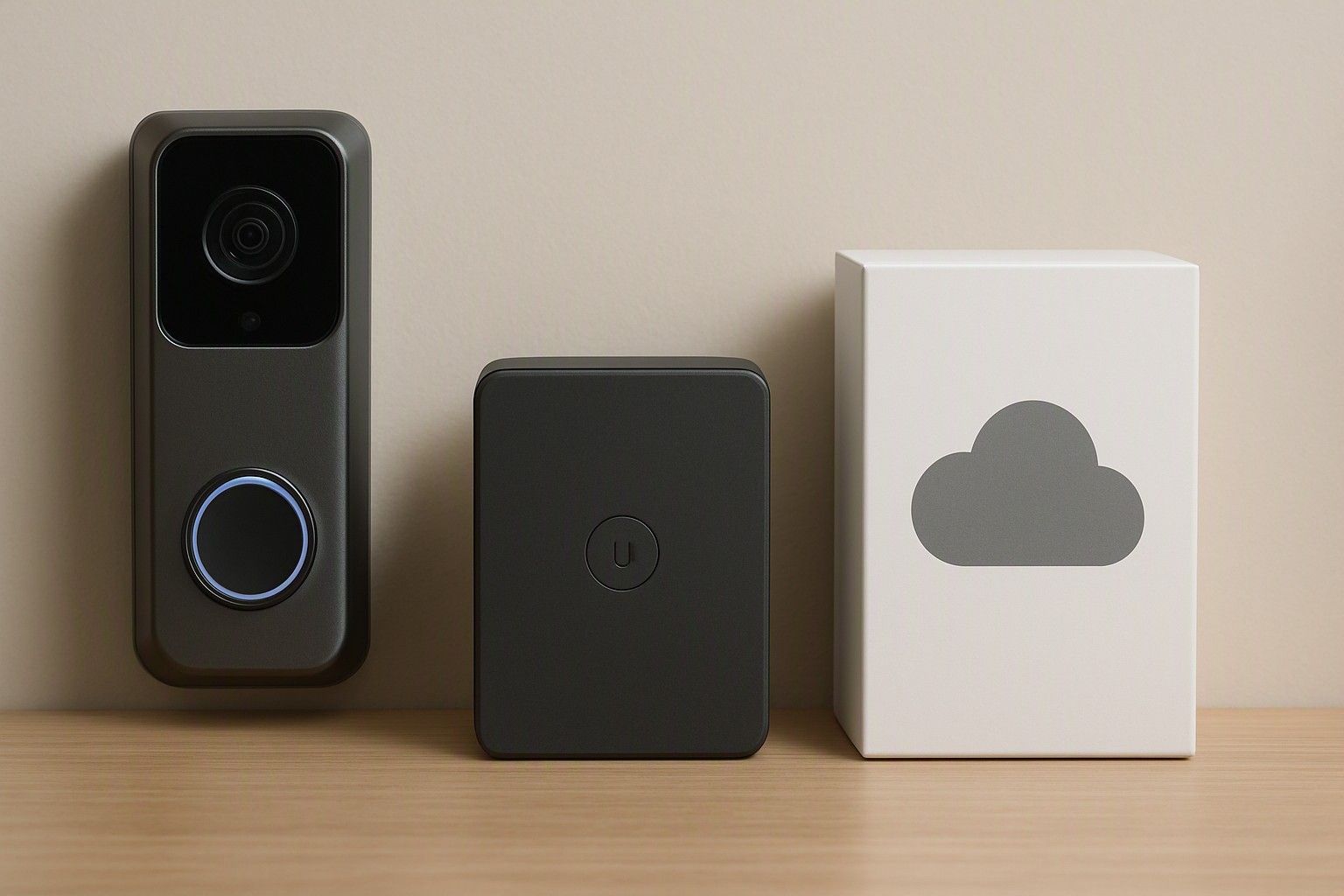
If you're wondering whether a video doorbell locks you into a monthly bill forever, the honest answer is: it depends entirely on which storage model you pick, not on the bell itself. Some best brands of video doorbell hand you a free rolling clip history, others show a live feed only and charge for anything recorded, and a few skip the cloud entirely with local storage. This article walks through exactly where the ongoing cost comes from and how to avoid it if a subscription isn't something you want to carry for years.
Cloud Storage vs Local Storage (SD Card / Hub)
Every video doorbell has to put recorded footage somewhere, and that single design decision is what determines whether you'll ever see a subscription screen. Cloud storage means every clip your doorbell records gets uploaded over your home Wi-Fi to the manufacturer's servers, and you access it later through the app from anywhere. This is convenient — footage survives even if someone steals or damages the doorbell itself — but it almost always comes bundled with a paid plan once you go past a very short free history, and it depends on your internet staying up.
Local storage instead saves footage onto a microSD card inside the doorbell, or onto a separate hub/NVR box connected to your router. There's no recurring bill tied to storage capacity: you buy the card once, and it just overwrites older footage in a loop once it fills up, similar to how a dashcam works. The trade-off is that clips only live on that physical media, so if the doorbell unit itself is stolen off your door, the footage usually goes with it unless a hub is stored inside the house. Local storage also depends on the card's health — cheap cards degrade with constant write cycles over a couple of years and need replacing.
For Indian buyers specifically, local storage matters more in areas with unreliable broadband, since a spotty connection can mean cloud uploads fail right when you needed the recording most. Neither approach is wrong; the right call depends on whether you value off-site backup or a one-time cost more.
What Free Plans Include and What They Hold Back
Almost every doorbell brand offers something for free, but the free tier is deliberately built to feel useful while leaving out the one feature most people actually want. Typically, a free plan gives you live view on demand and a real-time motion alert on your phone — so you can see who's at the door right now. What it usually withholds is recorded clip playback: you either get no history at all, or a very short window of a few hours to a couple of days before clips are auto-deleted. Before installing one, it's also worth understanding video doorbell installation, privacy rules and common mistakes that can affect how your doorbell records and captures visitors.
Some free plans also cap how many events get recorded per day, or reduce clip length to just a few seconds, which is often too short to capture a full delivery or a visitor walking up and leaving. Person detection versus generic motion detection is another common holdback — free tiers tend to flag every moving leaf and car, while smarter filtering that only alerts you to actual people sits behind the paid plan.
The practical effect is that a free plan works fine if you only care about answering the door in real time, but it fails the moment you need to go back and check "who rang the bell at 2 PM while I was out" or pull footage after a package theft. That gap — no retrievable history — is exactly what the paid subscription is sold to close, so read the free-tier fine print before assuming the doorbell you're buying will actually hold onto evidence when you need it.
Typical Subscription Costs Over a Year
Subscription pricing on video doorbells sold in India generally scales with how many days of cloud history you want and how many cameras or doorbells you're covering under one plan. A single-doorbell plan with a short rolling history (often 7 days) sits at the lower end, while extended history of 30 days or more, plus support for multiple devices on one account, pushes into a noticeably higher annual bracket. Paying monthly instead of annually usually costs more in total, so most people who commit to a subscription end up on the yearly billing cycle to bring the effective monthly cost down.
What catches buyers off guard is comparing this against the doorbell's own price. Devices in this category run from ₹2,000 to ₹15,000, averaging around ₹6,500, and a fair number of budget picks sit in the ₹5,000 band. If you've bought a doorbell at the lower end of that range and then add a cloud plan on top, the subscription can equal or exceed the hardware cost within twelve to eighteen months — and it keeps recurring every year after that, while the hardware cost was paid once.
This doesn't mean the subscription is bad value; for someone who genuinely wants searchable, always-available footage and doesn't want to manage an SD card, it's a fair trade. But it changes what "cheap doorbell" actually means over a two or three year ownership period, and it's worth doing that multi-year math before you commit to a plan rather than after.
Doorbells That Work Fully Without Any Subscription
If avoiding a recurring bill is the priority, look specifically for doorbells that state local recording (SD card slot or a bundled hub) as a core feature rather than an afterthought, and confirm that person detection and clip playback both work without an active cloud plan. Some models marketed around the ₹8,000 range are built this way deliberately — they skip cloud infrastructure altogether and rely on the SD card for all history, with the app simply reading from local storage over your home network.
A few things to check before assuming "no subscription" truly means no subscription: some brands still gate two-way audio, night vision quality, or multi-user access behind a paid tier even when basic recording is free and local. Others offer local storage as an add-on hub that itself costs extra upfront, which shifts the cost from recurring to one-time but still adds to the total spend. Read the product listing for whether the SD card slot is included in the box or sold separately, since that's an easy detail to miss.
The genuinely subscription-free models tend to trade off some convenience — you won't get remote clip access if your phone isn't on the same network as a hub-based system in certain setups, and there's no automatic off-site backup. For a lot of Indian households, particularly where the doorbell is mainly used to see who's at the gate and not as a security-evidence archive, that trade-off is perfectly reasonable and saves real money over the years.
Factoring Ongoing Cost Into Your Total Budget
The upfront price tag on a video doorbell is only half the number that matters — the other half is whatever you'll pay in subscriptions over however long you plan to keep it installed. A doorbell priced near ₹2,000 with a mandatory-feeling cloud plan can end up costing more over three years than a device priced closer to ₹12,000 that includes local storage and needs nothing further. Neither choice is automatically smarter; it depends on whether you value cloud convenience enough to pay for it every year.
A practical way to decide is to add up one year of the subscription tier you'd actually use — not the cheapest teaser plan — and add that to the doorbell's price before comparing it against a subscription-free alternative. Once you've got that combined number, it's worth going back to combine this with the upfront price bands so you're weighing the full ownership cost against what different budget tiers typically buy you in hardware, rather than judging a doorbell on sticker price alone. That's the number that actually tells you which doorbell is cheaper to own, not just cheaper to buy.
Whether a video doorbell will cost you a monthly fee comes down to the storage model you choose at purchase, not something you're locked into after the fact — cloud plans buy convenience and off-site backup, local storage buys a one-time cost with a bit more manual upkeep. Check the SD card slot, the free-tier's actual clip history, and the real annual subscription price before you buy, and you'll know exactly what you're signing up for rather than discovering it in month two.
Comments
Be the first to comment.