How to Choose the Right Washing Machine for Your Indian Home
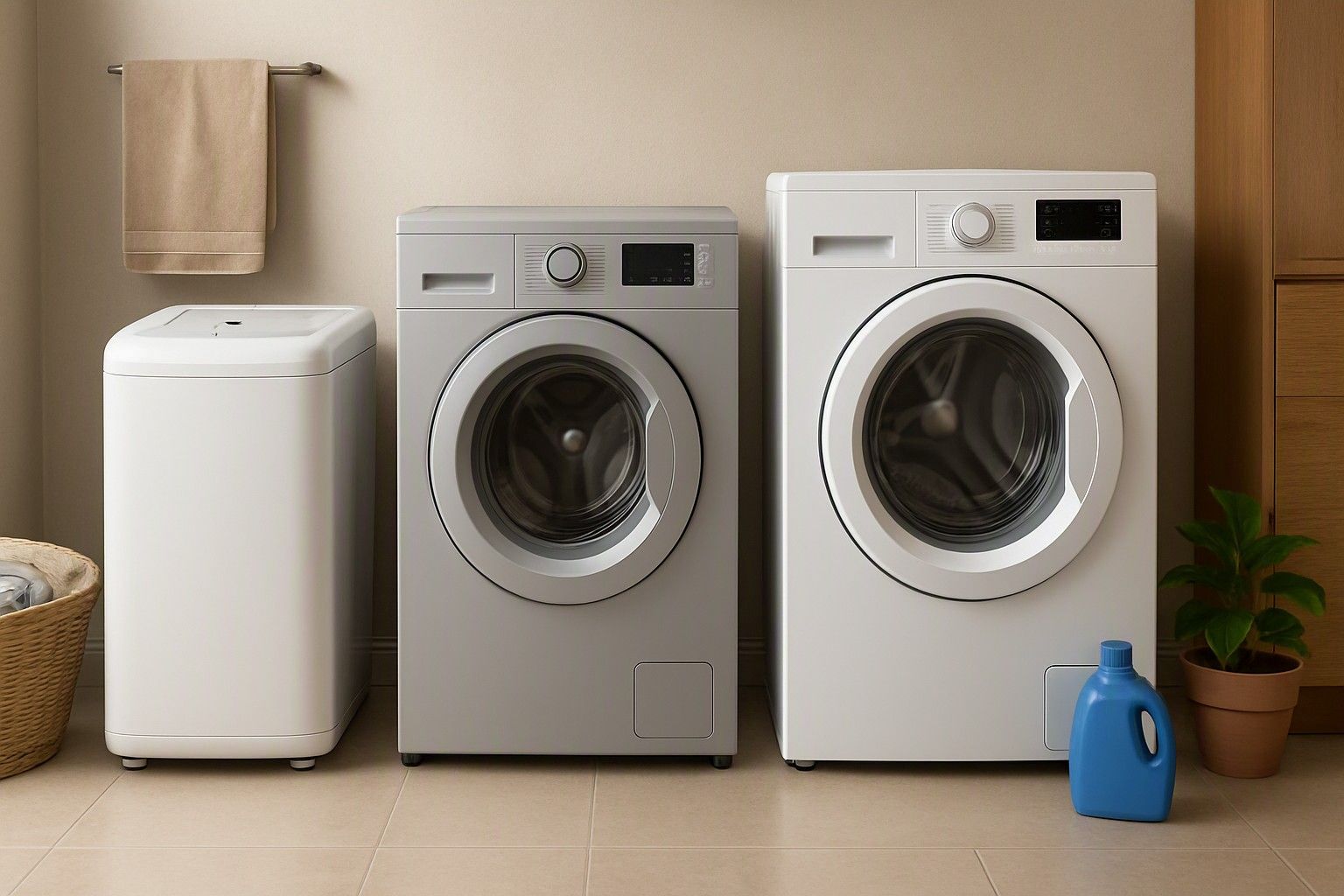
Buying a washing machine in India isn't one decision — it's about eight smaller ones stacked on top of each other, and getting any one of them wrong means living with the mistake for a decade. The load type, the drum size, whether your water pressure can even run the thing, what it costs you every month, and whether the price on screen right now is fair — each of these pulls in a different direction depending on your home and your habits. This guide lays out every one of those decisions in order, then points you to a detailed breakdown for each. Work through them and you'll know exactly what to buy, not just what looks good on a listing page.
Top vs Front Load: Which Washing Machine Suits Indian Homes?
The first fork in the road is the machine's basic shape, and there's no single winner here. What tips the balance is your water pressure, what you're willing to spend, and how much you care about protecting your clothes over time. To cut through the marketing and see how each type behaves in a real Indian home, compare top load and front load machines in detail.
Semi-Automatic vs Fully Automatic: Understanding the Real Trade-off
Next comes how much of the work you want the machine to do for you. This choice hinges on whether your building delivers water reliably and how much hands-on effort you'll accept in exchange for a lower price. If you're torn between the two, this breakdown will help you weigh semi-automatic against fully automatic washing for your own setup rather than in the abstract.
What Capacity Do You Actually Need?
Drum size sounds obvious until you're comparing a 6kg and a 7kg model and can't tell which suits your household. Capacity in kilograms translates into a real number of loads per week, and matching that to your family size is what stops you overpaying or running the machine twice a day. Use this guide to work out the right drum capacity for your household with confidence.
Fitting a Washing Machine Into Indian Apartments and Water Supply
Before specs even matter, there's the plain question of whether the machine physically fits and whether your plumbing can run it day to day. Indian bathrooms, balconies and utility corners are rarely a neat rectangle, and water pressure swings from building to building. Take the measurements and plumbing checks in this article to check whether it will fit your space and water pressure well before delivery day.
Running Costs: Water, Electricity and Star Ratings
A low sticker price can hide a machine that quietly drains your electricity and water bills for years. Working out whether a cheaper unit truly stays cheaper means putting the monthly running numbers side by side. This guide sorts out how star ratings and consumption translate into rupees, so you can understand how much it costs to run every month.
How Much Should You Spend? Price Tiers Explained
With machines spanning ₹5,990 to ₹89,990, "budget" means very different things depending on which band you're shopping in. The jumps between ₹7,500, ₹20,000 and ₹42,000 track real gains in wash technology, capacity and build quality rather than arbitrary pricing. Set a figure with intent instead of guessing — this breakdown lets you see what each budget tier actually gets you.
Is Today's Price Actually a Good Deal?
Once you know your budget, the next question is whether the number in front of you is genuinely fair or just made to look that way. Rather than holding out for some perfect moment that keeps slipping away, you can read the price history and decide right now with actual data behind you. This article shows you how to judge today's price against its history before buying.
Installation, Servicing and Long-Term Ownership
The purchase is the simple part; the years of ownership that follow are where installation charges, warranty small print and service turnaround really bite. Knowing what's covered when something fails, and what upkeep looks like over the long haul, saves nasty surprises after delivery. Read this to plan for installation and after-sales service before you commit.
That's the full shape of the decision — load type, automation, capacity, fit, running costs, budget, price timing and long-term ownership. You don't have to tackle them all at once, but you now know which questions matter and where to get a straight answer for each. Start with whichever one is stopping you today, and work outward from there.

Comments
Be the first to comment.