Semi-Automatic vs Fully Automatic Washing Machine: Which Should You Buy?
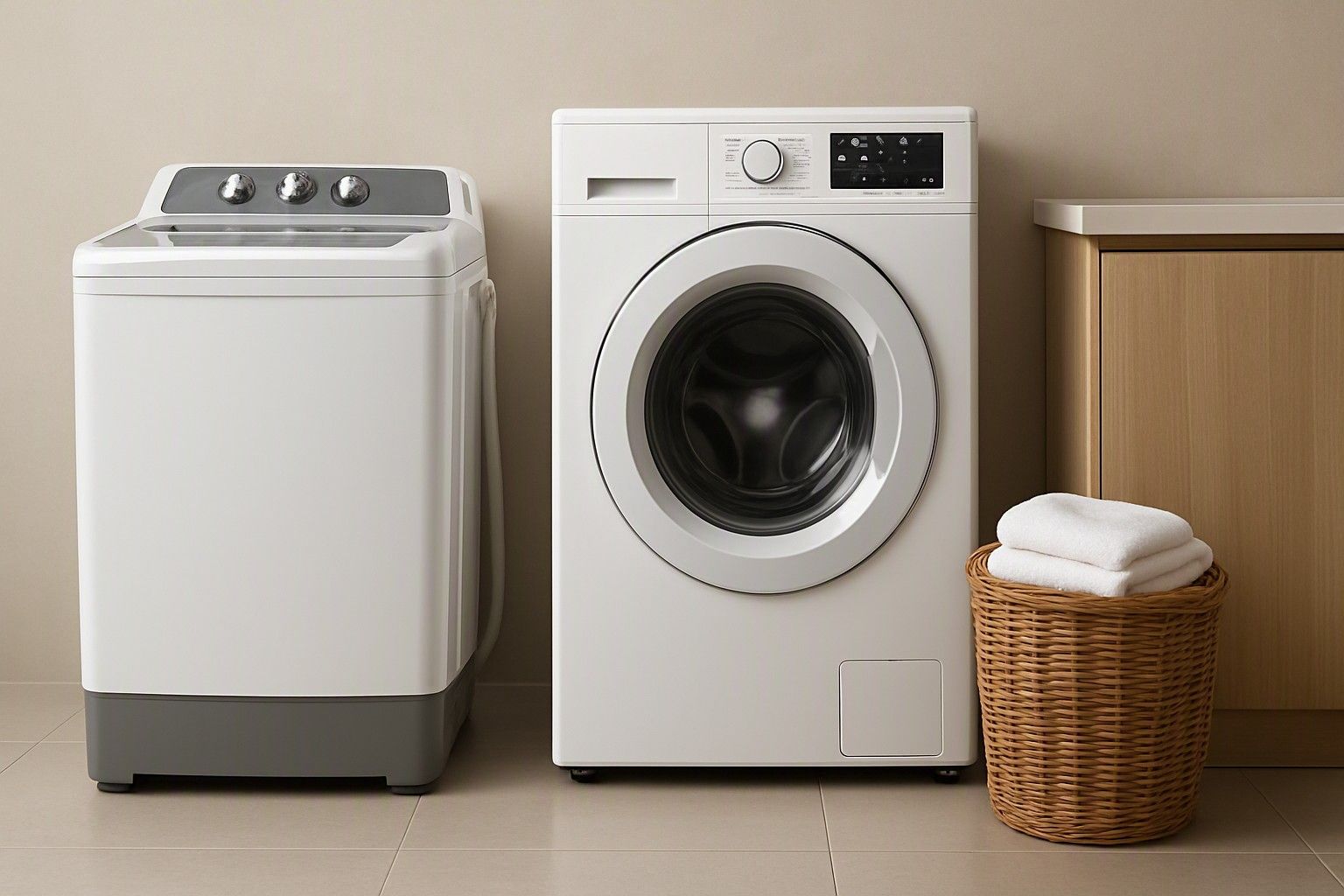
If you're stuck deciding between a semi-automatic and a fully automatic washing machine, the answer usually comes down to two things: how reliable your water supply is, and how much manual effort you're willing to put in for a lower price. This article walks through the real differences so you can settle the question for your specific household, not in general.
How Semi-Automatic and Fully Automatic Machines Actually Differ
A semi-automatic washing machine has two separate tubs — one for washing and rinsing, another for spin-drying. You fill it with water manually, move the clothes from the wash tub to the spin tub yourself, and control each stage of the cycle. It sounds old-fashioned, but this hands-on design is exactly why it's cheaper and simpler to repair.
A fully automatic washing machine, whether top load or front load, does the entire cycle in one drum with no manual intervention once you've loaded clothes and detergent. It takes in water on its own through an inlet connection, washes, rinses, and spins in sequence, and shuts off when done. You get convenience, but you also give up control over each step, and the machine depends entirely on a working water connection to function.
This distinction matters more than it seems on the surface. It's not just a feature difference — it changes what kind of home the machine actually works well in, which is the real question this article is trying to answer. A semi-automatic buyer is usually optimising for cost and flexibility around water; a fully automatic buyer is optimising for convenience and is assuming a dependable water supply. Neither is objectively better — they solve different problems.
Water Usage and Suitability for Bucket-Fed Homes
This is where the semi-automatic vs fully automatic decision is usually made in Indian households, and it has almost nothing to do with preference and everything to do with your water situation. A semi-automatic machine lets you fill the tub with exactly as much water as you have on hand, including from buckets or stored water, and you can pause between the wash and spin stages if the supply runs out mid-cycle. This makes it genuinely workable in areas with erratic municipal supply, homes that depend on tanker water, or upper-floor flats with weak pressure.
A fully automatic machine needs a continuous, adequately pressured water inlet to complete its cycle without interruption. If your supply cuts out partway through a wash, the cycle can stall or fail to rinse and spin properly. It's not that fully automatic machines use dramatically more water in absolute terms — many are actually efficient once running — but they're inflexible about how and when that water arrives.
Before deciding, it's worth being honest about your building's water pattern rather than your ideal one. If you're not sure how your specific water supply and available space should shape this choice, it helps to match your choice to your water supply and space, since the two are more connected than most buyers expect going in.
Effort, Convenience and Manual Intervention
Owning a semi-automatic machine means staying involved. You manually fill water for each wash, physically transfer wet clothes from the wash tub to the spin tub partway through, and drain the tub yourself when done. For a household doing laundry daily, that's several minutes of hands-on attention per load, every single day, not a one-time inconvenience. It also means someone has to be around during the wash rather than starting it and walking away.
A fully automatic machine removes nearly all of this. You load clothes and detergent, select a program, and leave — the machine handles water intake, washing, rinsing, and spinning without supervision, which is why it suits working households or anyone who wants laundry running in the background while they do something else.
The honest trade-off is that semi-automatic machines reward patience with lower running costs and more control, particularly useful if you want to wash a small batch quickly or handle heavily soiled clothes with extra manual rinsing. Fully automatic machines reward busy schedules but ask you to trust the machine's programmed cycle rather than adjust it as you go. Neither is more "modern" in a way that should override your actual daily routine — a retired couple with time on their hands may genuinely prefer the control of a semi-automatic, while a dual-income household with no time to hover over laundry will find the automation worth the extra cost.
Price Difference Between the Two Types
Semi-automatic washing machines are consistently the cheaper entry point into the category, and this is the second big reason buyers pick them. Across the market, washing machine prices span ₹5,990 to ₹89,990, with an overall average around ₹18,500, and semi-automatic models dominate the lower end of that range. Most semi-automatic machines sit within the ₹7,500 tier, making them the realistic choice if your budget is tight or if you're buying a second machine for a smaller household need.
Fully automatic machines start appearing meaningfully in the ₹20,000 tier and extend up into ₹42,000 and beyond, since you're paying for the automation, the single-drum mechanism, and often additional wash programs. This isn't a small gap — it's frequently the difference between a machine that costs a fraction of another for the same basic job of getting clothes clean.
That price gap is current market reality, not a temporary situation to wait out. Rather than holding off in hopes of a fully automatic machine dropping into semi-automatic pricing, it's more useful to decide which tier your household genuinely needs and buy within it. If you want a clearer sense of what you get at each price point, you can see how the two types sit across price tiers before finalising a budget.
Which Type Fits Which Kind of Household
A semi-automatic machine tends to suit renters and first-time buyers who want a low upfront cost and don't want to commit heavily to one home's plumbing setup, since these machines are lighter, easier to shift, and don't need a fixed inlet connection. It also suits households with inconsistent water supply, joint families doing large volumes of laundry who want to control water usage tub by tub, and anyone in a smaller flat where space and budget are both tight.
A fully automatic machine fits households with a stable, pressured water connection and less time to spend on manual laundry steps. Working couples, nuclear families with young children generating frequent loads, and anyone who values starting a wash and returning to finished, spun-dry clothes will find the automation genuinely useful rather than a luxury. It also suits homes with the space to accommodate a single larger unit, since fully automatic machines — especially front load ones — often have a larger footprint than a compact semi-automatic pair of tubs.
There's no household type where either option is flatly wrong; it's about which trade-off you're less bothered by. If daily manual effort is the bigger irritant for your routine, lean fully automatic. If price and water flexibility matter more than convenience, a semi-automatic machine will do the job just as well for years.
Making the Final Call
By this point the decision usually comes down to answering two honest questions: how reliable is my water supply, and how much manual effort am I actually willing to give this every day? If your water supply is inconsistent or your budget sits comfortably in the ₹7,500 range, a semi-automatic machine is not a compromise — it's the more sensible pick for your situation. If your water connection is stable and you'd rather spend a bit more to remove laundry from your daily to-do list, a fully automatic machine earns its higher price.
This fork is only one part of the wider decision, though. Once you know which type you're leaning toward, there are still choices around load capacity, drum type, and where the machine fits in your home. If you haven't already, it's worth stepping back to return to the full washing machine buying guide to work through those remaining factors in order, rather than deciding them in isolation.
Whichever way you've leaned while reading this, the semi-automatic vs fully automatic question isn't really about which machine is better — it's about which one matches your water supply, your patience for manual steps, and your budget. Match those three honestly and the rest of your washing machine search gets a lot narrower and a lot easier.

Comments
Be the first to comment.