Will It Fit? Washing Machine Space and Water Supply Check for Indian Homes
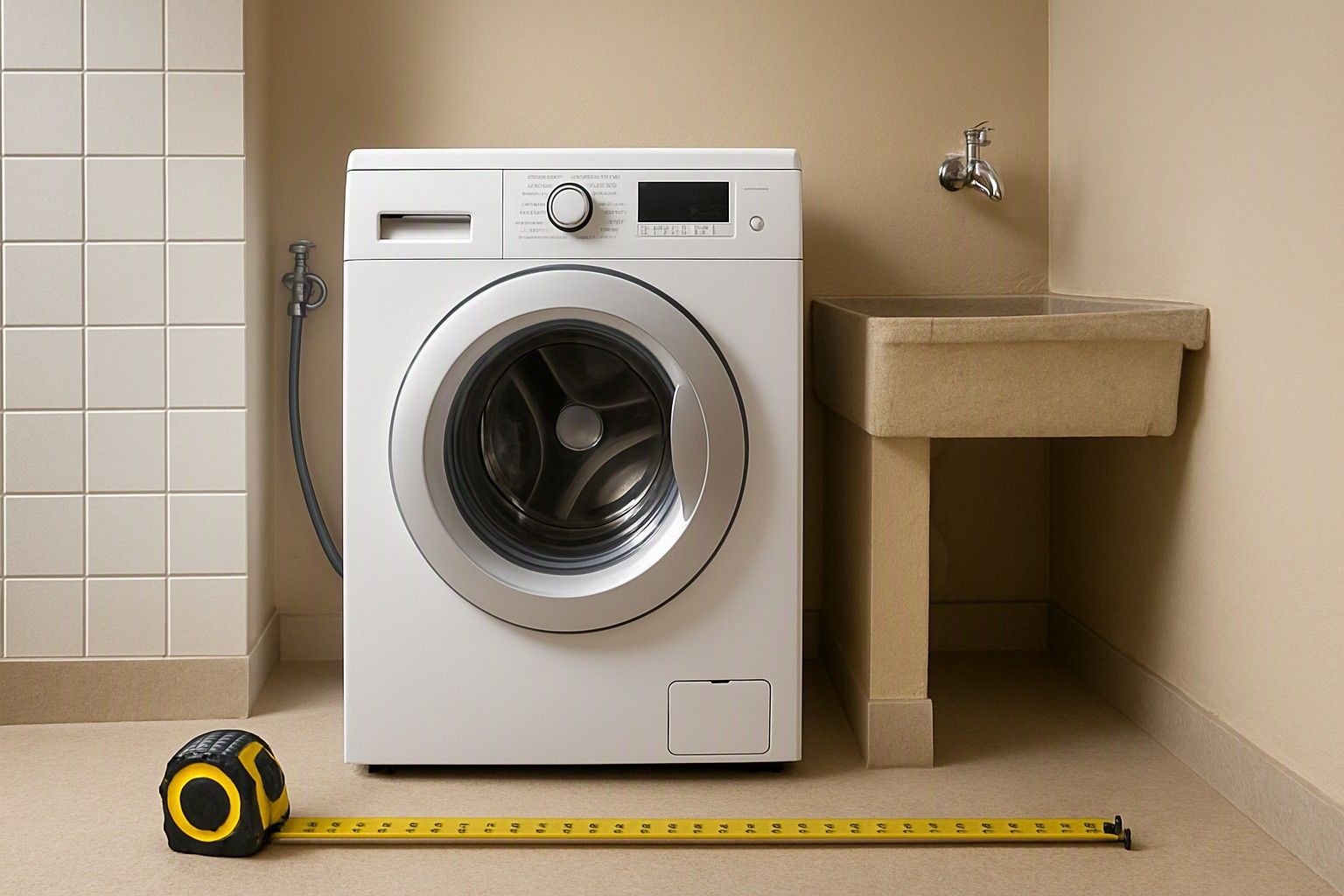
Before you compare specs or brands, the more basic question is whether a washing machine will actually fit where you plan to keep it, and whether your water supply can run it without daily workarounds. Indian bathrooms, balconies and utility corners come in awkward shapes, and water pressure varies wildly building to building — both of which decide the machine that will actually work, not just the one that looks good in the showroom. This article walks through the measurements, plumbing checks and pressure realities you need to confirm before delivery day, not after.
Measuring Space in Bathrooms, Balconies and Utility Areas
Most washing machine returns in Indian homes trace back to one thing: nobody measured the actual spot before ordering. Start with the width, depth and height of the space you have in mind — a bathroom corner, a balcony niche, or a dedicated utility area — and measure the narrowest point, not just the floor footprint. Many balconies and utility spaces have grilles, half-walls, or overhead cabinets that reduce usable height even when the floor space looks generous.
Add at least 5-8 cm of clearance on all open sides for the door to swing fully (critical for front-load machines) or for the lid to lift without hitting a wall (for top-load machines). If the machine will sit under a shelf or loft, check that the lid or door still opens with the shelf in place — a lot of buyers only discover this after installation.
Also measure the path from your main door to the final spot, including staircases and lift dimensions if you're on an upper floor. A machine that fits the utility area but can't get through a narrow bathroom door or around a landing turn is a fit failure of a different kind. Bathrooms in older Indian flats are often the tightest constraint — narrow doorways, no separate drain point, and shared space with a bucket or mug — so measure twice here before you commit to a size or type.
Water Pressure Needs and Low-Pressure Solutions
Fully automatic washing machines, especially front-load models, expect a certain minimum water pressure to fill the drum in reasonable time through their inlet valve. Many Indian homes — particularly those relying on an overhead tank on a low-rise building, or older plumbing with narrow pipes — don't consistently deliver that pressure, which shows up as slow fills, incomplete cycles, or error codes on the display.
If you've noticed weak flow at your bathroom tap already, that's a reliable early warning sign before you even bring a machine home. The practical fix most Indian households use is a small inline water pump fitted before the machine's inlet, which boosts pressure to the level the machine needs — this is a common, low-cost workaround rather than a sign something is wrong with your building.
Semi-automatic machines are far more forgiving here since you fill the wash tub manually with a bucket or pipe, sidestepping the pressure question almost entirely. This is one of the real reasons semi-automatics remain popular in bucket-fed Indian bathrooms despite fully automatic machines dominating showroom displays. Before you buy a fully automatic model, it's worth running a simple test: time how long it takes to fill a bucket at your intended tap. If it's slow, either budget for a booster pump or lean toward a semi-automatic instead.
Inlet, Drainage and Tap Connection Requirements
A washing machine needs three physical connections to run properly: a water inlet point, a drainage outlet, and in many cases a dedicated tap that isn't shared with daily bathroom use. Fully automatic machines connect directly to a tap via the supplied inlet hose, so you need a tap positioned within hose reach of the machine, not just anywhere in the room — measure this distance, since inlet hoses are a fixed length and extensions can affect pressure further.
Drainage is just as important and often overlooked. The machine's outlet hose needs to reach a floor drain, a bathroom drain point, or a balcony drain without lying across walkways where it can become a trip hazard or crack over time. If your intended spot has no nearby drain, you'll need a wall-mounted outlet or a longer drain pipe run, which some installers charge extra for.
If you're on a shared tap setup where the same connection serves a bucket, mug bath and the machine, decide in advance whether you'll install a T-joint or divert the tap fully to the machine when in use. None of this is complicated, but it needs deciding before the machine arrives, not while the delivery team is standing in your doorway. It genuinely helps to plan the installation before delivery day, since inlet and drainage mismatches are the single biggest cause of delayed first-use in Indian homes.
Overhead Tank vs Direct Supply Considerations
How your building supplies water changes what you can expect from a washing machine day to day. Homes on an overhead tank system typically get gravity-fed pressure, which is often lower and more inconsistent than a direct municipal or borewell-fed line, especially on upper floors of a building where the tank sits only slightly higher than the flat itself. If you're on one of the top floors with an overhead tank, expect weaker pressure than a neighbour on a lower floor with the same tank.
Direct supply lines, where water comes straight from a municipal connection or a pressurized borewell pump, tend to deliver more consistent pressure and are generally kinder to fully automatic machines with strict minimum-pressure requirements.
If you're not sure which setup you have, ask your building's facility staff or a plumber rather than guessing — it's a five-minute conversation that saves you a return or an unplanned booster pump purchase later. Overhead tank users aren't ruled out of fully automatic machines by any means; it just means checking your actual tap pressure matters more for you than for someone on a strong direct line, and a booster pump is a realistic and common addition rather than a red flag on the machine itself.
When Space Constraints Should Change Your Machine Choice
Sometimes the honest answer to a tight bathroom or narrow balcony isn't a smaller version of the same machine — it's a different type of machine altogether. If your available footprint is genuinely small, a compact top-load fully automatic or a semi-automatic with separate wash and spin tubs often fits where a full-size front-load simply won't, since semi-automatics can sometimes be split or positioned more flexibly around fixed plumbing.
Semi-automatic machines also sidestep the water pressure question covered earlier, which matters if your space constraint and your low-pressure tap are the same room. If you're working with a narrow bathroom corner that also has weak water flow, a semi-automatic solves two problems at once rather than one.
On the other hand, if you have reasonable space but limited time for manual bucket-filling and transferring loads between tubs, a fully automatic remains worth the slightly larger footprint even if it means a booster pump or minor plumbing adjustment. This is genuinely a case where it pays to reconsider semi versus fully automatic for tight spaces rather than forcing a fully automatic machine into a spot it was never going to comfortably serve. Machines across the full price range, from ₹5,990 to ₹89,990, come in both formats, so budget alone shouldn't be what decides this — your actual room should.
Pre-Purchase Fit Checklist
Before you finalize a purchase, run through this list against your actual space and plumbing rather than the showroom floor:
- Measured width, depth and height of the exact spot, including any shelf, grille or half-wall that reduces usable space
- Confirmed clearance for door swing or lid lift once the machine is in place
- Checked the path from entrance to final spot for width and turns, especially on upper floors
- Timed your tap's fill rate to gauge whether pressure will be adequate for a fully automatic machine
- Confirmed whether you're on overhead tank or direct supply, and what that means for consistency of pressure
- Located a drain point within reach of the outlet hose, or budgeted for an extended drain run
- Decided whether a shared tap needs a T-joint or dedicated connection
- Weighed whether a semi-automatic suits your space and water situation better than a fully automatic
Most machines in the market fall between ₹7,500 and ₹42,000, with a good number of practical, well-reviewed options sitting around the ₹18,500 mark — but none of that matters if the machine you choose can't physically go where you need it to. Running this checklist takes fifteen minutes and is far cheaper than a failed delivery or a return. For the broader set of decisions beyond fit and plumbing, you can return to the full buying guide to work through capacity, type and features in one place.
If you've measured your space, checked your tap's pressure, and confirmed how water and drainage will connect, you have a real answer to whether a washing machine will fit and function in your home — not a guess based on how it looked in a showroom. That's the groundwork that actually prevents returns and installation-day surprises, and it's worth doing before anything else on your shortlist.
Comments
Be the first to comment.