Washing Machine Running Costs: Water, Electricity and Star Ratings Explained
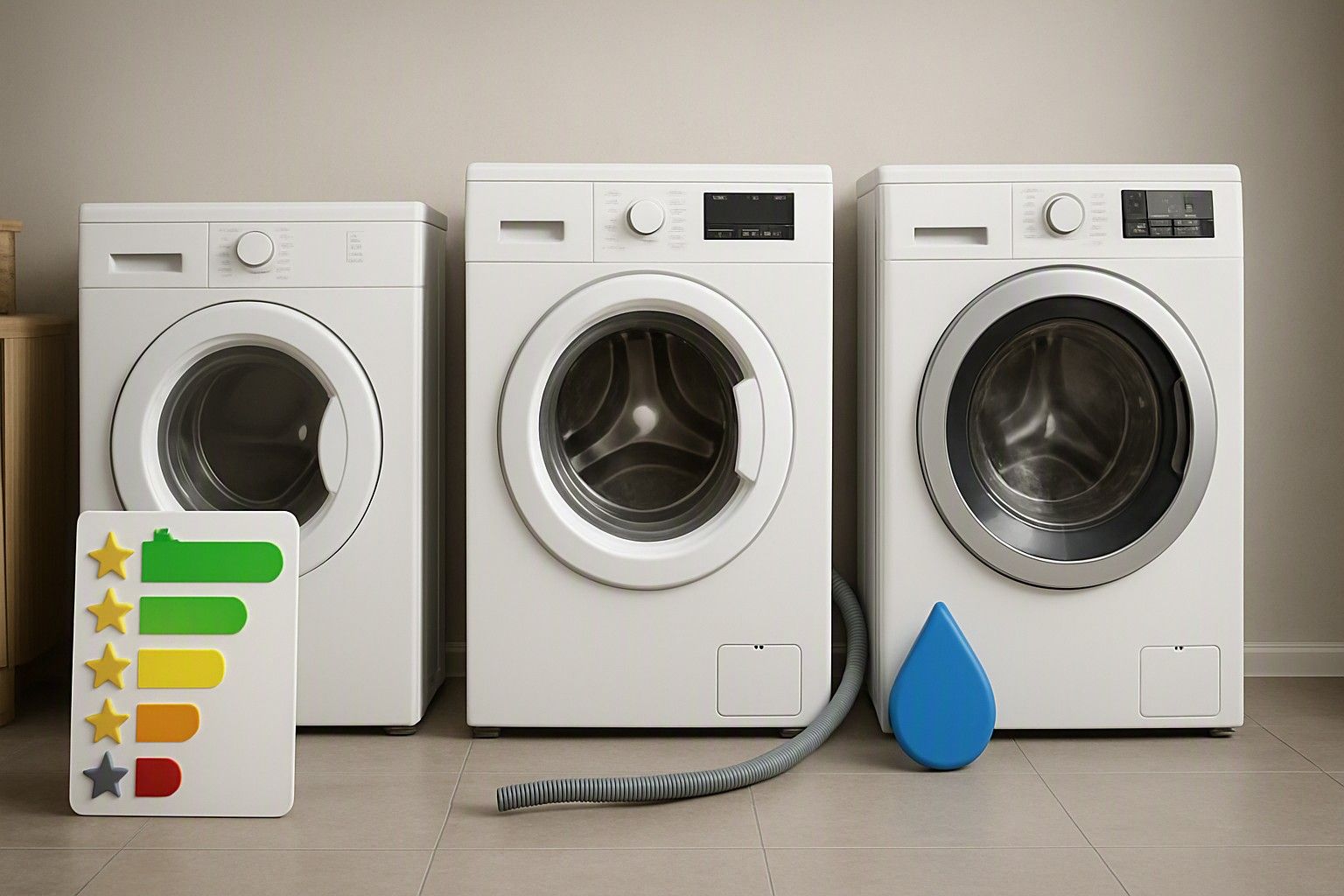
The sticker price on a washing machine is only half the story — what it draws in electricity and water every month can quietly add up over the years you own it. If you're trying to figure out whether that cheaper machine is actually cheaper once you factor in running costs, this is where the numbers get sorted out.
Understanding BEE Star Ratings on Washing Machines
The Bureau of Energy Efficiency (BEE) star label on a washing machine tells you how much electricity it consumes to complete a standard wash cycle relative to machines of a similar type and capacity. More stars mean a more efficient motor and better-tuned wash programs, which translates to a lower per-cycle power draw. A 5-star machine isn't just a marketing sticker — it usually reflects genuine engineering differences in the motor, the drum design, and how the machine manages water heating and spin cycles.
What trips up a lot of buyers is comparing star ratings across different machine types. A 5-star semi-automatic and a 5-star fully-automatic front-load machine don't consume the same amount of energy in absolute terms, because the rating is calculated within each category, not across all washing machines. So a star rating only tells you how efficient a machine is compared to its peers, not whether it's the most efficient machine you could buy overall.
For an Indian household, the real value of checking the star rating shows up over years of use, not on day one. A washing machine typically runs several loads a week for a decade or more, so even a modest difference in per-cycle power consumption compounds into a noticeable difference on your electricity bill over that stretch. If two machines are similarly priced, the one with a higher star rating is almost always the better long-term bet, even if it costs a little more upfront.
Electricity Cost of Inverter vs Regular Motors
Inverter motors adjust their speed and power draw based on load size and wash intensity, instead of running at one fixed speed regardless of how full the drum is. This means a half-empty load doesn't consume the same electricity as a full one, which is where most of the real-world savings come from. Regular (non-inverter) motors are simpler and cheaper to manufacture, but they tend to draw a fairly constant amount of power whether you're washing two shirts or a full family load.
The catch is that inverter technology adds to the upfront price of the machine, so the electricity savings need to be weighed against that extra cost. If you do frequent small loads — common in smaller households or for quick daily washes — an inverter motor earns back its price premium faster because the savings scale with how often you're running partial loads. If you almost always run full loads, the gap between inverter and regular motors narrows considerably, and a well-rated regular-motor machine can be the more sensible buy.
Across the price spectrum in India, inverter motors show up more consistently as you move into the mid and upper tiers, while machines in the ₹7,500 range are more likely to use regular motors. That's a reasonable trade-off if your usage pattern is mostly full loads, but if you wash small batches often, it's worth checking whether a slightly pricier inverter model changes your monthly electricity outgo enough to matter.
Water Consumption and Its Real Cost
Water cost doesn't show up as clearly on a bill the way electricity does, but it's a real recurring expense, especially in Indian cities where municipal water is metered or where tanker/borewell water carries its own cost per litre. Top-load machines generally use more water per cycle than front-load machines, because top-load washing relies on fully submerging clothes in the drum, while front-load machines tumble clothes through a shallower water pool and rely on mechanical action to compensate. If you want the actual number for your own machine rather than a general rule, calculate washing machine's water and electricity cost based on its type and how often you will use it weekly.
This difference matters more in water-stressed areas or in homes that rely on tanker deliveries, where every extra litre per wash has a tangible cost. A family running several loads a week will notice the gap between a water-heavy top-load cycle and a more conservative front-load cycle showing up in their monthly water usage, even if it isn't a bill they pay directly like electricity.
Water consumption also interacts with detergent use — a machine that uses less water for the same wash quality typically calls for less detergent as well, since detergent dosage is usually calibrated to water volume. So when you're weighing water efficiency, it's not just the water itself but the downstream saving on detergent that adds up. If your home already deals with water supply constraints, this is a factor worth weighing as seriously as the electricity star rating, even though it gets far less attention in typical buying conversations.
Do Heaters and Hot Wash Cycles Raise Your Bill?
Yes, and often more than buyers expect. A washing machine's built-in heater — used for hot water washes on some fully-automatic models — is one of the most power-hungry components in the entire machine, because heating water electrically takes far more energy than simply spinning a drum or running a pump. If you use hot wash cycles regularly, say for heavily soiled clothes or in a household that prefers hot water washing during winter, your electricity draw for that cycle can be several times higher than a standard cold or lukewarm wash.
This is worth separating clearly from the star rating discussion, because the BEE rating is typically calculated on a standard test cycle that may not reflect how often you'll actually use the heater in daily life. Two machines with identical star ratings can end up costing very differently to run if one household uses hot wash frequently and the other almost never does.
If hot water washing isn't a regular need for you, it's worth checking whether a model has the option to skip the heater for routine loads and reserve it only for specific situations. Machines without a built-in heater, more common on simpler semi-automatic and some entry-level fully-automatic models, sidestep this cost altogether, though they also mean you lose the option of hot washing entirely. Whether that trade-off makes sense depends on your climate, water hardness, and how much you rely on hot cycles for stain removal or hygiene washing for infants and elderly family members.
Balancing Purchase Price Against Long-Term Savings
Washing machines in India span a wide range, from ₹5,990 at the entry level to ₹89,990 for feature-loaded models, with the average buyer landing closer to ₹18,500. A lower purchase price doesn't automatically mean a lower total cost of ownership once you factor in a decade or more of electricity and water use, especially if that cheaper machine has a weaker star rating or lacks an inverter motor. The reverse is also true — paying more doesn't guarantee savings if the extra cost went into features you won't use rather than into genuine efficiency gains.
The practical way to think about this is to estimate how many years you'll keep the machine and multiply the expected difference in monthly running cost across that period. Even a relatively small monthly saving, when carried across many years of ownership, can outweigh a meaningful price difference at the time of purchase. This is especially relevant if you're deciding between machines in adjacent budget tiers, where the extra spend often buys you better efficiency rather than just extra features.
It helps to compare this against what each budget tier offers, since machines in the ₹20,000 and ₹42,000 ranges tend to differ not just in price but in exactly the efficiency factors — motor type, star rating, water use — covered above. Knowing what each tier typically includes makes it easier to judge whether the extra spend is buying you real running-cost savings or just a longer feature list.
How Running Costs Fit Your Overall Decision
Running costs are one piece of a larger decision that also includes capacity, wash programs, build quality, and how much space you have for installation. None of that changes the core point here: a washing machine's star rating, motor type, water use, and heater habits will shape your monthly bills for as long as you own it, often far more than the initial price difference between two comparable models. Treating running cost as a genuine line item in your decision, rather than an afterthought, puts you in a better position to pick a machine that actually suits your household's usage pattern.
If you're still weighing this against other factors like capacity or wash type, it's worth stepping back and looking at the complete picture before finalizing anything. You can head back to the main buying guide to see how running costs weigh against everything else that goes into choosing the right washing machine for your home.
At this point, the actual monthly cost of running a washing machine shouldn't be a mystery — it comes down to the star rating, whether the motor is inverter-based, how much water the wash cycle uses, and how often you rely on a hot wash. Weigh those against the purchase price for your usage pattern, and you're deciding on genuine long-term value rather than just the number on the price tag.
Comments
Be the first to comment.