Washing Machine Capacity Guide: What Size Does Your Family Need?
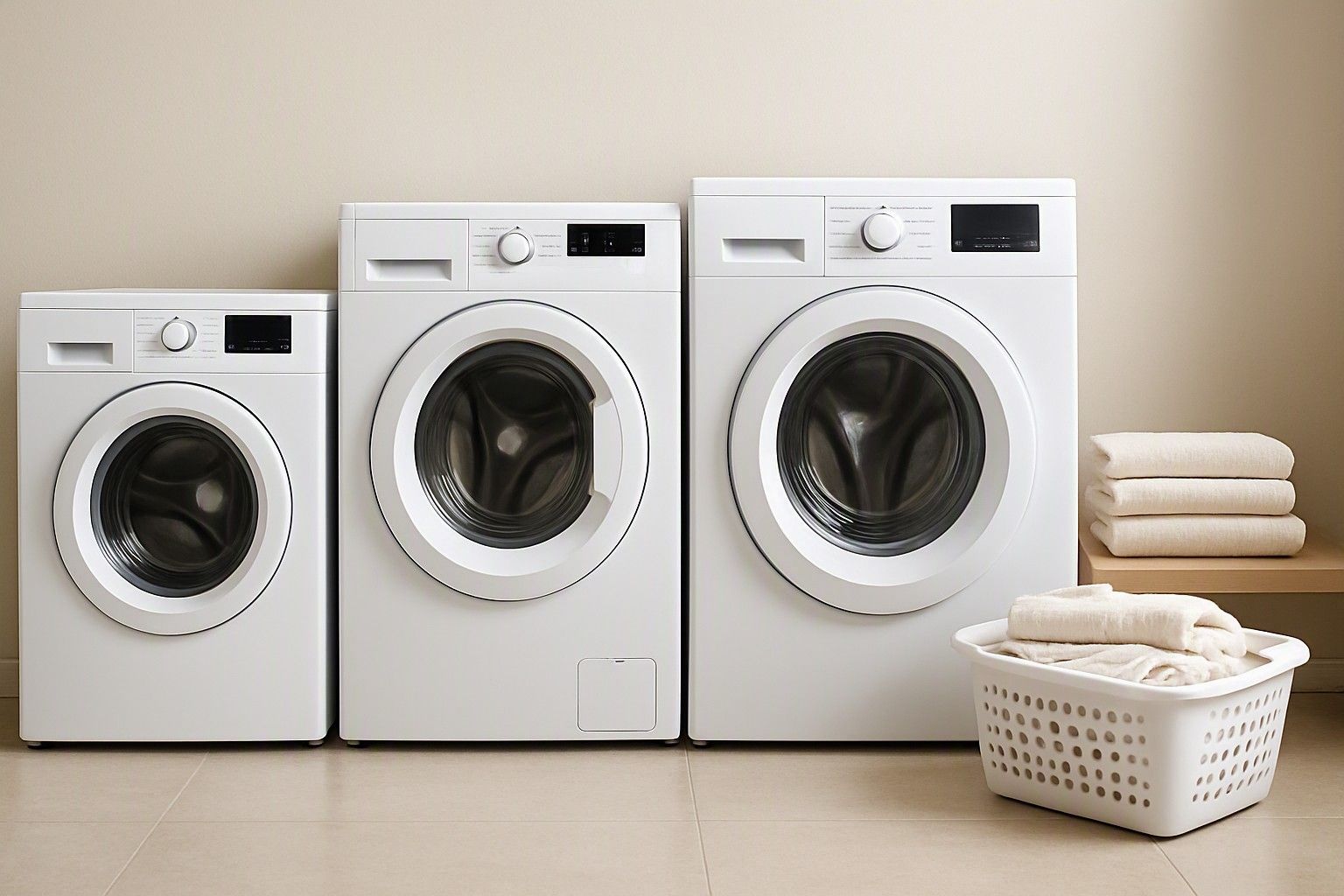
If you're staring at product listings wondering why one 7kg machine costs less than another 6kg one, capacity is only half the story — but it's the half that decides whether your machine actually fits your household's laundry, every single day. This guide breaks down exactly what kg capacity means in practice and matches it to real Indian family sizes, so you can pick a number and stop second-guessing it.
How Washing Machine Capacity Is Measured
Washing machine capacity is quoted in kilograms of dry clothes, not wet or wrung laundry — a 6kg machine is rated to wash 6kg of dry fabric per cycle, and going over that mark doesn't just risk overflow, it also means clothes don't get enough room to tumble freely, so they come out less clean and more creased. This dry-weight rating is why capacity numbers can feel misleading at first: a stack of clothes that looks small can weigh more than you'd expect once you account for denim, towels, and thicker cottons common in Indian wardrobes.
Manufacturers arrive at this figure using standardised cotton garments in lab conditions, so real households should treat the rated capacity as a ceiling, not a target to hit every wash. A practical rule most Indian buyers use is to load the drum to about 80% of its rated capacity for everyday mixed loads, saving the full rated capacity for lighter fabrics like bedsheets or cotton kurtas that pack down less densely than jeans or towels. Understanding this measurement is the starting point for the primary decision this guide exists to answer — what kg number should you actually buy — because every recommendation that follows, from family-size matching to bedsheet handling, is built on this same dry-weight logic. Skipping this step is how buyers end up with a machine that's technically the right size on paper but too tight in daily use.
Capacity for Couples, Nuclear and Joint Families
Family size is the single biggest driver of the kg number you need, and Indian households tend to generate heavier daily loads than the global averages baked into manufacturer marketing, so it helps to think in local terms rather than generic buying advice. A couple or single working professional doing laundry two to three times a week is usually well served by a 6kg to 6.5kg machine — enough for daily office wear, a few towels, and light bedding without ever running a half-empty drum. A nuclear family of three to four, which is the most common household size searching for a washing machine in India, typically needs 7kg to 7.5kg, since school uniforms, work clothes, and weekend bulk washing (bedsheets, kids' clothes, towels) all stack up faster than a two-person household.
Joint families or households of five or more, especially where laundry includes multiple generations' clothing plus shared linens, generally need 8kg or higher to avoid running two or three cycles a day just to keep up. Running a machine at or near full capacity repeatedly, rather than buying appropriately sized in the first place, wastes both water and electricity over time. It's also worth resisting the temptation to buy one size down to save money upfront — a joint family squeezed into a 7kg drum will end up doing more loads per week, which adds up in water and power use far faster than the price difference between capacity tiers ever would.
Accounting for Heavy Indian Items Like Bedsheets and Curtains
Capacity charts rarely account for the specific items that dominate Indian laundry baskets, and this is where a lot of buyers underestimate what they actually need. A single cotton double bedsheet can weigh close to a kilogram on its own, and when combined with pillow covers, a thick winter razai cover, or heavy curtains, a load that looks like "just a few items" can quickly eat up half the rated capacity of a 6kg machine. Households that regularly wash joint-family bedding, thick sarees, or heavy woollens in winter should mentally add a buffer above the number they'd calculate from family size alone.
This matters because bedsheets and curtains don't just add weight — they also take up disproportionate drum space relative to their weight, since they don't compress as tightly as folded shirts or trousers. Washing a heavy bedsheet in an already-tight load forces the machine to work harder, extends wash time, and can leave detergent unevenly rinsed out. If your household washes bedding, curtains, or blankets more than once a week, it's worth sizing up by half a kg to a full kg from what family size alone would suggest, or planning to wash these items as separate, dedicated loads rather than folding them into a mixed daily wash. Either approach avoids the common mistake of buying "correctly" for clothes but underestimating for linens.
Why an Oversized Machine Can Cost You More
It's tempting to buy the largest capacity you can afford on the logic that bigger always means more flexibility, but oversizing has real, ongoing costs that outweigh the one-time convenience. A larger drum uses more water and more electricity per cycle regardless of how full it actually is, because the machine is calibrated around its rated capacity, not your actual load size. Running an 8kg machine to wash a couple's daily 3-4kg load means paying for water and power sized for a load nearly double what's actually inside the drum, cycle after cycle, for as long as you own the machine.
This is also where purchase price and running cost start to pull in different directions. Machines in the ₹42,000 range often carry higher capacities and more features, and it's easy to justify the extra spend as future-proofing. But if your household's actual laundry volume doesn't need it, you're paying twice — once at purchase, and again every month in utility bills for capacity you rarely use. You can see how capacity changes your running costs to understand exactly how many rupees this adds up to over a machine's typical lifespan. The right-sized machine, even if it looks less impressive on paper, is almost always the cheaper choice over the years you'll own it.
Matching Capacity to Machine Type
Capacity doesn't exist in isolation — the type of machine you choose changes how that kg number behaves in real use, and this is a decision worth making alongside your size calculation rather than after it. Top-load machines are commonly available in the same capacity ranges as front-load machines, but they tend to handle overloading a little more forgivingly since the agitator design gives clothes more movement space even near full capacity. Front-load machines, by contrast, rely on tumbling action and are less tolerant of loads pushed right to the rated limit — overloading a front-load machine more noticeably affects wash quality and rinse performance than doing the same in a top-load model.
This difference matters most for households near a capacity boundary — say, a family debating between 7kg and 7.5kg — because the machine type you lean toward can tip that decision. A joint family choosing a front-load machine may want to round up half a kg from what a top-load equivalent would need, simply to keep loads comfortably under the practical ceiling rather than at it. Price also factors in here, since front-load machines at a given capacity typically sit higher in the ₹20,000 to ₹42,000 range than an equivalent top-load model. It's worth taking the time to decide between top load and front load for that size once you have a target kg number, since the same capacity can feel noticeably different in daily use depending on which type you choose.
Quick Capacity Recommendation Table
Pulling everything together, here's how the numbers generally land for Indian households once family size, item weight, and machine type are all accounted for. A single person or couple doing frequent small loads is typically well matched to 6kg to 6.5kg. A nuclear family of three to four, the most common searching group, generally needs 7kg to 7.5kg, with a nudge toward the higher end if bedding or curtains are washed weekly. A joint family of five or more, or any household with heavy linen washing, is better served by 8kg or above to avoid running multiple daily cycles.
Across the market, prices for washing machines span ₹5,990 to ₹89,990, with an average around ₹18,500, and capacity is one of the clearest levers that moves a machine between the ₹7,500, ₹20,000, and ₹42,000 price bands. None of these bands represent a wrong choice on their own — the right one is whichever matches your household's actual weekly laundry volume rather than the biggest number you can afford. If you haven't already worked through the other buying factors like machine type, load style, and features, it's worth taking a moment to go back to the main buying guide and use this capacity number as your starting filter for everything else.
You now have a working answer to what capacity your household actually needs — not a generic recommendation, but one built from your family size, how much bedding and heavy linen you wash, and which machine type you're leaning toward. Getting this number right upfront is what keeps your washing machine efficient and comfortable to use for years, rather than something you're compensating for on every wash day.

Comments
Be the first to comment.