Washing Machine Price Tiers in India: What You Get From ₹5,990 to ₹89,990
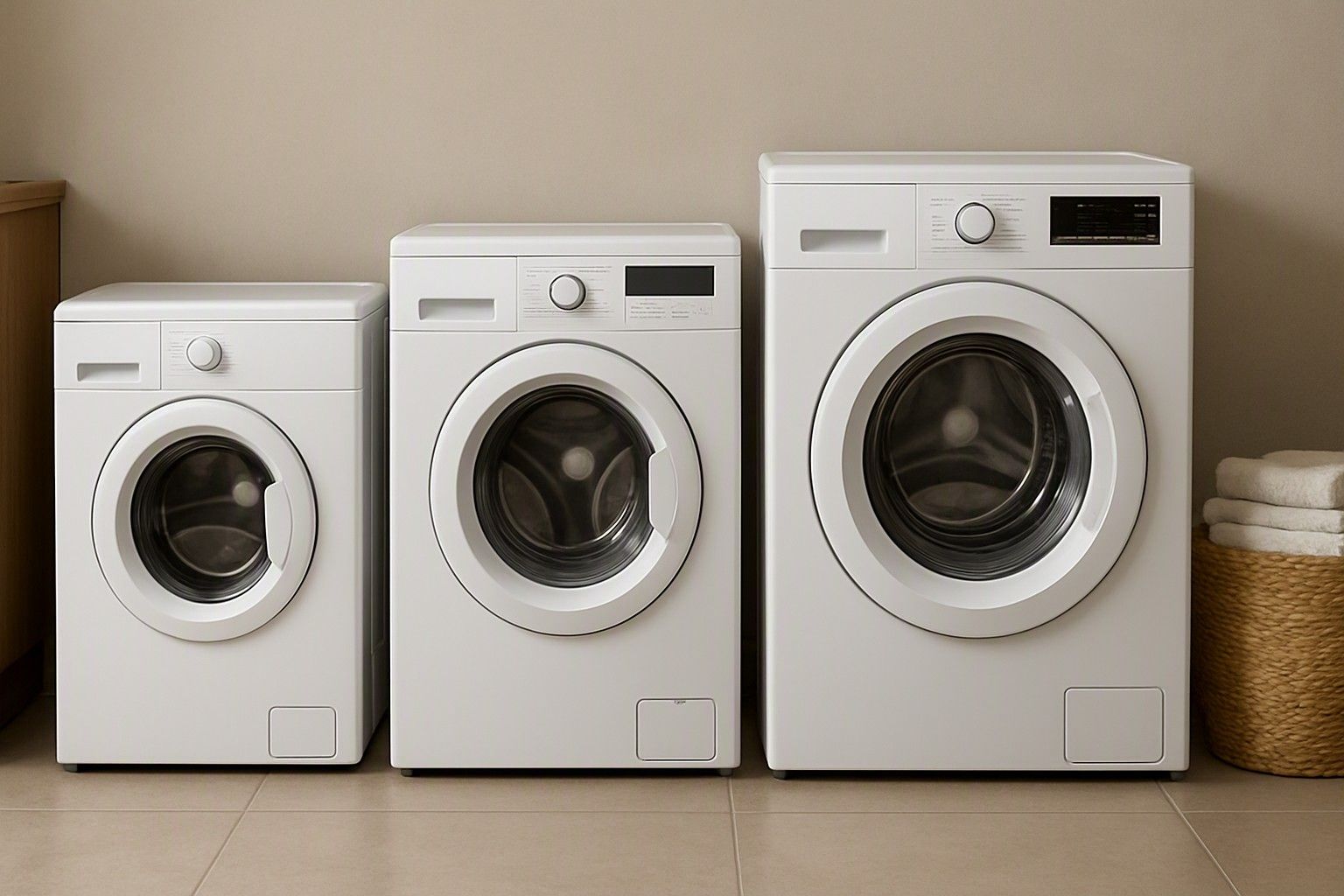
Before you open a shopping app, it helps to know what your money actually buys — because "budget" means something different depending on which price band you're in. Washing machines in India span ₹5,990 to ₹89,990, and the jump between tiers isn't random: it tracks real differences in wash technology, capacity, and build. This article breaks down exactly what each price tier gets you, so you can set a budget instead of guessing one.
Entry-Level Machines Under ₹7,500
Below ₹7,500, you're almost always looking at semi-automatic, top-loading machines with a twin-tub design — one tub for washing, one for spin-drying, operated manually between cycles. These machines skip the fully automatic wash-rinse-spin sequencing entirely, which is exactly why they cost less: there's no electronic timer board managing the full cycle, no water-level sensing beyond a basic dial, and no auto-lid-lock mechanism to engineer around.
What you do get at this tier is genuinely useful for the right household. Semi-automatics use less water per cycle since you control the fill manually, and they're forgiving of unstable voltage and inconsistent water pressure — a real factor in many parts of India where automatic machines' sensors can misfire during erratic supply. Capacity at this tier typically sits in the 6–7 kg range, enough for a small family's daily loads but tight if you're washing heavy items like blankets or curtains regularly.
The trade-off is your own time and effort. You're physically moving clothes from the wash tub to the spin tub, and you need to be present through the cycle rather than walking away. If you have the bandwidth for that and your priority is a low upfront cost with low running expense, this tier does the job without pretending to be anything more. It's not a compromise if it matches how you actually plan to use the machine — it's a mismatch only if you expected fully automatic convenience at this price.
Mid-Range Options ₹20,000
This is where fully automatic machines take over, and it's the widest, most consequential tier in the market. around ₹20,000, you'll find both fully automatic top-load and entry to mid-tier front-load machines, and the difference between the two matters more here than the price gap suggests.
Fully automatic top-loaders in this range handle the entire wash-rinse-spin cycle without manual intervention, usually in capacities of 6.5 kg to 8 kg, and they're the more forgiving choice if your water pressure is inconsistent since they don't rely on a sealed door and pressure-fed fill. Front-loaders in this same bracket use noticeably less water and are gentler on fabric because they wash by tumbling rather than agitating, but they typically demand longer cycle times and are pickier about detergent type and water quality.
As you move toward the top of this tier, you start seeing features that matter day to day: better rust-resistant drum coatings, more wash program options (specific cycles for delicates, quick wash, heavy fabrics), and stronger spin speeds that leave clothes closer to dry, cutting down line-drying time. Build quality also becomes more consistent — the plastic housings and control panels feel less like an afterthought. For most Indian households sizing a machine around a family of three to five, this tier is where the automatic-versus-manual trade-off resolves in favor of automatic, and where the real decision becomes top-load versus front-load rather than automatic versus semi-automatic.
Premium Machines ₹42,000 and Above
Above ₹42,000, you're paying for refinement rather than a fundamentally different core function — the wash cycle is still wash-rinse-spin, but everything around it gets better engineered. Front-loading machines dominate this tier, typically with 8 kg or higher capacity, and the differences show up in things you notice over years of ownership rather than in the first week.
Expect better motor technology — inverter-driven motors that run quieter, use less electricity over the machine's life, and carry longer warranties, sometimes a decade or more on the motor itself compared to two or three years at lower tiers. Drum design improves too: better ball-bearing and cushioning systems reduce vibration and noise, which matters if your machine sits near a bedroom or a shared wall in an apartment. You'll also find steam wash options, more granular temperature control, and wash programs tuned for specific fabric types rather than generic settings.
The honest question at this tier isn't whether the machine works better — it does — but whether the marginal improvement matches what you'll use. A steam cycle or app-based remote start is a genuine convenience if you'll use it weekly; it's dead weight if you won't. This tier makes sense when you do heavy laundry volume, have specific fabric-care needs, or simply plan to keep the machine a long time and want the lower long-term running cost that better motors and build quality bring.
Where the Average Buyer Spends Around ₹18,500
Most washing machine buyers in India land close to ₹18,500, and that number tells you something real about where the market's sweet spot sits — squarely inside the mid-range tier rather than at either extreme. At this spend, buyers are typically getting a fully automatic machine, either a higher-capacity top-loader or an entry-level front-loader, with enough wash programs and build quality to handle daily family use without the compromises of the entry tier or the added cost of premium features they may not use.
This average isn't a target to hit for its own sake — it's a reflection of what a typical household actually needs: enough capacity for regular loads, automatic operation to save time and effort, and a warranty and build quality that holds up over years rather than months. If your household size and laundry habits are unremarkable — a family of three to five, no unusual fabric-care demands, standard water supply — spending near this average usually gets you a machine that matches your needs without leaving obvious value on the table in either direction. Straying meaningfully below it usually means giving up automatic operation; straying well above it means paying for capacity or features a typical household won't fully use.
How Type and Capacity Shift Your Budget
Price tier alone doesn't tell the whole story — type and capacity move the number independently of each other, and mixing them up is where buyers overspend or undersize. A semi-automatic and a fully automatic machine at the same capacity can differ by a wide margin simply because of the mechanism, not the wash quality. Similarly, two front-loaders at the same price point can have meaningfully different capacities depending on how much the brand has invested in motor and drum engineering versus program count and finish.
Capacity itself is driven by household size and laundry frequency, not by what looks impressively large on a spec sheet. A single person or couple rarely needs more than 6 kg; a family of four to five typically needs 7–8 kg to avoid running multiple loads daily; larger households or those washing heavy items like blankets benefit from 8 kg and above. Buying more capacity than you need doesn't just cost more upfront — it also means using more water and electricity per cycle even for small loads, since most machines don't scale water usage down proportionally for a half-full drum.
The practical approach is to fix your capacity need first, based on household size and wash frequency, and then see which price tier that capacity naturally falls into for the type of machine you want. If you're unsure where your household lands, it's worth taking the time to match your budget to the right capacity before comparing specific machines — it narrows the field far more usefully than price alone.
Getting the Most Value in Your Range
Once you've settled on a tier, the remaining question is timing and confidence — not whether to wait for a better deal, but whether what you're seeing right now is a reasonable price to act on. Washing machine prices in India fluctuate across the year with fairly predictable patterns tied to festive sales and inventory cycles, and knowing where a current price sits against the ₹5,990 to ₹89,990 range for that category gives you a real basis for deciding, rather than a guess.
Within any tier, the highest-value purchase is usually the model sitting near the top of its price band rather than the bottom — a machine priced just under the next tier's floor often carries over a feature or two from that higher tier (a stronger spin speed, an extra wash program, better warranty terms) without the full cost jump. That's a more reliable way to extract value than chasing the absolute cheapest option in a band, which sometimes cuts corners on the one feature — like drum coating or motor quality — that determines how the machine holds up over years rather than months.
If you've found a specific machine you're considering, it's worth taking the extra step to check whether the current price is worth paying now rather than assuming the listed price is either a steal or a rip-off. A price that looks average against that machine's own history is usually a safe one to act on.
You now have a clear map of what ₹5,990 to ₹89,990 actually buys in a washing machine — from manual twin-tub basics to inverter-driven premium front-loaders — and where your own household's needs realistically fall on that scale. Fix your tier based on capacity and type first, then let the price data confirm you're paying a fair number for it.

Comments
Be the first to comment.