Do You Really Need an Air Purifier in India?
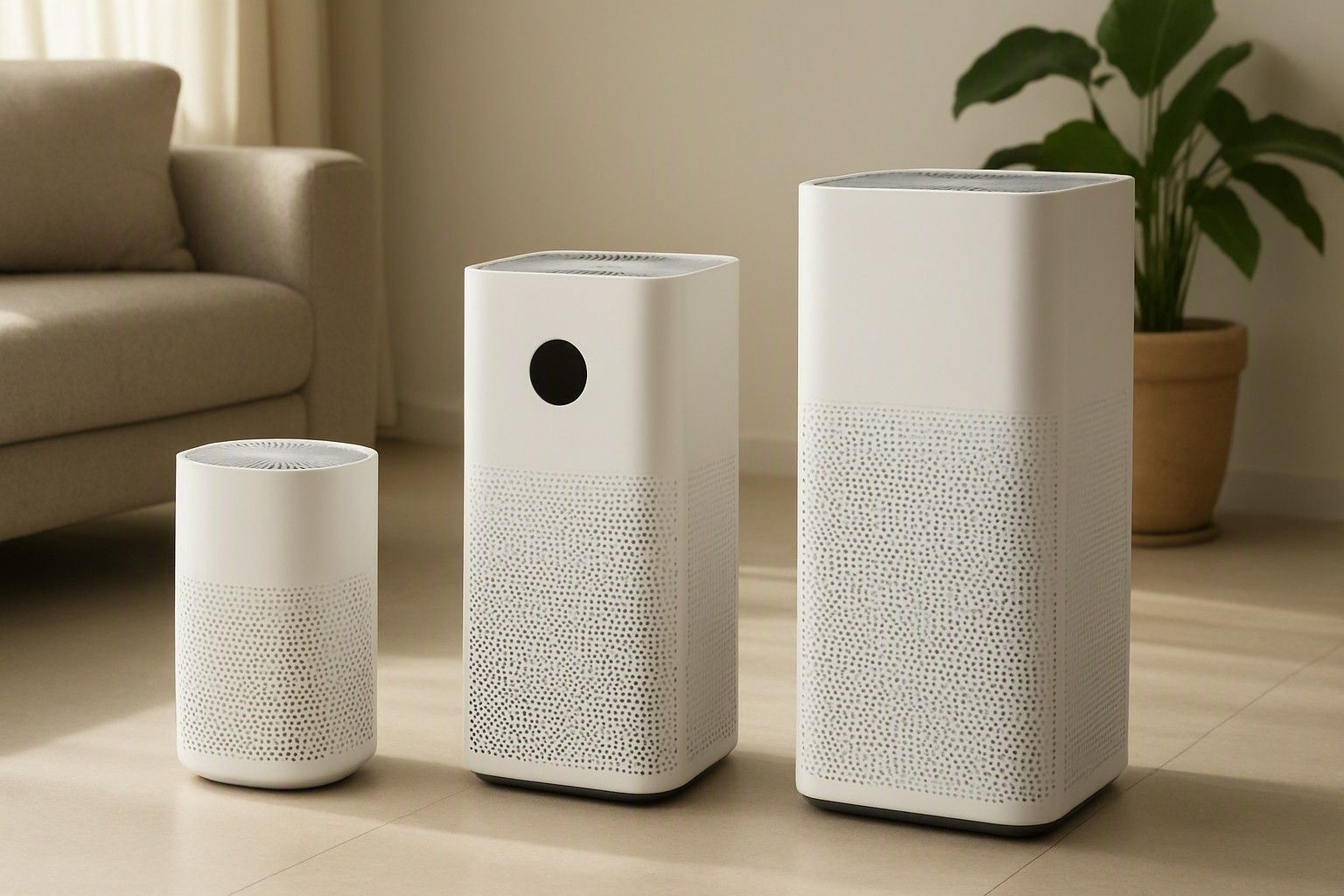
If you're asking whether you actually need an air purifier, the honest answer is: it depends on your city, your home, and who lives in it — not on whatever the last advertisement told you. This article walks through what a purifier genuinely fixes, what it doesn't, and how to tell if your household is a real candidate or if you'd be buying a machine to solve a problem you don't have.
What an Air Purifier Does and Doesn't Fix
An air purifier does one job well: it pulls particulate matter, some allergens, and certain odours out of the air inside a closed room, cycling it through a filter repeatedly until the air in that space is measurably cleaner than what's coming in from outside. That's genuinely useful in a country where PM2.5 and PM10 levels in most cities sit well above safe limits for large parts of the year. What it does not do is seal your home off from pollution at the source. If your windows and doors are open, if there's a construction site next door, or if incense, frying, or candles are constantly adding fresh particles to the air, a purifier is working against a moving target rather than solving the problem outright.
It also won't fix humidity, temperature, or carbon dioxide buildup in a stuffy room — those need a humidifier, an AC, or simply better ventilation. And it does nothing for gaseous pollutants beyond what its specific filter type is built to catch; a purifier with only a basic filter won't meaningfully touch something like excess moisture or heat. So the real question isn't "does a purifier work" — it's whether the specific problem in your home is one a purifier is designed to solve, or something else entirely.
How Bad Is Indoor Air in Indian Cities Really?
Outdoor air quality in most major Indian cities regularly crosses into the "poor" to "severe" range on the national air quality index, especially through the winter months when stubble burning, vehicle emissions, and construction dust combine with still air and low temperatures to trap pollutants close to the ground. That outdoor air doesn't stay outdoor — it seeps in through windows, doors, and gaps every time you open them, and settles into curtains, carpets, and furniture. Even in cities considered relatively cleaner, indoor air can carry cooking smoke, dust from nearby roads, and in older buildings, mould spores or damp-related particulates.
What makes this different from a lot of other countries is the sheer duration of exposure. This isn't a two-week pollution spike; in many parts of north and central India, several months a year sit in unhealthy territory, and even the so-called cleaner months rarely reach what would be considered genuinely safe air. That sustained exposure is what changes this from a seasonal inconvenience into a real health consideration. If you live in a city where you can see haze from your window on a normal evening, or where local air quality apps consistently show orange or red readings, your indoor air is very likely carrying more of that same pollution than you'd assume from a sealed home.
Signs Your Home Would Benefit From One
Not every home in India needs a purifier running around the clock, but certain signs point clearly toward genuine benefit. If you notice dust settling on surfaces within hours of cleaning, if anyone in the house wakes up congested despite no cold or allergy history, or if you can smell traffic or construction dust indoors even with windows shut, that's your air quality talking. Homes on lower floors facing a main road, homes near ongoing construction, and homes in cities that see heavy winter smog are all higher-risk situations where a purifier tends to earn its price rather than sit unused in a corner.
Room size and layout matter too. A large open living-cum-dining area will need a stronger machine than a small bedroom, and a home with poor cross-ventilation will trap pollutants longer than one with good airflow. Before deciding on a unit's capacity or spending anywhere from ₹6,000 to ₹35,000, it's worth taking a closer look at your specific situation — you can check whether your pollution levels demand a stronger machine to avoid either underbuying for a heavily polluted home or overspending on capacity you don't need.
Health Situations Where a Purifier Genuinely Helps
Certain health situations move a purifier from "nice to have" to genuinely worth the investment. Anyone in the household with asthma, chronic bronchitis, or diagnosed allergies to dust and pollen tends to see real, noticeable relief from cleaner indoor air, particularly during peak pollution months when outdoor triggers are at their worst. Infants and young children, whose lungs are still developing, and elderly family members with reduced respiratory capacity, also fall into groups where sustained exposure to polluted indoor air carries more risk than it does for a healthy adult.
People recovering from respiratory infections, those living with a smoker in the house, or households where someone has recently been advised to reduce particulate exposure by a doctor are other clear-cut cases. In these situations, the purifier isn't a lifestyle upgrade — it's a targeted response to a specific, real vulnerability. That said, a purifier is a supporting tool, not medical treatment. It reduces particulate load in the room; it doesn't replace medication, ventilation improvements, or a doctor's guidance. If none of these situations apply to your household and everyone breathes easily without incident, the case for buying one is weaker and rests more on general precaution than medical necessity.
Could a Cheaper Option Work Instead?
Before spending on a dedicated purifier, it's fair to ask whether something simpler already covers your need. Indoor plants are often suggested as a natural alternative, but the science here is honest and a little disappointing — the number of plants needed to meaningfully clean the air in even a small room is far more than anyone keeps indoors, so they help with ambience more than particulate removal. Better ventilation, cleaning routines that reduce dust buildup, and simply keeping windows shut during peak pollution hours can reduce your exposure without spending anything at all, and are worth trying first if your problem is mild.
Some ACs now come with basic filtration built in, which sounds like a two-in-one solution, but the filtration in most of these units is far less capable than a dedicated purifier's, since cooling is the primary job and air cleaning is a secondary feature. If your main need is temperature control and you get filtration as a bonus, that's fine; if your main need is genuinely clean air, relying on an AC's built-in filter alone is usually underpowered for Indian pollution levels. It's worth taking the time to weigh purifiers against plants and air-cleaning ACs before you spend, especially if your pollution exposure sits closer to moderate than severe — that's where a cheaper alternative has the best chance of actually being enough.
If You Decide to Buy, What Comes Next
If everything above points toward a genuine need — a polluted city, a vulnerable family member, or a home that keeps failing the basic dust-and-smell test — the next decision is what to actually buy and how much to spend. Prices for air purifiers sold in India span a wide range, from ₹4,500 at the low end to ₹80,000 for the most capable machines, with the average buyer landing closer to ₹15,000. That spread exists because room size, filter type, and coverage area change what a machine can realistically handle, not because pricier always means better for your specific room.
Rather than picking a number and working backward, it helps to understand the budget tiers first: ₹6,000 covers small-room, basic-filtration units; ₹15,000 covers stronger filtration and larger coverage; and ₹35,000 moves into higher-capacity machines built for bigger spaces or heavier pollution loads. Buying at any of these price points today, against this known range, is a reasonable decision rather than a gamble — there's no strong reason to hold off waiting for prices to shift when the range itself has been fairly stable. Once you've confirmed the need is real, it makes sense to move on to the full set of things to weigh before purchasing so you don't end up with a machine sized wrong for your room or your budget.
The question you started with — whether an air purifier is a real need or just another gadget — usually answers itself once you look honestly at your city's air, your home's ventilation, and who you're sharing that air with. For some households, it's a clear yes backed by real health stakes; for others, better ventilation or a cleaning routine change will do just as much for free. Either way, you now have enough to make that call without guessing.

Comments
Be the first to comment.