Air Purifier Budget Range: What You Get at Each Price Point
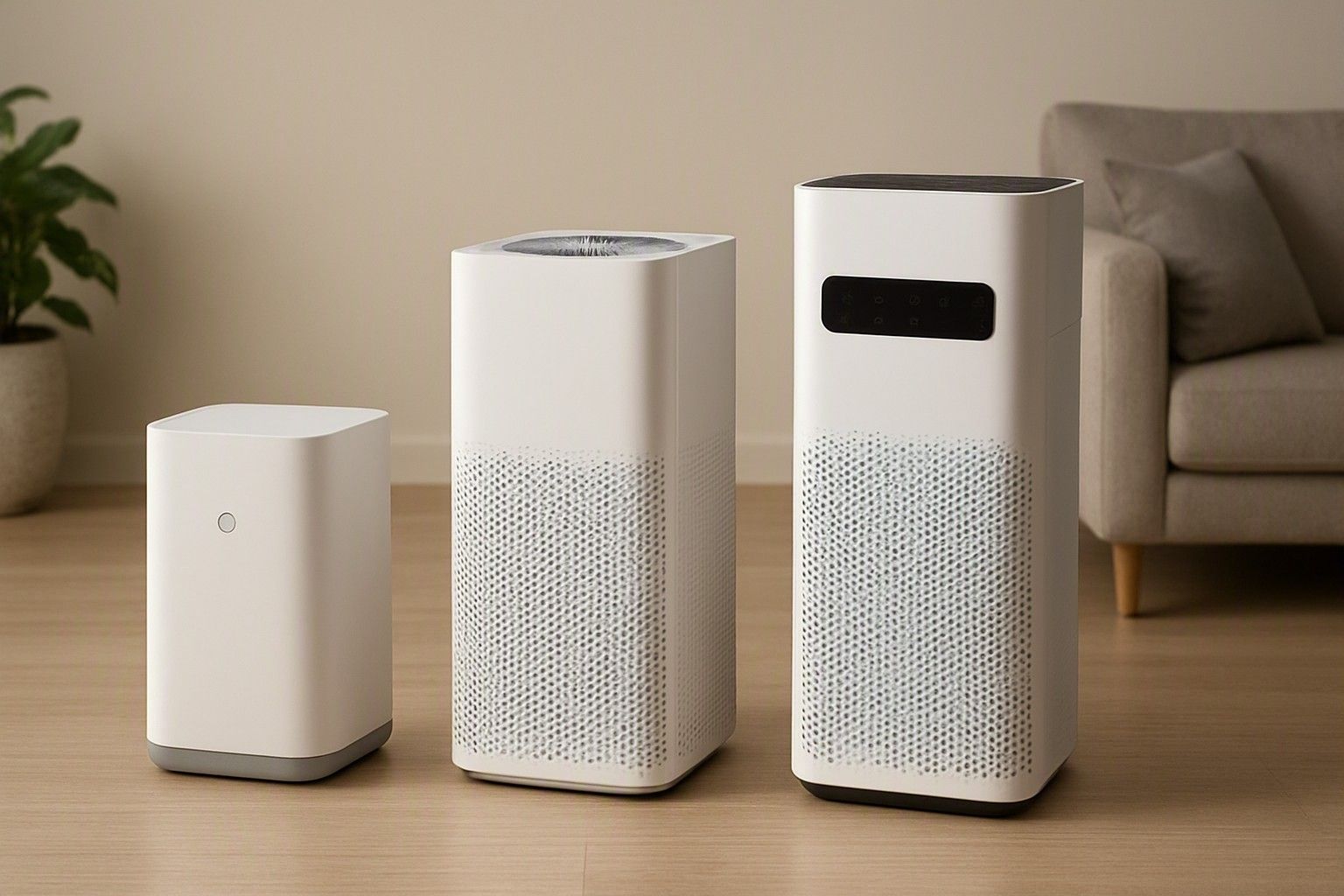
If you're trying to figure out how much an air purifier should actually cost, the honest answer is: it depends on room size, pollution load, and how much filter replacement you're willing to pay for later. Air purifiers sold in India span ₹4,500 to ₹80,000, and the jump between tiers isn't cosmetic — it changes coverage area, filtration stages, and how long the unit lasts before it needs real maintenance. This article breaks down exactly what you get at each price point, so you can set a budget instead of guessing at one.
The Price Range You'll See in India
Air purifiers sold in the Indian market run from ₹4,500 at the low end to ₹80,000 at the premium end, with the average purchase landing around ₹15,000. That spread exists because "air purifier" covers a huge range of machines — small single-room units meant for a bedroom, mid-size purifiers meant to handle a living room with moderate pollution, and large-capacity machines built for bigger homes or genuinely bad outdoor air quality. None of these are doing the same job, so it's not useful to think of one "right" price for the category. It's more useful to think in tiers, because each tier tends to cluster around a specific room size and a specific level of filtration seriousness. Under ₹6,000 you're mostly buying basic coverage for a small space. Between ₹6,000 and ₹15,000 sits the range where most Indian households actually end up buying, because it balances real filtration performance with a manageable running cost. Above ₹15,000 and up to ₹35,000, you start paying for larger coverage, quieter operation, and filtration built for tougher pollution days. Knowing which tier matches your room and your air quality concern is the first real decision, before you even start comparing individual models.
Entry Models Under ₹6,000
Purifiers priced under ₹6,000 are built to cover small spaces — typically a single bedroom or a compact room, not an open living-dining area. At this price, you're usually getting a basic pre-filter to catch dust and larger particles, paired with a HEPA-type filter that handles finer particulate matter, but without the extra activated carbon layer that helps with smoke and odours. Fan motors at this tier tend to be simpler, which usually means fewer speed settings and a machine that's audibly louder when running on higher settings. Build quality is functional rather than refined — expect plastic housings, basic display panels, and manual controls rather than app connectivity or air quality sensors that auto-adjust fan speed. That doesn't make these bad purchases; for someone who wants basic dust and allergen control in a small room and doesn't face heavy pollution exposure, an entry model does the core job. Where this tier falls short is in homes with genuinely poor outdoor air, larger rooms, or households with someone who has respiratory sensitivity — the filtration area is simply too small to keep pace, and you'll notice the air not clearing as quickly as you'd expect. Think of this tier as the floor of the category, not a shortcut to the same performance at a lower price.
The ₹15,000 Sweet Spot for Most Homes
The stretch from ₹6,000 to ₹15,000 is where most Indian buyers land, and for good reason — it's the first tier where you consistently get a true multi-stage filter setup: a pre-filter, a proper HEPA filter rated for fine particulate matter, and an activated carbon layer for odours and light smoke. Coverage area steps up meaningfully here too, with enough airflow to handle a living room or a couple of connected rooms rather than just one bedroom. You'll also start seeing more usable features at this tier — multiple fan speeds, a sleep or night mode that keeps noise down, and sometimes a basic air quality indicator that gives you a rough read on when the room needs more active filtration. Build quality improves as well, with sturdier housings and filters that are easier to access and replace without extra tools. This is also the tier where the value proposition is clearest against the category average of ₹15,000 — you're not paying entry-level compromises, but you're also not paying for premium capacity you may not need. For a typical apartment or independent house room, this range covers the vast majority of realistic use cases without asking you to stretch into premium territory.
Premium ₹35,000 Models: Worth It?
Once you move past ₹15,000 and into the ₹35,000 range, you're paying for scale and refinement rather than a fundamentally different filtration idea. These machines typically cover larger rooms or open-plan living spaces, run quieter at comparable airflow thanks to better motor and fan engineering, and often add real-time air quality sensors that adjust fan speed automatically instead of leaving you to guess. Some models in this range also add extra filtration stages aimed at very fine particles or stronger odour and gas control, which matters more in cities with consistently poor air quality readings. Whether that's worth the jump depends entirely on your situation, not on the fact that it's a bigger number on the price tag. A large open living room, a household with someone managing asthma or allergies, or a city with regularly high pollution index readings are all legitimate reasons to spend here. A small bedroom with occasional dust concerns is not — you'd be paying for coverage and sensing capability you'll never use. The most reliable way to decide is to match higher budgets to serious pollution needs rather than buying premium because it feels like the safer choice by default.
Is Today's Price Actually a Good Deal?
With prices across the category running from ₹4,500 to ₹80,000 and averaging around ₹15,000, the most useful question isn't whether a price will drop later — it's whether what you're being asked to pay today sits inside the normal range for the tier and features you actually want. If a purifier is priced near the top of its tier's typical band but doesn't offer the filtration stages, coverage area, or build quality you'd expect at that level, that's a signal to look at other models in the same bracket rather than assume it's simply expensive right now. Conversely, a purifier priced toward the lower end of a tier that still delivers the filtration and coverage you need is a reasonable buy at that moment, not a purchase to postpone. Air purifier pricing in India doesn't follow the same aggressive seasonal discounting patterns you see in some other appliance categories, so waiting rarely changes the underlying value equation much — it mostly just delays clean air in your home. The more productive use of your time is comparing what a given price gets you against the tier benchmarks above, and buying once you've confirmed the fit for your room size and pollution concern.
Don't Forget Filters in Your Budget Maths
The purchase price is only part of what an air purifier will cost you over its life. HEPA and carbon filters wear out and need replacing on a regular cycle, and depending on the model, that recurring cost can add up to a meaningful fraction of what you paid upfront — sometimes within the first year or two of ownership. This is where a lot of buyers get their budget maths wrong: they compare two purifiers purely on sticker price without checking how often filters need replacing or how much each replacement costs, and end up with a cheaper machine that's actually more expensive to run over three or four years. Before you finalise a budget tier, it's worth working out what you'll spend on filters annually and treating that as part of the real cost of ownership, not a separate line item you'll deal with later. The smarter approach is to add recurring filter spending to the sticker price before comparing models across tiers, because a purifier that looks like better value at purchase can lose that advantage once you factor in a year or two of filter replacements.
Setting a Budget That Fits Your Priorities
By now you have the price map: ₹4,500 to ₹80,000 across the category, an average purchase around ₹15,000, and a clear sense of what changes as you move from under ₹6,000 through the ₹6,000–₹15,000 sweet spot and into ₹15,000–₹35,000 premium territory. But price alone doesn't tell you which tier is right for you — that depends on room size, local pollution levels, whether anyone in the house has respiratory sensitivities, and how much ongoing filter spending you're comfortable with. Setting a number in isolation, without weighing it against those factors, is how buyers end up either overspending on capacity they don't need or underspending and living with a purifier that can't keep up with their room. The most reliable way to land on the right budget is to tie your budget back to every other purchase factor — coverage area, filter type, noise levels, and running costs — rather than picking a number first and working backward. Once you've done that cross-check, the price point stops feeling like a guess and starts feeling like a decision you can stand behind.
You now know what separates an entry-level purifier from a mid-range or premium one, and where your own room size and pollution concern should put you on that scale. Use the tier breakdown above against your specific situation, factor in filter running costs, and you'll be able to commit to a price point with actual reasoning behind it — not just a number that felt safe.

Comments
Be the first to comment.