Air Purifier vs Indoor Plants vs Air-Cleaning AC
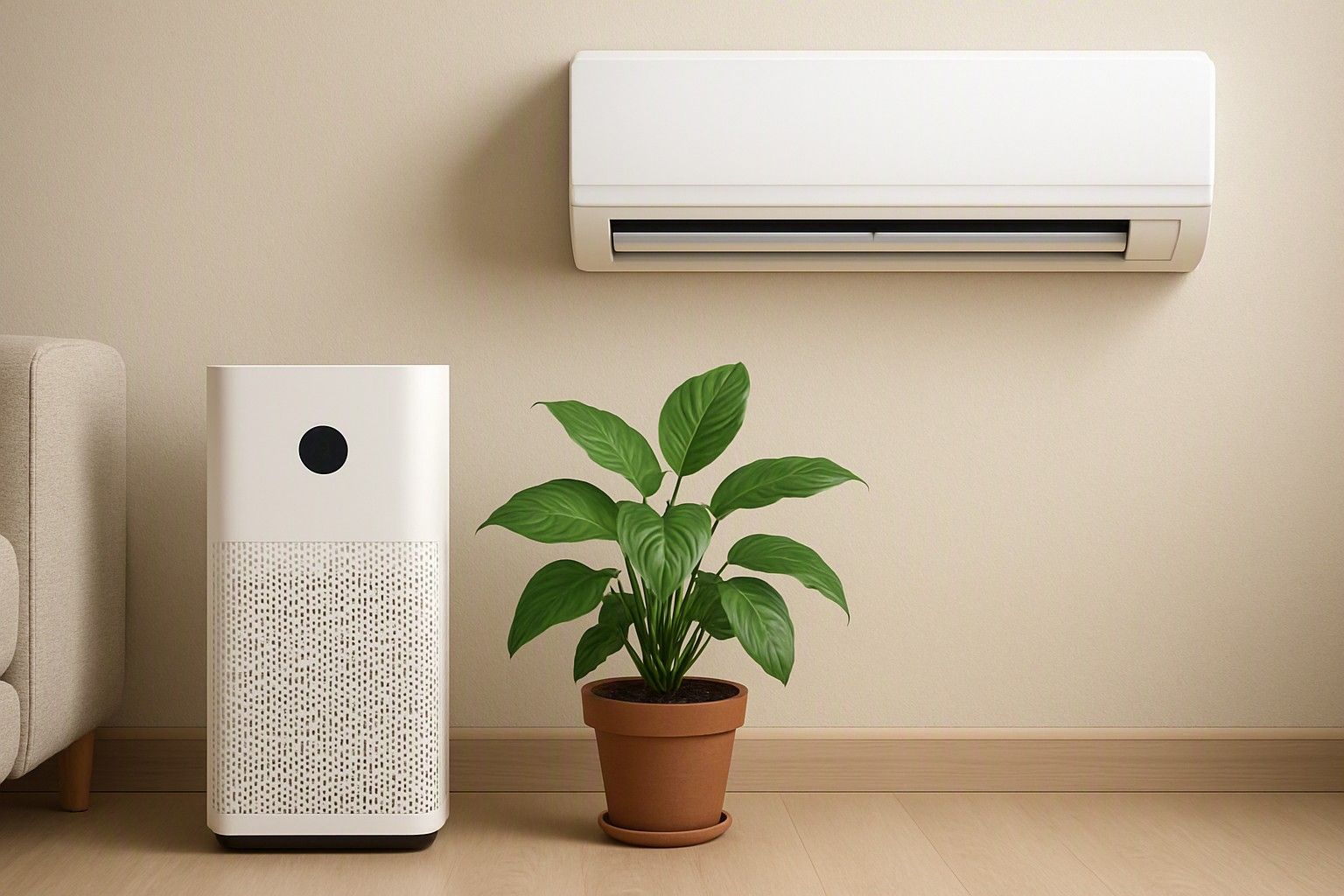
If you're wondering whether a few potted plants or your new AC's "air purifying" mode can do the job of a dedicated purifier, the honest answer is: mostly no, but it depends on what problem you're actually solving. This article compares the three side by side so you're not spending money — or skipping a purchase — based on a marketing claim rather than how these things actually behave indoors.
Can Indoor Plants Clean Air the Way People Claim?
Indoor plants are one of the most persistent air-quality myths, and it's worth being direct about why. The famous NASA study that started the "plants clean air" idea was conducted in a sealed lab chamber with no fresh air exchange — nothing like a real Indian living room or bedroom with doors opening, cooking happening, and air circulating naturally. In real rooms, follow-up research has repeatedly found that you would need dozens of plants per square metre to make a measurable dent in indoor pollutant levels, and even then, plants are slow to act compared to mechanical filtration.
What plants genuinely do well: they add humidity, look good, and can modestly help with certain VOCs (volatile organic compounds) from paints or furnishings over time, in a small, sealed space. What they do poorly is anything related to particulate matter — PM2.5 and PM10, the fine dust and smoke particles that Indian cities are actually dealing with during high-pollution months. Plants don't filter particles out of air the way a HEPA filter physically traps them; they have no mechanism to do so at meaningful volume.
So if your concern is outdoor smoke, traffic pollution, or seasonal stubble-burning haze finding its way indoors, plants alone won't move the needle. If your concern is a slightly stuffy, low-humidity room with no major pollution source, plants can be a pleasant, low-cost addition — just not a replacement.
Air-Purifying ACs vs Dedicated Purifiers
Many split ACs now advertise an "air purifying" or "anti-viral" filter built into the unit, and it's tempting to assume this makes a separate purifier redundant. In practice, these AC filters are usually a thin mesh or ionizer stage bolted onto the intake, designed to catch large dust and some odours — not a true multi-stage HEPA system with a dense, replaceable filter bed sized for the room. The airflow through an AC is also optimised for cooling, not for repeatedly cycling the entire room's air through a filtration stage the way a purifier is built to do.
A dedicated air purifier is engineered around one job: pulling in room air, passing it through progressively finer filter stages (pre-filter, HEPA, sometimes activated carbon for smells and gases), and pushing it back out — many times an hour, rated by its CADR (clean air delivery rate) for a specific room size. An air-purifying AC does this incidentally, at a much lower rate, while its main compressor and fan are busy managing temperature.
The practical difference shows up during pollution spikes — a smoggy week, a nearby construction site, or wildfire-season haze — when you need aggressive, continuous filtration rather than an occasional pass-through. It also matters that ACs are typically run only during hot months in most Indian homes, while indoor air pollution from cooking, dust, and traffic doesn't take a seasonal break. If you're relying on your AC's purifying mode as your only defence, you're getting a fraction of what a dedicated unit delivers, most of the year it isn't even running.
Exhaust Fans and Ventilation: When They're Enough
Ventilation solves a different problem than filtration, and knowing the difference matters here. An exhaust fan or open window removes stale air and swaps it for outdoor air — useful for kitchen smoke, bathroom humidity, or general staleness in a room that's rarely aired out. But it only works when the air coming in is cleaner than the air going out.
In most Indian cities during winter and early summer, outdoor air quality is frequently worse than indoor air, especially in the evenings. In that situation, opening windows or running an exhaust fan is actively counterproductive — you're inviting outdoor PM2.5 in, not pushing pollution out. Ventilation is genuinely enough when you're dealing with cooking odours, a one-off paint smell, or humidity buildup, and outdoor air quality is reasonably good that day.
It is not enough when the outdoor air itself is the problem, which is exactly the scenario most Indian purifier buyers are worried about. A sensible approach many households use is situational: ventilate on genuinely clear days, and rely on filtration on days when the outdoor air quality index is poor. Treating ventilation as a permanent substitute for a purifier only works if you happen to live somewhere with consistently clean outdoor air, which describes very few Indian cities for most of the year.
Where a Dedicated Purifier Clearly Wins
Once you line up plants, air-purifying ACs, and ventilation against what a dedicated purifier does, the gap is clearest in three specific situations. First, sustained particulate exposure — smog episodes, stubble-burning season, or living near a busy road — where you need continuous, high-volume filtration that only a purifier's dedicated fan and filter stack can provide. Second, households with a genuine medical reason to control air quality closely: asthma, allergies, or a young child or elderly person sensitive to dust and smoke. Third, homes where windows stay shut most of the day anyway, whether for AC efficiency or noise, meaning natural ventilation isn't doing much filtering work regardless.
In each of these cases, plants and AC filters are supplementary at best — they don't have the filtration capacity or runtime pattern to matter much. A purifier is also the only option among the three that you can size, monitor (many show real-time PM2.5 readings), and run continuously without depending on weather, season, or plant density in your room.
Where a purifier is genuinely not needed: a home with consistently good outdoor air, no major indoor pollution sources, and no household members with respiratory sensitivity. That's a smaller share of Indian households than marketing suggests, but it does exist — coastal towns with clean sea breeze, hill stations, homes far from traffic and industry. If you're unsure which category you fall into, it's worth taking a step back to revisit whether your household genuinely needs one before comparing models further.
Cost Comparison Over a Few Years
Money is where this decision often actually gets made, so it's worth being concrete. Indoor plants are the cheapest option upfront — a handful of pots costs a few hundred rupees each — but they need ongoing care, occasional replacement, and, as covered above, they don't meaningfully address particulate pollution, so the cost comparison isn't really apples to apples. An air-purifying AC has no separate purchase cost if you're already buying an AC for cooling, but you're paying for a filtration feature you'll barely use for most of the year, and the filter itself is rarely user-replaceable or high-capacity.
A dedicated purifier sits in a clear price band in the Indian market — from ₹4,500 at the low end up to ₹80,000 for high-capacity or feature-heavy models, with the average buyer paying around ₹15,000. Most households looking for genuine year-round protection land in the ₹15,000 range, which typically covers a room-appropriate CADR and a proper multi-stage filter. Budget options under ₹6,000 exist for smaller rooms, while the ₹35,000 tier adds features like larger coverage, quieter operation, or app connectivity rather than fundamentally better filtration.
The ongoing cost that catches people off guard is filter replacement — typically needed every several months depending on usage and local pollution levels — which is a real recurring expense a purifier carries that plants and AC filters don't. Before deciding between these paths, it's worth taking the time to compare true ownership costs before choosing a path, since the sticker price is only part of what you'll spend over the years you own it.
Making the Final Call Between Options
None of these three options are direct competitors once you look closely — they solve overlapping but different problems. Plants are a low-cost, low-effect addition that improve a room's feel without touching particulate pollution in any meaningful way. Air-purifying ACs offer a marginal filtration bonus on top of a purchase you may already be making for cooling, but they run only when the AC runs and filter far less air than a dedicated unit. Ventilation is free and effective, but only on days when outdoor air is actually cleaner than indoor air, which isn't reliable in most Indian cities for large parts of the year.
A dedicated air purifier is the only one of the three built specifically and continuously for filtration, and it's the right call for households dealing with real particulate exposure, sensitive family members, or consistently sealed-up rooms. If your situation doesn't match that, spending on plants and better ventilation habits is a reasonable, lower-cost path. Since this decision doesn't exist in isolation from the rest of your purchase — room size, filter costs, and where you'll place the unit all factor in — it helps to weigh this choice inside the wider purchase decision rather than deciding on this comparison alone.
The comparison ultimately comes down to what's actually polluting your air and how consistently. Plants and ventilation help around the edges, an air-purifying AC adds a small bonus to a cooling purchase, but a dedicated purifier is the only one of the three designed to filter continuously, at scale, regardless of season — and that's the deciding factor for most Indian households weighing this choice.
Comments
Be the first to comment.