Air Purifier Filter Replacement and Running Costs in India
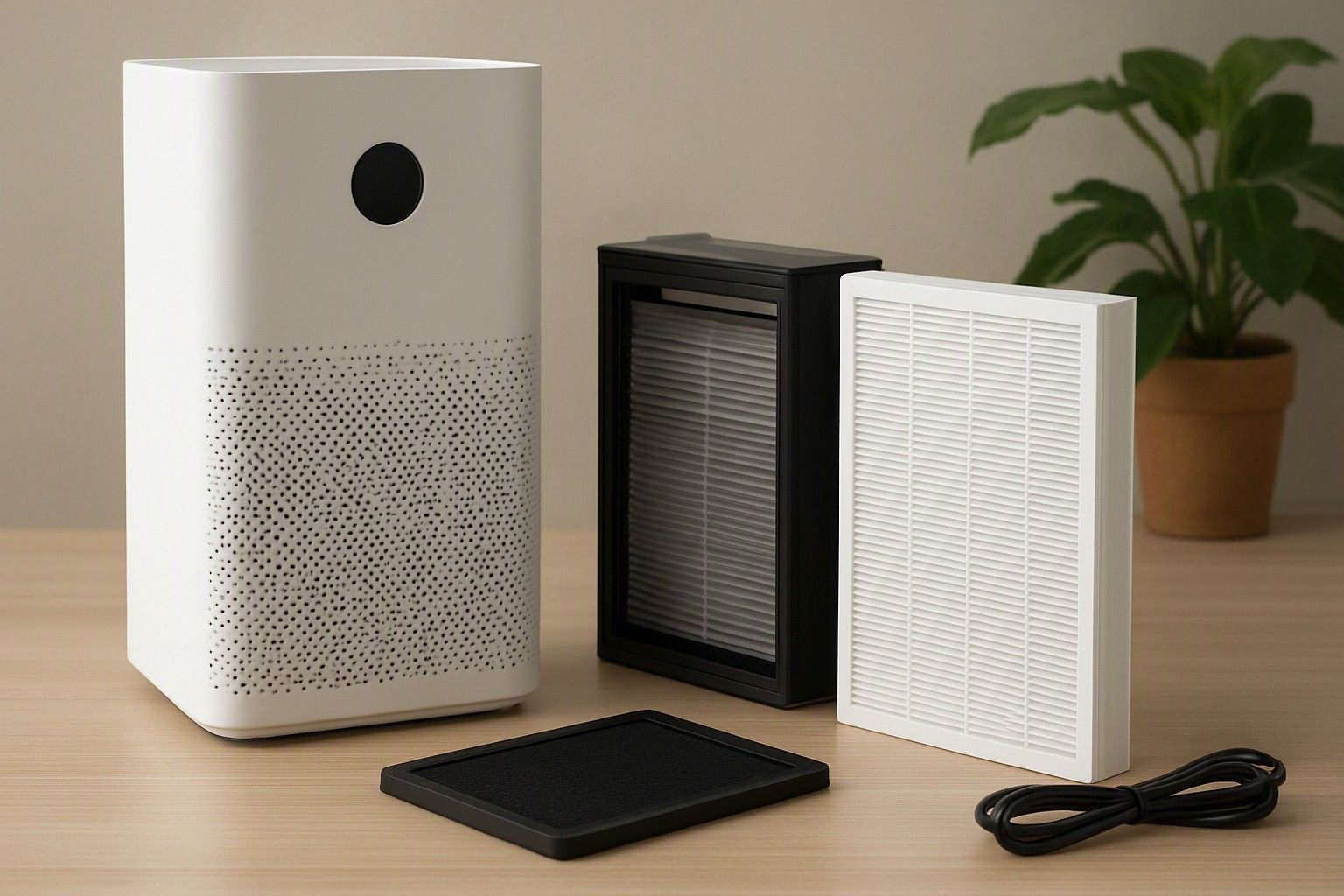
The purchase price on the box is only the entry fee. What decides whether an air purifier is actually affordable is what it costs to keep running every month after that — filters, power, and the occasional surprise replacement. If you're trying to figure out the real annual number before you commit, this is that math laid out plainly.
How Often Filters Really Need Replacing in India
Manufacturer manuals often quote a filter life of six to twelve months, but that number assumes moderate, western-city air quality. Indian cities, especially through winter and the stubble-burning months, push far more particulate load through a purifier than the same machine would see in a country with cleaner ambient air. In a metro with heavy traffic or seasonal smog, a HEPA filter that's rated for a year of use can visibly clog and lose efficiency in six to eight months, particularly if the purifier runs most of the day in a bedroom or living room.
Carbon or gas-absorption layers behave differently — they saturate faster in kitchens near cooking smoke or in homes close to industrial areas, sometimes needing attention every three to four months even when the HEPA layer still has life left. Pre-filters, the washable mesh layer that catches dust and hair, need cleaning every one to two weeks in dusty Indian conditions to stop the finer filters from clogging prematurely.
The practical takeaway: don't plan around the box's stated filter life. Plan around your city's air quality index and how many hours a day the unit runs. A purifier used 16-18 hours daily in Delhi will chew through filters noticeably faster than the same model run occasionally in a smaller town with cleaner air.
What Replacement Filters Cost by Brand
Replacement filter pricing varies enormously depending on where the purifier itself sits in the market. Entry-level machines in the ₹6,000 band typically use smaller, simpler filter cartridges that cost less individually, but because these machines are often less efficient to begin with, the filters need swapping more frequently — so the low sticker price on a replacement doesn't always translate to a low annual spend.
Mid-range purifiers in the ₹15,000 bracket usually carry a combined HEPA-plus-carbon filter unit, sold as one cartridge rather than separate layers. This is convenient for replacement but means you're paying for a full unit even if only the carbon layer has saturated. Purifiers in the ₹35,000 range and above, closer to the ₹15,000 mark and beyond, tend to use larger, multi-stage filter assemblies that cost more per replacement but often last longer per rupee spent, since the filter media itself is denser and rated for heavier particulate loads.
Across the board, expect filter replacement to be an annual or twice-yearly line item rather than a one-time cost. Before buying, it's worth checking what a replacement filter for that specific model costs and how easily it's stocked, because a purifier that seems cheap upfront can turn expensive if its filters are priced high relative to the machine's own value, or hard to source when you actually need one.
Electricity Consumption of Running It Daily
Air purifiers are generally low-wattage appliances compared to something like an air conditioner, but running one continuously through the day and night adds up over a billing cycle. Most home purifiers draw somewhere between 25 and 60 watts on lower fan speeds, and can climb higher — sometimes past 70-100 watts — on turbo or high settings used during heavy pollution spells.
A unit run on a moderate speed for 12 hours a day draws a modest amount of power daily, but many households in polluted cities run purifiers closer to 18-24 hours during winter months, and that shifts the calculation meaningfully. Larger purifiers built for bigger rooms, which tend to sit in the higher price bands up toward ₹80,000, also carry bigger motors and higher sustained power draw, especially when the room size pushes the unit to run on higher fan speeds most of the time to keep up.
The practical effect is that electricity cost rarely becomes a dominant expense next to filters, but it isn't negligible either, particularly for larger-room units run near-continuously across a full pollution season. Anyone budgeting seriously for ownership should treat power draw as a secondary but real cost, checked against the wattage rating printed on the unit or its manual, not assumed from the purchase price alone.
Filter Availability and Brand Lock-In
One of the least discussed ownership risks with air purifiers is what happens when a brand discontinues a model or scales back its India presence. Unlike a chimney or geyser, where replacement parts are often generic, air purifier filters are almost always proprietary — designed to fit one specific model or a narrow family of models from one manufacturer. If that brand exits the category or stops importing spares, you're left holding a machine with no legitimate filter source, and third-party or unbranded replacements are a real compromise on filtration quality and fit.
This is a bigger factor at the budget end of the market, where smaller or newer brands sometimes discontinue models quickly, than at the premium end, where established players tend to support filter supply for longer. Before buying, it's worth checking whether the model has been in the market for a while with a visible filter supply chain, rather than being a brand-new launch with no replacement history yet.
The filter architecture itself — whether it's a single combined cartridge or separate swappable layers — also shapes long-term flexibility, and it's worth taking the time to understand how filter design decides your future costs before finalising a model, since this single decision affects every replacement you'll make for years afterward.
Total Cost Over Three to Five Years
Add it up properly and the picture looks different from the price tag on day one. Take a purifier bought anywhere in the ₹4,500 to ₹80,000 range: over three to five years, filter replacements alone — assuming one to two swaps a year depending on the model and your city's air quality — can rival or exceed the original purchase price, especially for machines bought at the lower end of that range. Electricity adds a smaller but steady layer on top, accumulating quietly across pollution seasons where the unit runs long hours daily.
A purifier bought near the ₹15,000 mark, with a well-supported filter line and moderate running hours, often ends up cheaper in total five-year cost than a budget unit bought under ₹6,000 that needs filters more often and runs less efficiently per hour of use. This is the calculation that upfront price alone hides, and it's exactly why the purchase price and the running cost need to be weighed together rather than treated as separate decisions.
It helps to read total cost alongside the upfront price bands before deciding which tier actually fits your budget, because a slightly higher purchase price with lower ongoing filter costs can genuinely work out cheaper than the cheapest machine on the shelf.
Budgeting for the Full Ownership Picture
The honest way to shop for an air purifier in India is to stop looking at the price tag as the whole decision. Work out roughly how many hours a day you'll realistically run it, check what a replacement filter costs for that specific model, and factor in whether the brand has a track record of keeping spares available. That combined number — purchase price plus a realistic filter and electricity estimate for the first few years — is the figure that actually matters for your budget, not the number on the shelf sticker.
This is also where it makes sense to step back and factor running costs into your complete buying decision, because room size, pollution levels in your city, and how many hours the unit runs daily all interact with filter life and power draw in ways that are specific to your household, not generic to the category. Getting this right once, before purchase, saves the irritation of discovering a year in that a "budget" purifier has quietly cost more to run than a pricier one would have.
Filters and electricity are not footnotes to an air purifier purchase in India — for many households they end up costing as much as the machine itself over a few years. Knowing roughly how often you'll replace filters, what those replacements cost for your model, and how power draw scales with daily running hours turns an unpredictable ongoing expense into something you can actually plan for before you buy, not discover afterward.
Comments
Be the first to comment.