Choosing an Air Purifier for High-Pollution Indian Homes
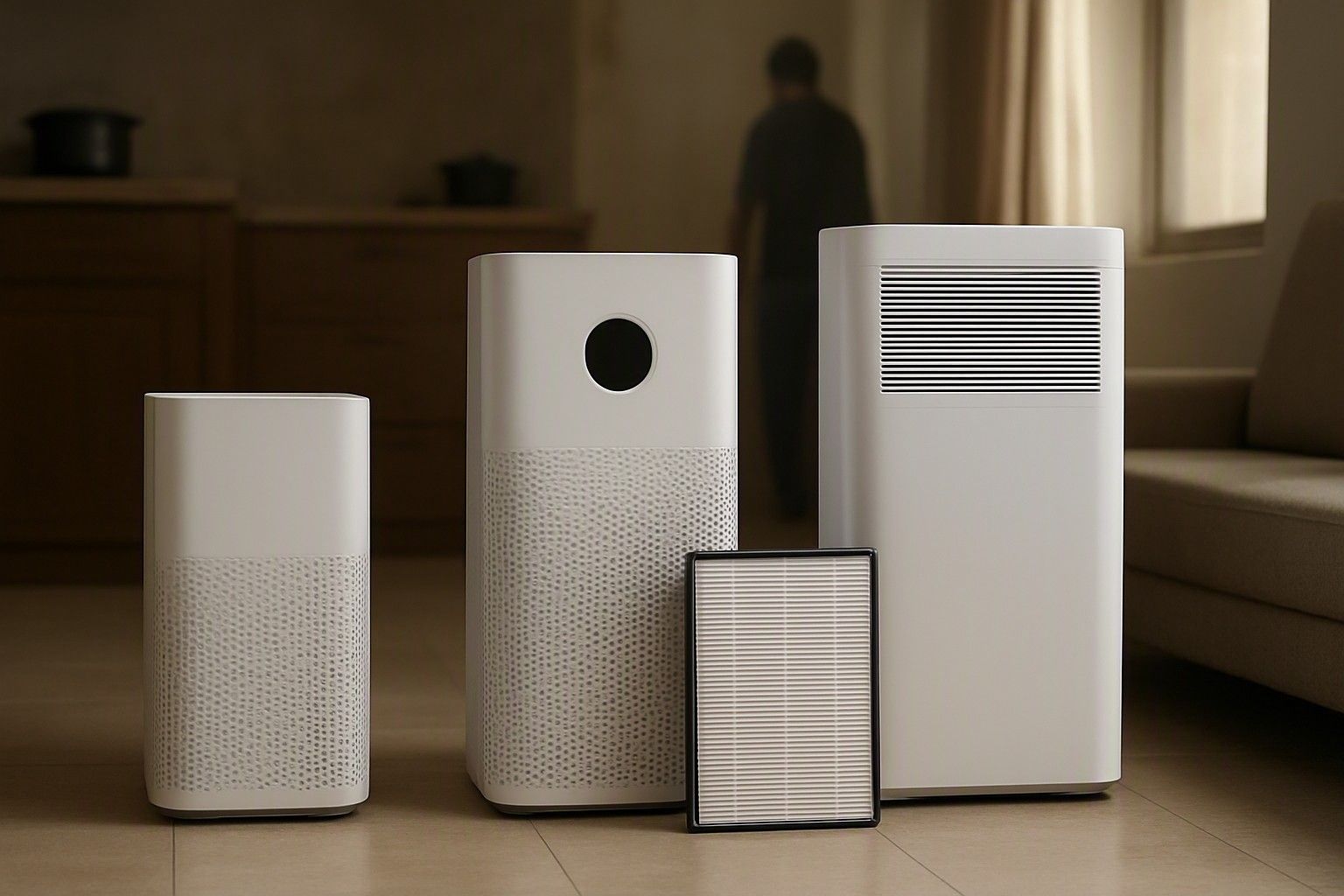
If your real worry is winter AQI touching severe levels, Diwali smoke rolling in overnight, or a kitchen and main road that keep the air dirty all year, a generic "top-rated" purifier recommendation won't help you. What matters is whether the unit you pick can handle sustained, heavy pollution loads rather than just light, occasional dust — and that depends on filter design, CADR, and how you size it against your actual rooms. This article walks through each of those India-specific stress points so you know exactly what to look for before you buy.
Winter Smog and Peak AQI Season Demands
For most of North India, the real test of a purifier isn't daily use — it's the six to ten weeks a year when AQI sits in the 'very poor' to 'severe' band and stays there for days at a stretch. During this period the machine is expected to run near-continuously, often on higher fan speeds, and that changes what you should prioritise. A unit that feels adequate in October can feel underpowered by late November when outdoor PM2.5 pushes indoor levels up even with doors shut. What you need here is sustained performance, not peak performance in a lab test: a purifier that can run for hours on a mid-to-high setting without the filter saturating within days, and without the motor noise becoming unbearable at night. Filter life also gets compressed dramatically in this window — a HEPA filter rated for several months under normal conditions can clog in weeks during peak smog, so factor in the added running cost of filter replacements when budgeting. If your home sits in a city that regularly sees severe winter AQI, this seasonal surge — not the mild pollution of the rest of the year — should be the benchmark you size and budget your purifier against, because a machine that only just copes with average conditions will visibly struggle when it matters most.
Diwali Smoke and Festival Air Spikes
Diwali creates a different kind of stress: not sustained smog but a sudden, sharp spike in smoke and particulate matter concentrated over a night or two, often indoors as much as outdoors if firecrackers are used nearby or incense and diyas are burning inside the home. A purifier bought mainly with everyday dust in mind may not have the headroom to respond quickly to this kind of spike. What matters here is how fast the unit can bring a room down from a very high reading to a comfortable one — its response speed on the highest fan setting matters more on these nights than its quiet, low-speed performance does the rest of the year. Activated carbon layers help meaningfully here because festival smoke carries strong odours and gaseous compounds that a HEPA filter alone won't neutralise, so a purifier with a combined HEPA and carbon setup handles the smell as well as the particles. It's also worth running the purifier proactively in the hours before and during the festival rather than switching it on only once the room already feels smoky, since most purifiers clean air progressively rather than instantly. If Diwali is the one time of year your air quality genuinely worsens indoors, treat that night's demands as a stress test the machine needs to pass, not an edge case you can ignore.
Open Kitchens, Frying and Indian Cooking Smoke
Indian cooking — tempering, deep frying, tandoor-style grilling, or just regular use of a gas stove without strong exhaust — puts out a mix of fine particulates, oil aerosols, and strong odours that behaves differently from outdoor dust or smog. This matters a lot in open-plan homes where the kitchen isn't walled off, because cooking smoke drifts straight into the living or dining area and the purifier ends up doing double duty as an odour and grease-particle handler, not just a dust filter. A plain HEPA filter will catch the particulate load from frying reasonably well, but it does little for the lingering smell of masala, fish, or burnt oil that hangs in the air long after cooking ends — that's a job for activated carbon, and the amount of carbon in the filter stack varies a lot between models even at similar prices. If your kitchen is open to your main living space, it's worth taking the time to check which filters actually tackle cooking odours before you buy, rather than assuming any HEPA-labelled purifier will handle it. Placement matters too — a unit positioned closer to the kitchen boundary will clear cooking smoke faster than one tucked away in a far corner of the living room, so think about where you'll actually place it before deciding on capacity.
Roadside Dust and Ground-Floor Homes
Homes on or near a busy road, and especially ground- or lower-floor flats, deal with a fairly constant intake of coarse dust, vehicle exhaust particulates, and construction grit whenever windows or doors are opened, or through gaps around them. This is a different load pattern from smog or cooking smoke — it's less about sudden spikes and more about a continuous low-level input that keeps re-polluting the room throughout the day. For this kind of home, the pre-filter stage matters more than it does elsewhere, since a purifier that's constantly pulling in coarse dust needs a washable or replaceable pre-filter that can be cleaned often without the whole filter cartridge wearing out faster than expected. It also means the purifier is essentially never resting — even when outdoor AQI numbers look moderate, the localised dust near a road can be worse than the city average, so running the unit on a lower continuous setting through the day, rather than only switching it on when air visibly looks dusty, tends to keep indoor levels steadier. If you're on a lower floor facing a main road, it's worth accepting that your filter replacement cycle will likely be shorter than the manufacturer's general estimate, and budgeting for that rather than being caught off guard when performance drops off between scheduled replacements.
Why Heavy Pollution Needs Bigger Coverage
A purifier's CADR (Clean Air Delivery Rate) rating is usually quoted against ideal conditions, but under the sustained, heavy pollution loads common in Indian winters, festival smoke, or constant roadside dust, that same unit effectively delivers less usable clean air per hour than its spec sheet suggests. This is the single biggest reason people feel their purifier "isn't working" during peak pollution weeks — it was sized correctly for light, occasional use but not for near-continuous high-load running. The practical fix is to size up rather than size to the exact room-area recommendation: a purifier rated for your room's minimum requirement on paper will be running flat-out just to keep pace during a severe AQI week, leaving no headroom and shortening filter life in the process. Buyers across the ₹4,500 to ₹80,000 range face this same trade-off, and it's not simply a function of spending more — a mid-range unit with genuinely higher CADR for its price can outperform a pricier one that wasn't built with high-load Indian conditions in mind. Before deciding on a model, it's worth taking the time to size up your CADR for constant high-load running so the unit you buy has enough margin for the conditions it will actually face, not just the conditions it was tested under.
Building Your Purchase Around These Conditions
Once you've mapped which of these pressures apply to your home — winter smog, festival smoke, cooking fumes, roadside dust, or some combination — the decision becomes less about chasing a single best-in-class spec and more about matching filter type, carbon content, and CADR headroom to your specific conditions. A home with an open kitchen and a main-road frontage needs a different filter balance than one that's mainly dealing with seasonal smog for a few weeks a year, even if both sit in the same ₹15,000 price band. Price alone doesn't tell you this: the average purifier in the Indian market sits around ₹15,000, but plenty of units at the ₹6,000 end handle light, occasional pollution just fine, while genuinely heavy, sustained conditions usually call for something in the ₹35,000 range with stronger CADR and a proper carbon layer. There's no need to wait for a better deal to show up — current prices already reflect a wide, well-established range from ₹4,500 to ₹80,000, so the more useful step is narrowing down what your home actually needs. That's exactly where it helps to fit these India-specific needs into your overall choice and work through room size, filter type, and running cost together as one decision.
Whichever of these conditions dominates in your home — a smog-heavy winter, a smoky Diwali, an open kitchen, or a dusty main road — you now have a clearer read on what actually changes the answer: filter composition, CADR headroom, and where you place the unit, not a generic star rating. Match those to your specific pollution pattern and the right purifier for your home stops being a guess.
Comments
Be the first to comment.