Open vs Closed System Breast Pumps: Is a Borrowed or Hand-Me-Down Pump Safe?
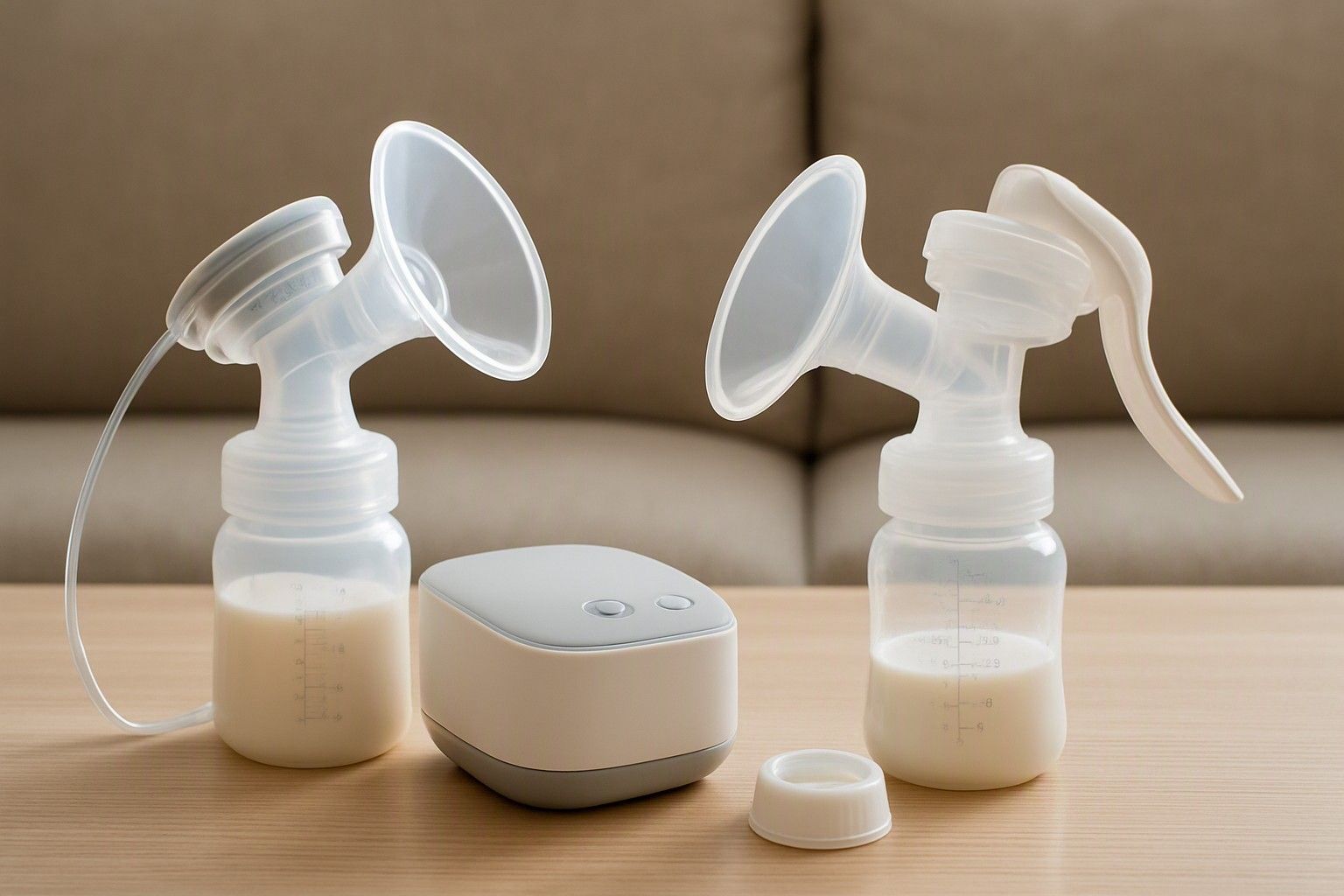
If your sister or cousin has offered you her old breast pump, the safe answer depends on one thing: whether it is a closed system pump, and what condition its motor and tubing are in. This article is for you if you are weighing a hand-me-down or second-hand pump against buying new. By the end you will know which parts you can reasonably reuse, which you should always replace, and when buying new is the simpler call.
What Open and Closed System Mean in a Breast Pump
The difference comes down to one barrier. In a closed system pump, a diaphragm, silicone membrane or sealed protector sits between the part that collects milk and the tubing and motor. Air can move through to create suction, but milk and moisture are meant to stay on the collection side.
An open system pump has no such barrier. The air path runs straight from the flange and bottle through the tubing to the motor, so the milk collection area is not sealed off from the mechanical side.
Two practical points matter for an Indian buyer. First, the listing or box does not always say which type it is, and the wording varies: look for terms like backflow protection or closed system, and confirm it in the manual rather than assuming. Second, a closed system is not a permanent shield. The barrier is a wearable part, and over months of use it can loosen, stretch or crack. A closed pump with a worn barrier is no longer reliably closed, which is why the age and condition of a pump matter as much as its design.
How Milk Backflow Can Contaminate the Motor and Tubing
Every pumping cycle creates pressure changes. In an open system, milk droplets, vapour and moisture can travel up from the flange into the tubing, and sometimes into the motor housing. You may see fine condensation or droplets inside the tube after a session. That is your cue that moisture is already past the collection area.
The trouble is that nobody can wash what they cannot reach. Tubing is narrow and hard to dry inside. The motor is a sealed electronic unit that cannot be boiled, soaked or scrubbed. Warm, humid conditions, which many Indian homes have through the monsoon and in coastal cities almost year-round, give mould and bacteria a better chance of settling in damp tubing. Dark specks, a musty smell or tubing that stays foggy after drying are all warning signs.
This is the core reason many manufacturers treat personal pumps as single-user devices. If the previous user's milk moisture got into parts you cannot clean, you are feeding your baby from equipment with an unknown history. Replacing tubing deals with only part of that risk, because backflow that reached the motor stays there. If you are unsure about a particular pump, ask your paediatrician or a lactation consultant before using it.
Reusing a Relative's Pump: What Is Safe to Share and What Isn't
Think of the pump in two groups: parts that touch milk, and parts that do not.
Always use new for you: flanges or breast shields, valves, membranes, connectors, tubing and collection bottles. Milk-contact parts and anything that has been exposed to moisture should not pass from one mother to another. Soft silicone and rubber parts also age, so even a clean-looking old valve may not seal properly. Doing replacing tubing, valves and membranes before reusing a pump properly is the minimum, not a bonus.
Possibly reusable: the motor unit and power adapter of a closed system pump, but only if the manufacturer's manual allows reuse, the barrier is intact, the motor runs with steady suction, and the previous user can tell you how it was cleaned and stored.
Skip it entirely: any open system pump with a motor, any pump with cracked, yellowed or warped plastic, a pump whose manual is missing so you cannot confirm its type, or one stored damp in a cupboard for a long time.
Manual pumps are simpler: the hard parts can be sterilised, and the silicone and valve parts replaced. Before accepting an electric hand-me-down, price the replacement parts too. Once you add them up, the saving over a new basic pump in the ₹3,000 tier may be smaller than it first seems.
Buying Second-Hand Pumps Online: Risks to Weigh
A used listing from an unknown seller removes the one thing a family hand-me-down has: someone you can question. You cannot ask how often it was used, whether milk ever backed up into the tubing, or where it was kept during the monsoon. Photos show the outside of the plastic, not the inside of the tubing or the motor.
The other risks stack up quickly:
- No way to confirm system type. Sellers often do not know or mislabel it.
- Hidden contamination. Mould or residue inside tubing and the motor housing is invisible in a photo.
- Wear you cannot test. Weak or uneven suction, a tired battery or a worn barrier only show up after you have paid.
- No warranty or invoice. Warranty usually follows the original purchase, and many platforms restrict returns on used personal-care items.
- Missing or mismatched parts. Replacements for an older or unbranded model can be hard to find in India.
The category runs from ₹450 to ₹26,000, with an average of ₹2,800. When a used listing saves only a modest amount against a new pump in your tier, the saving rarely justifies the uncertainty over something your baby's milk passes through. If a used pump comes from a relative you trust and is a closed system, it is a reasonable option. From an anonymous seller, buying new is the safer decision.
Spotting Counterfeit or Unbranded Pumps on Marketplaces
Fakes are a bigger concern than used pumps, because they arrive looking new. Start with price. The low end of this category belongs mostly to manual pumps, so an electric pump listed near that level should be questioned. Treat prices that look suspiciously low for a branded electric pump as a prompt to verify the seller before anything else.
Then check the details a counterfeiter usually gets wrong:
- Seller identity. Look for the brand's official store or a named authorised seller, not a generic shop with a handful of unrelated products.
- Packaging. Spelling errors, blurry printing, no manufacturing date or batch details, and no manufacturer address or customer-care contact are red flags.
- Review photos. If customers' pictures show a different design, different parts or a loose, unsealed box from the listing, be cautious.
- Parts and smell. A strong chemical smell, rough moulding edges or parts that do not fit snugly suggest poor-quality plastic or silicone in contact with milk.
- Missing paperwork. No warranty card, no user manual, or a manual that does not mention system type.
If an unbranded pump will not tell you what materials it uses or whether it has a barrier, assume you cannot trust it.
Safety Checks to Run Before Checkout
Run through this list before you pay, whether the pump is new or a relative's:
- Confirm the system type in the manual or listing. If you cannot find it, treat the pump as open.
- Choose a sealed, new unit from the brand's own store or an authorised seller, and keep the invoice.
- Check the warranty and who handles service in India, not just the brand's global promise.
- Look up spare parts. Tubing, valves, membranes and flanges should be easy to buy separately, because you will need them.
- Read the materials claims on the box or listing for milk-contact parts, and be wary of vague wording.
- Check the return policy for opened personal-care items, so you know where you stand if the pump does not suit you.
- For a hand-me-down, inspect for cracks, discolouration, damp or odour, and test suction before you commit to cleaning and replacing parts.
The category runs through ₹900, ₹3,000 and ₹8,000, so settle on your tier first, then filter for closed system and a verified seller. Once safety is covered, use the wider list of fit, suction and power checks for a new pump to confirm the pump actually suits your routine. A pump bought now, with these checks done, gets you to a confident decision without delay.
So, can you use your sister's old pump? Only if it is a closed system in sound condition, her manual permits reuse, and you replace every milk-contact part. If it is an open system, its type is unclear, or it has been stored damp, buying new is the straightforward answer. The same goes for marketplace deals: verify the seller and the system type before you pay.
Comments
Be the first to comment.