Do You Actually Need a Breast Pump? When It Helps and When Hand Expression Is Enough
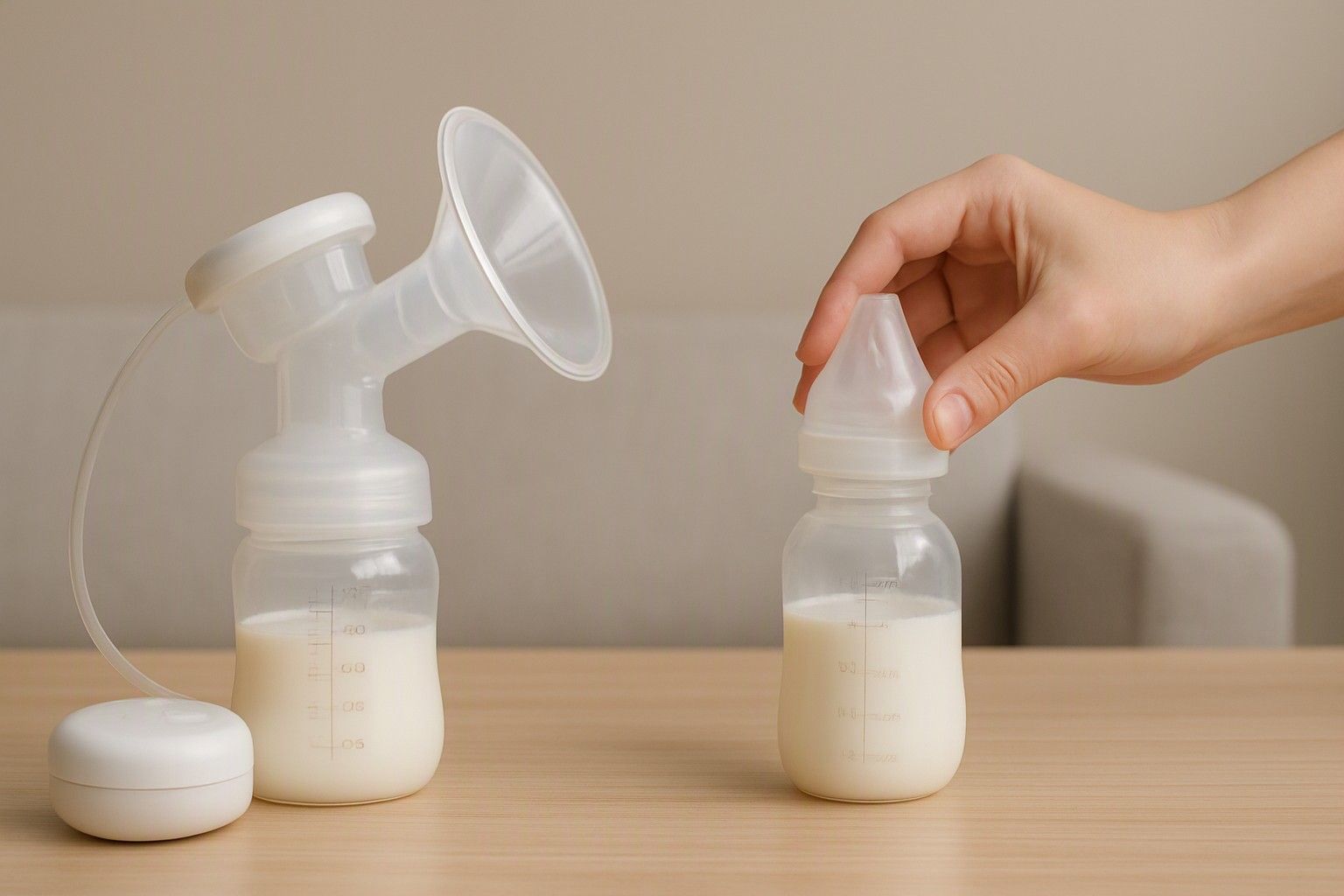
If your baby is feeding well at the breast, you and the baby are together most of the day, and no one else needs to give a feed, you may not need a breast pump at all. A pump becomes worth buying when something separates mother and baby, when latching is a struggle, or when someone else has to share feeds. This guide helps you work out which of those situations is yours before you spend anything.
How a Breast Pump Works and What It Can and Cannot Do
A breast pump imitates a baby's suckling with suction, which triggers milk to flow into a collection bottle. Manual pumps rely on your hand to create that suction. Electric and wearable ones use a motor, and some let you adjust speed or suction strength.
What a pump can do is move milk out of the breast when the baby cannot, or when you need to be away. It can also help relieve fullness, and it can keep your supply going while a feeding problem is being sorted out. Milk supply works on demand, so regularly removing milk tells your body to keep making it.
What a pump cannot do is fix a poor latch, make a baby feed better, or reliably boost supply for a mother who is already feeding on demand. It is also a poor measure of how much milk you make. A baby drains the breast far more efficiently than any device, so a small pumped quantity does not mean low supply, and many families worry needlessly because of it. Think of a pump as a tool for specific gaps, not a required part of breastfeeding.
It also needs cleaning after every use, which adds work to your day. That is a real cost, so it is worth having a clear reason before you take it on.
Situations Where a Pump Becomes Necessary: NICU Stays, Latching Trouble and Engorgement
NICU or special care stays. If a baby is born early or unwell and cannot feed at the breast, expressing is how you build and protect supply until direct feeding is possible. Here a pump is usually a real need rather than a convenience. Ask the hospital's nursing team how they want you to express, what equipment they recommend, and whether they provide or can point you to a pump for rent or purchase.
Latching trouble. When a baby cannot attach well, or feeds are painful or ineffective, expressing between feeds keeps milk being removed while you work on the latch with a lactation consultant. The expressed milk can be fed to the baby by a method your consultant suggests. In this case the pump is a bridge, and you may use it for weeks rather than months.
Engorgement. Very full, hard breasts can make it difficult for a baby to latch. Often a little hand expression to soften the area around the nipple is enough. A pump may help if fullness is persistent, but pumping heavily to empty the breasts can signal your body to make even more milk, so do it only as guided.
Another case is a mother who is medically unable to feed directly for a period. Her doctor will usually advise on expressing in that situation.
Returning to Work or Sharing Night Feeds With Family
Separation from your baby for several hours is the most common reason Indian mothers buy a pump. If you will be at work for most of the day, expressed milk lets a caregiver or grandparent feed the baby while you are away, and expressing during the workday keeps your supply steady. If you are heading back soon, it helps to start planning a pumping routine around a return to the office well before your first day, including where you will pump, how often, and how you will store the milk.
Sharing night feeds is the other situation. When a partner or family member gives a bottle of expressed milk at night, the mother may get a longer stretch of sleep. A baby monitor can add to that peace of mind, since whoever is on night duty can keep an eye on the baby from the next room while you rest. Many mothers find this valuable in the first months. A pump does the job here only if you are willing to express regularly, since the milk not taken from the breast overnight still needs to come out at some point.
Before introducing bottles, check with your lactation consultant or paediatrician about timing, since some babies take time to settle into feeding at the breast first. Also, if you work from home or have a short commute and can feed directly, you may not need a regular pumping schedule at all.
When Hand Expression or Occasional Pumping Is Enough
Hand expression costs nothing, needs no cleaning of parts, and goes wherever you do. It works well for the first days when colostrum is thick and comes in small amounts that a pump can leave behind in its bottle. It also helps to relieve a full breast, soften the nipple area before a feed, or give a spoonful of milk to a sleepy baby. A lactation consultant or the nursing staff can teach you the technique in a few minutes, and it is worth learning even if you buy a pump later.
If you are home with your baby, feeding directly, and only need to express now and then, such as for a doctor's visit, a wedding or a few hours out, you do not need a heavy-duty setup. In that case, a low-effort manual pump for occasional expressing usually covers the need without a large spend. Prices in this category start around ₹450, and most buyers who pump occasionally stay in the ₹900 range.
The signal that hand expression is no longer enough is repetition. If you find yourself expressing several times a day, for long stretches, or your hands and wrists ache, that is the point at which a pump starts to earn its place.
Buying Before Delivery vs Buying After Feeding Is Established
There is no single right time, but the situation you expect decides it.
Buy before delivery if you already know a pump will be needed. That includes a planned early return to work, a high-risk pregnancy where a NICU stay is likely, or a medical reason you may not be able to feed directly. Having it ready means no scramble while recovering from the birth. Put it in the hospital bag only if your hospital or consultant says it will be useful.
Buy after feeding is established if your situation is straightforward. The first few weeks tell you a lot about whether your baby latches well, how your supply behaves, and whether you really want to express. Many families discover they need only a simple manual pump, or nothing at all, and avoid spending on a motorised one they never use. Since pumps are widely available online and in stores, you can order within a day or two once the need is clear.
On cost, the category runs from ₹450 to ₹26,000, with an average of ₹2,800. Rather than watching for a lower price, match the pump to how often you will use it. Occasional use fits the lower tiers, and daily use tends to justify the ₹3,000 or ₹8,000 range.
Questions to Ask Your Lactation Consultant or Paediatrician First
Elders may have strong views on pumps, in either direction, so it helps to have a professional's view of your own baby. Take these questions with you:
- Is my baby latching and gaining weight as expected, or is there a feeding issue that expressing would help?
- Do I need to express in the first weeks, and if so, how often and for how long?
- Can you show me hand expression, and is it enough for my situation?
- If I plan to return to work, when should I start expressing and introducing bottles, so it does not disturb direct feeding?
- What is a safe way to store and warm expressed milk, and for how long can it be kept at home?
- If my baby is in the NICU, what should I use to express, and does the hospital provide or rent equipment?
- Which type of pump would suit how often I expect to use it?
- How should I clean pump parts, and how should I know if something is not working right?
Take notes on the answers. They tell you whether you need a pump at all, and if you do, they give you the details you need to choose one sensibly.
Once You Know You Need One, What to Compare
If the answers above point towards buying, the next step is narrowing down what suits you. Start with how often you will use it, since that decides whether a manual, electric or wearable type makes sense. Then look at whether the flange size fits you comfortably, how the pump is powered, and how easy the parts are to clean and dry at home.
Those details matter more than extra features. A pump that fits poorly or is hard to keep clean tends to sit unused. For a structured walk through these points, see the checks that narrow a pump down to fit, power and hygiene.
As a rough guide to spend, ₹900 is where simple manual options sit, ₹3,000 covers a wide range of everyday choices, and ₹8,000 is where more powerful electric pumps are found. Decide on how you will use it first, and the right tier usually becomes clear.
You now have a way to answer the question for your own family. If you are feeding directly, staying close to your baby and need only the occasional relief, hand expression or a simple manual pump will likely do. If a NICU stay, latching trouble, a return to work or shared night feeds are on the horizon, a pump is a reasonable purchase, and the questions for your consultant will tell you what kind. Decide on the need first and the product second.
Comments
Be the first to comment.