Breast Pump Spare Parts, Sterilising and Warranty: What Ownership Really Involves
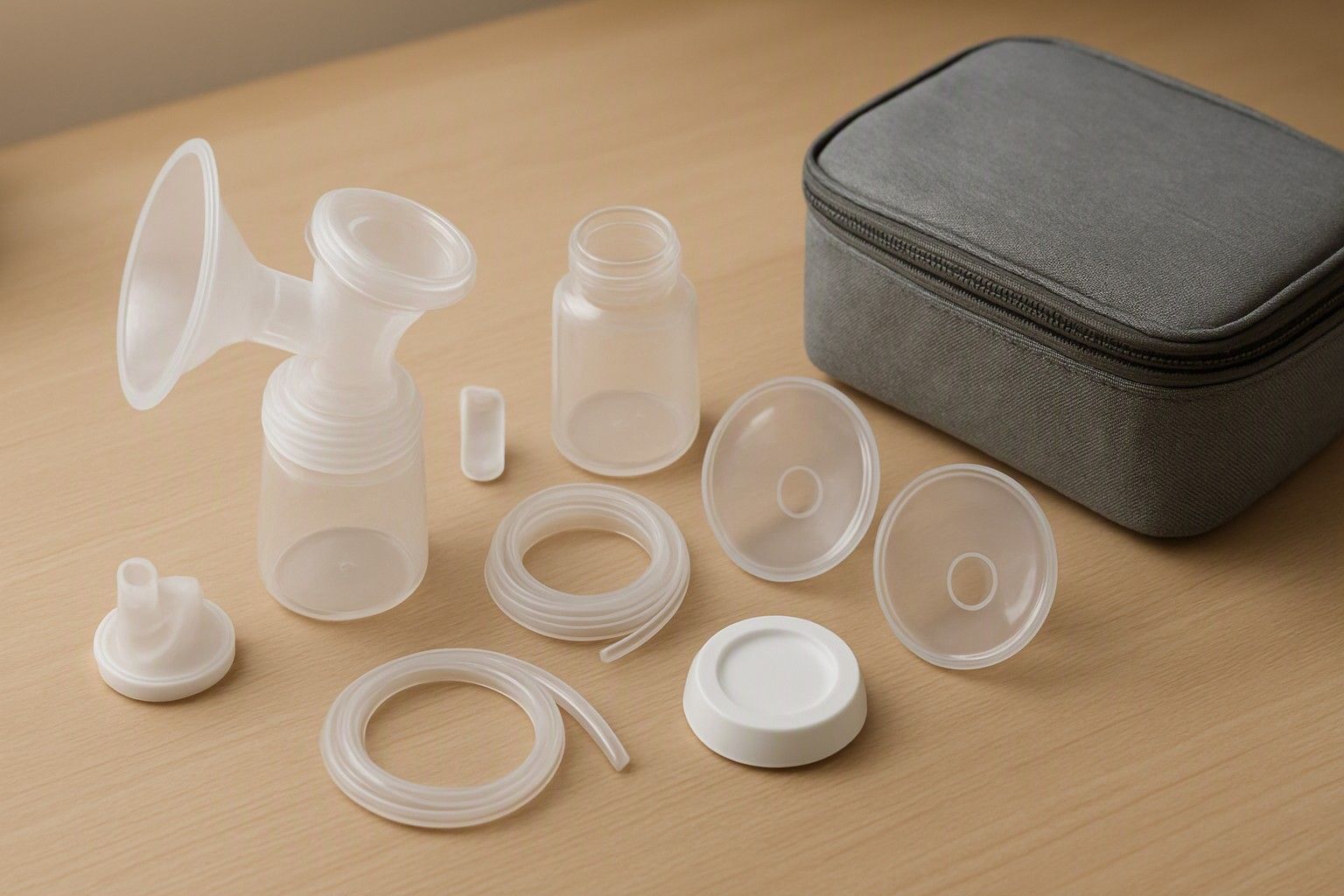
Most of the parts that touch milk or create suction in a breast pump (valves, duckbills, membranes and tubing) need replacing every few weeks to months, and everything that contacts milk needs washing after each session. This guide is for anyone who owns a pump or is about to buy one and wants to know what upkeep, spares and warranty support really look like in India. It covers replacement schedules, sterilising in hard water, drying in humid weather, and what service centres and warranties usually do and don't cover.
Parts That Wear Out: Valves, Duckbills, Membranes and Tubing
The motor is rarely the first thing to fail. The small soft parts go first, because they flex thousands of times a day and are washed and heated again and again.
- Duckbill and flat valves: These silicone pieces open and close with every suction cycle. When they stretch, tear or stop sealing flat, suction drops and milk output can fall even though the pump seems to run normally.
- Membranes and diaphragms: These thin silicone discs transfer suction to the milk path. They warp, stiffen or develop tiny splits, and you will often notice weaker or uneven pulling before you see any damage.
- Backflow protectors in closed systems: The barrier that keeps milk out of the tubing and motor is also a wear part, and it should be replaced when it looks cloudy, stained or damaged.
- Tubing: Tubing does not usually touch milk, but it traps moisture. Any condensation, droplets of milk or visible mould inside means it should be replaced, not cleaned.
- Flanges, connectors and bottles: Hard plastic parts last longer, but cracks, rough edges or a loose fit let air leak and reduce suction.
A useful rule: if suction feels weaker and your settings have not changed, check the valve and membrane before suspecting the motor.
Replacement Intervals for Occasional vs Exclusive Pumping
There is no single interval that suits everyone, and manufacturers publish their own guidance, so treat the figures below as a starting point and check your pump's manual. What matters most is how many sessions your parts go through.
Occasional pumping (a few sessions a week, for an office day or an occasional bottle): valves and membranes often last several months. Inspect them monthly, and replace them when they look worn or suction dips, even if the calendar says otherwise.
Frequent or exclusive pumping (six to eight or more sessions a day): the same parts can wear within roughly one to two months. Keeping a full spare set of valves and membranes at home is sensible, so a worn part never forces you to skip a session while you wait for a courier.
Tubing, flanges and bottles follow condition, not a schedule. Replace tubing at the first sign of moisture or mould, and replace any hard part that cracks or stops fitting snugly.
Since replacement frequency follows use, it helps to understand how pumping frequency shapes the choice of pump in the first place. A hand pump used twice a week has almost nothing to replace, while a daily electric pump carries a steady spare-parts routine.
Cleaning and Sterilising: Boiling, Steam Sterilisers and Hard Water
Wash every milk-contact part after each session. Disassemble fully, rinse in cool water first to move milk residue, then wash in a separate basin (not directly in the kitchen sink) with mild dish soap and a dedicated brush. Rinse well and let it dry.
Sterilising is usually recommended at least once a day for newborns, premature babies or babies with health concerns. Your paediatrician can tell you how strictly to follow it for your baby.
- Boiling: Submerge parts in a clean pot of water, boil for about five minutes, and lift them out with clean tongs. This costs nothing, but check that your parts are heat-safe, and never boil tubing.
- Steam sterilisers: Electric or microwave units are faster and more consistent. Follow the cycle instructions and empty the water after each use.
Hard water is the Indian complication. Many cities supply water that leaves a white limescale film on valves, bottles and steriliser bases. Scale can stop a duckbill from sealing and makes the steriliser work harder. Use filtered or softened water for boiling and steaming, descale the steriliser regularly, and occasionally soak parts in diluted white vinegar before rinsing thoroughly.
Never wash or immerse the motor unit. Wipe it with a dry or barely damp cloth.
Drying and Storing Parts in Humid Weather
Damp parts are where mould and odour start, and in monsoon months or in coastal cities like Mumbai, Chennai and Kochi, air-drying can take far longer than the instructions assume.
Place washed parts on a clean, dedicated drying rack with the openings facing down so water drains out. Keep them away from the kitchen counter where cooking steam settles, and avoid drying with a cloth or kitchen towel, which leaves lint and bacteria. If parts still feel damp after a few hours, a fan blowing across the rack speeds things up.
Tubing needs separate attention. If you see condensation inside, disconnect it from the breast shield side and run the pump for a few minutes until it dries. If moisture keeps returning or you spot mould, replace the tubing.
Store completely dry parts in a clean, lidded container or a steriliser basket with ventilation. Do not seal parts that are even slightly damp in a bag or box, because that creates the exact conditions you are trying to avoid. In humid weather, check stored parts before each use for odour, sticky patches or discolouration.
Spare-Part Availability and Service Centres in Indian Cities
A pump is only as easy to own as its spares are to get. Before you buy, check a few practical points.
- Are valves and membranes sold individually? Some brands sell them only as kits, which costs more if only one part has worn out.
- Where are they sold? Look for the brand's own website, authorised baby stores and chemists, and established online marketplaces. Spares that exist only through one imported listing are a risk.
- Do spares fit? Lookalike parts are common online, and a poorly fitting valve or membrane lowers suction or leaks. Prefer genuine parts, matched to your exact pump model.
- Is there a service centre in your city? Service networks tend to be concentrated in metros and large cities. In smaller towns, repairs often mean couriering the motor unit, which can take days or weeks.
- Is there a working helpline? Ask how quickly they respond and whether they replace or repair.
Since pumping is time-sensitive, buying a spare set of valves and membranes at the start protects you from gaps, especially if you live outside a major metro. Be cautious with pumps that have no clear spares channel in India, since an unusable pump after a few months is a real cost.
Warranty Terms: What Motor Coverage Includes and Excludes
Warranty on a breast pump almost always means the motor unit, covering manufacturing defects for a stated period. Read the card and confirm the duration, the process, and whether you must ship the unit or can use a service centre.
Usually covered: a motor that stops working, an unusual fault in the control board or buttons, and defects present from manufacture.
Usually excluded:
- Wear parts: valves, duckbills, membranes, tubing, flanges and bottles.
- Liquid damage, including milk that has travelled into the motor.
- Drops, cracks and other physical damage.
- Repairs by unauthorised technicians.
- Rechargeable battery degradation through normal use, in many cases.
- Use of non-genuine parts, which some terms treat as grounds to refuse a claim.
Keep the invoice, register the product if the brand asks, and photograph the serial number. If you are considering a pre-owned pump, check whether the warranty transfers at all, since many do not.
Liquid damage is one of the more common reasons for a refused claim, which is why a sealed closed-system motor is easier to keep under warranty: the barrier keeps milk away from the motor, so fewer faults can be traced back to your use.
Factoring Upkeep Into Your Choice
Pump prices in this category run from ₹450 to ₹26,000, with an average around ₹2,800, but the sticker price is only the start. Over months of use, the cost includes replacement valves and membranes, tubing, a steriliser or a dedicated pot, and filtered water if your supply is hard.
A pump in the ₹900 bracket can suit light, occasional use, but check that spare parts are sold separately and are easy to find. In the ₹3,000 bracket, look for pumps with clearly stocked spares and a reachable service channel. Pumps in the ₹8,000 bracket usually suit frequent or exclusive pumping, where a longer warranty and fast support carry more weight, since you will use the pump many times every day.
A simple way to decide: estimate how many sessions you will pump per day, check how that affects part replacement, then confirm that your city has genuine spares and service access. Buying with that picture in mind lets you commit now with confidence, without being surprised later.
For the wider decision, see the main guide on weighing upkeep and service support alongside fit and suction.
Valves and membranes need replacing every one to several months depending on how often you pump, tubing when moisture or mould appears, and everything that touches milk needs washing after every session. Sterilise as your paediatrician advises, keep parts dry in humid weather, and confirm spares and service access in your city before you buy. With those basics covered, you know what owning a pump involves.
Comments
Be the first to comment.