Manual vs Electric vs Wearable Breast Pumps: Which Type Suits How Often You'll Pump
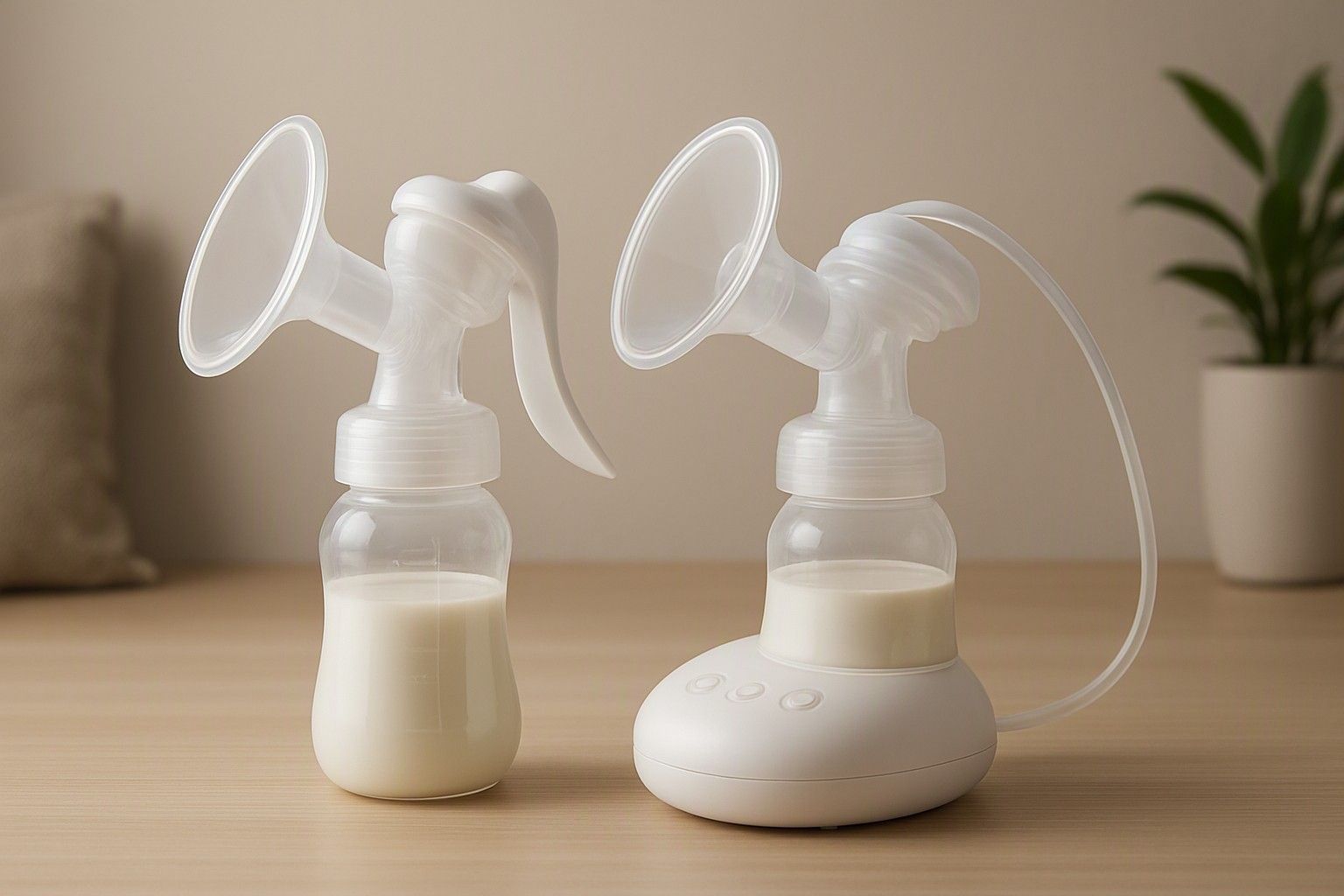
If you are asking whether to buy a manual or an electric breast pump, the answer comes down to one thing: how many times a day you will realistically pump. A few sessions a week points to a manual pump, daily pumping around work or feeds points to an electric one, and wearable pumps suit a narrower group who value moving freely during a session. This article lays out the trade-offs of each type so you can pick one today and stop second-guessing.
Manual Pumps: Where Hand-Operated Suction Makes Sense
A manual pump works by hand: you squeeze a lever or plunger, and the suction comes from your own rhythm. That makes it the simplest and cheapest type. Most sit in the ₹900 tier, and the category starts at ₹450.
The real strengths are practical. There is no motor, so there is no noise worth mentioning, no charging and no dependence on a power socket, which matters during Indian power cuts or on a train journey. There are fewer parts to wash and sterilise, and the pump fits easily into a handbag.
The cost is effort and time. Your hand tires within a few minutes, and you can only pump one side at a time. That is fine for relieving engorgement, collecting a single bottle's worth for an occasional night out, or building a small stock once in a while. It becomes tiring if you need to pump several times a day, because each session takes longer and the output depends on how steadily your hand keeps going.
Choose a manual pump if you pump rarely, want a backup, or are not sure you will pump at all.
Electric Pumps: Single vs Double for Time Saved per Session
An electric pump replaces hand effort with a motor, so your only job is to hold the flange in place. The main choice within this type is single or double.
A single electric pump expresses from one breast at a time. It costs less, is lighter, and suits someone pumping once or twice a day who does not mind a session running 25 to 30 minutes when both sides are done in turn.
A double electric pump works on both breasts together. Sessions are usually shorter, since both sides are done in a single go, and many mothers find that stimulating both sides at once helps milk flow. The trade-off is a higher price and a bulkier setup, with two sets of flanges, bottles and tubing to clean.
The category average of ₹2,800 falls within the ₹3,000 tier, and that is where many electric pumps sit. Check whether the pump runs on a rechargeable battery or only on a mains adapter. In India, a pump that works through a power cut or while you are travelling is far more useful than one tied to a socket.
If you will pump daily, time saved per session adds up quickly, which is the strongest argument for a double electric.
Wearable In-Bra Pumps: Convenience Against Output and Price
Wearable pumps sit inside your bra, with the motor and collection cup built into a single unit. There are no tubes and no wires, so you can pump while working at a desk, cooking or moving about the house. That freedom is the whole appeal.
The compromises are real. Wearables generally have lower suction strength than a standard electric pump, and the cups hold a limited volume, so a long session or a heavy supply can overflow. You cannot easily see how much has collected, and the fit depends heavily on your bra and your breast and nipple size. A poor fit leaks milk and reduces output. Cleaning involves several small parts, and you need to assemble them correctly every time.
They also cost more for what they deliver. Most fall in the ₹8,000 tier, well above manual and standard electric models. If you are wondering why wearable pumps cost more than standard electric models, the answer is mainly the miniaturised motor and battery, not stronger suction.
Treat a wearable as a convenience add-on for a mother who already pumps comfortably, not as a first or only pump.
Hospital-Grade Pumps and Renting One for Premature or NICU Babies
Hospital-grade pumps are built for heavy, repeated use, with stronger and more consistent suction and a design meant to be shared across users through a personal collection kit. They are the type recommended when a baby cannot feed directly, most often a premature baby or one in the NICU.
In those cases the pump has to start and sustain your milk supply in place of a baby's latch, often with sessions every few hours from the first days. A standard home pump may not keep up with that demand, which is why a hospital-grade unit is usually advised.
Buying one means a spend at the top of the category, which reaches ₹26,000. For a need that may last only weeks or a few months, renting is usually more sensible. Ask the NICU team, the hospital's lactation consultant or your paediatrician where rentals are available locally. Confirm the rental terms, how the unit is cleaned between users, and whether a rental covers the motor only.
The parts that touch milk, such as flanges, tubing and bottles, should always be your own, bought new. The motor can be shared, but the milk path should never be.
Matching Type to Pumping Frequency: Occasional, Daily or Exclusive
Here is how the types line up against how often you will pump.
- Occasional (a few times a week or less): A manual pump covers relief, a weekend outing or a small stash. Spending more gives you capability you will not use.
- Daily (one to three sessions, such as after returning to work): A single or double electric pump is the practical choice. If your sessions are tight, such as a lunch break, the double's shorter time is worth the extra cost. A wearable can complement this if you often need to pump while doing something else.
- Exclusive pumping (most or all feeds expressed): Go for a double electric with a strong, reliable motor and a rechargeable battery, or a hospital-grade pump if your baby is premature or a consultant advises it. A manual pump or a wearable alone will rarely keep up with the volume.
Once you reach daily use, the details start to matter more than the type itself. Look closely at the suction modes and battery life that matter for frequent pumping, because adjustable suction and a battery that lasts a full day separate a pump you rely on from one you resent.
Which Type to Shortlist Next
Start from your pumping frequency and shortlist one type, not three.
If you will pump occasionally, shortlist manual pumps in the ₹900 tier. If you will pump daily, shortlist double electric pumps, and consider single electric only if sessions are short and infrequent. If your baby is premature or in the NICU, speak to the hospital about renting a hospital-grade unit before buying anything. Consider a wearable only as a second pump, once your main one is in place.
After that, the decision shifts from type to fit and hygiene: flange size, how easily parts come apart for cleaning, and whether spares are available. Those are covered in the other fit and hygiene checks once a pump type is settled, which is the right next read before you add anything to your cart.
Your pumping frequency is the deciding factor, and you now know how it maps to each type: manual for occasional use, electric for daily use, double electric or hospital-grade for exclusive pumping, and wearable as a convenience extra. Pick the type that matches how you will actually pump, and you can move on to the fit checks with confidence.

Comments
Be the first to comment.