Pumping After Maternity Leave: Choosing a Breast Pump for Office Days and Long Commutes
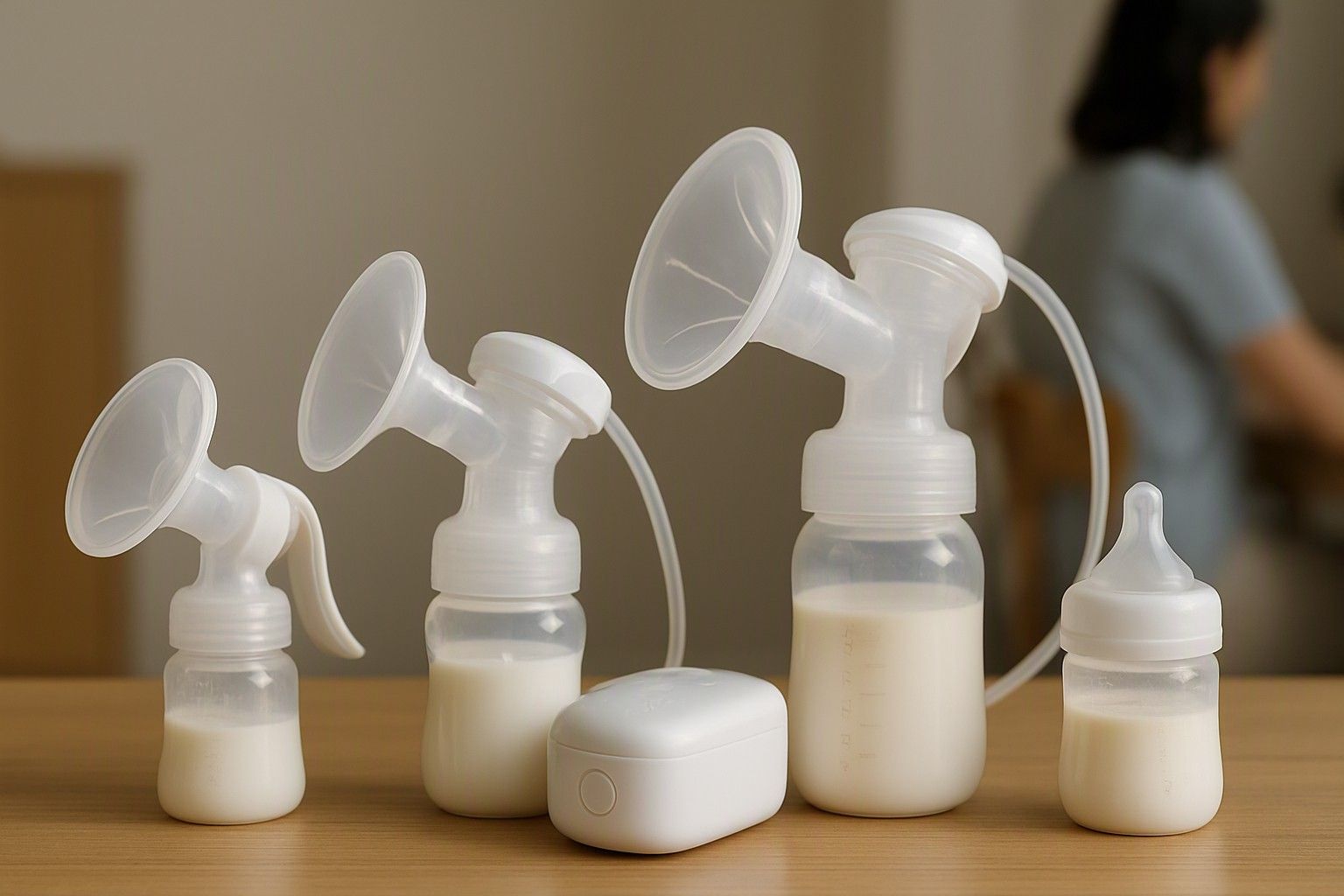
If you are heading back to work after maternity leave and need to pick a breast pump that survives office days, shared pantries and a long commute, this article is for you. The right pump for a working mother is rarely the one that looks best on paper. It is the one that fits your office setup, your travel time, your power supply and your milk storage options. Below, we go through each of those in turn so you can decide with confidence.
When to Start Pumping Before Your Return-to-Work Date
Aim to buy your pump and begin practising two to three weeks before your first day back. That gap is not about building a huge stockpile. It is about learning how your body responds to the pump, which flange size is comfortable, and how long a session takes you. Most mothers find the first few sessions yield very little, and that is normal.
A sensible pattern is to pump once a day, usually in the morning after a feed when supply tends to be higher, and store that milk. Over a couple of weeks this builds a modest reserve for your baby's caregiver to use while you settle into office routines. You do not need a freezer full of milk before you return, because you will be pumping at work as well.
Use this window to test the pump's settings, noise level and assembly. A pump that seems fine on a quiet Sunday can feel fiddly when you have ten minutes between meetings. Also let your baby try a bottle with the caregiver during this time. If supply or latch worries come up, a lactation consultant or your paediatrician can help before the pressure of a work schedule begins.
Pumping Without a Dedicated Lactation Room
Many Indian offices have no lactation room at all. You may end up using an empty meeting room, a wellness room, a quiet corner or even your own cabin. Plan for that reality rather than hoping for a better one. Ask HR early for a private, lockable space with a power socket and a chair. Under maternity benefit rules, employers are expected to support nursing mothers, so the request is reasonable.
What you can pump with depends on the space you get. A manual pump is silent and needs no socket, but it ties up a hand and takes longer. A plug-in electric pump is faster and more efficient, but it is louder and needs an outlet and some privacy. Wearable pumps sit inside the bra and let you keep working at a desk, which is why many mothers consider them for discreet use. If that appeals, read whether a wearable pump is worth it for discreet desk-side pumping before you decide, since they involve trade-offs in suction, fit and cleaning effort.
Whatever you choose, check how loud it is, whether it works in a hands-free bra or top, and how quickly you can set up and pack away. A shorter, calmer session in a borrowed room beats a perfect pump you dread using.
Battery Life and Charging for Commutes and Office Power Supply
Power is a practical problem that spec sheets rarely address. Ask yourself two things: will there be a socket where I pump, and will I want to pump while travelling? If your office room has a reliable socket, a plug-in pump works and battery life matters less. If not, or if you want to pump in a cab or during a long train or metro ride, a rechargeable pump becomes important.
When comparing rechargeable models, look for how many sessions one charge covers rather than a headline hour figure. A pump that handles a full workday of three sessions without topping up is far less stressful than one you must recharge every evening. Also check whether it charges via a common USB cable, because you can then use a power bank during commutes or power cuts.
Indian office buildings and homes both face occasional voltage fluctuations and outages. Keep the charger and cable in your bag, charge the pump overnight as part of your routine, and carry a small power bank. A pump that can run while plugged in is a useful fallback when the battery is low. Test the battery on a normal day at home before relying on it at work.
Keeping Expressed Milk Safe Without a Reliable Office Fridge
A shared office fridge may be crowded, switched off on weekends or simply uncomfortable to use. You can still store milk safely with a little planning. Commonly cited guidance says freshly expressed milk can stay at room temperature for only a few hours, and less in hot weather, so in an Indian summer do not leave it on the desk. Confirm exact timings with your paediatrician or lactation consultant.
The simplest workaround is an insulated cooler bag with frozen ice packs. Place sealed milk containers or storage bags against the packs right after each session and keep the bag closed. This holds milk cold through the working day and the commute home, where it can go straight into your home fridge. If your office fridge works, a labelled, sealed bag in a personal pouch keeps things private and tidy.
Label every container with date and time, and use the oldest milk first. Do not top up a chilled container with warm milk; cool the new milk first. If a power cut or a long journey leaves you unsure whether the milk stayed cold enough, it is safer to discard it than to risk your baby's health.
Carry Bags, Cooler Packs and Spare Parts for Workdays
Think of your pump bag as a small kit that must work every day without you thinking about it. Besides the pump itself, it should carry the charger or power bank, extra flanges if your size varies, storage bottles or bags, a marker for labels, a few clean cloths or wipes, a small towel and a spare top or nursing cover. A cooler bag with ice packs travels alongside it, ideally slim enough to slide under a desk.
Spare parts are what separate smooth days from stressful ones. Valves and membranes are small, wear out and are easy to misplace, and a missing piece can end a session. Consider keeping a second set of valves and bottles ready for office days so that a dropped part or a delayed wash does not leave you stuck. Check that the spares you buy are compatible with your exact pump.
Pick a bag that closes securely and separates clean items from used ones. Keep the whole kit packed at home so you are not assembling it in a rush every morning. A bag that is heavy or awkward on a crowded commute is one you will stop carrying, so favour compact over everything-in-one.
Cleaning Pump Parts Between Sessions at Work
Cleaning at work is limited by what is available: often a pantry sink, a small amount of time and no sterilising kit. The aim is to keep parts hygienic between sessions without turning each break into a chore. Most mothers rinse parts that touched milk in clean water soon after pumping and then wash them with a drop of mild soap and a dedicated brush. Air-dry on a clean cloth rather than wiping with a used towel.
To reduce effort, choose a pump with few small parts that are easy to open and reach inside. Fewer crevices mean quicker, more reliable washing. Wearable designs and some electric models have more components, which adds time at the sink. Check how simple it is to take apart and put back together, since you will do it several times a day.
If pantry access is awkward, a common approach is to rinse quickly after each session, store the parts in a sealed clean container or bag, and do a thorough wash and sterilise at home in the evening. Your paediatrician can advise on how strict to be for your baby's age. Never skip the evening wash, even when the day has been rushed.
Balancing Office Needs With the Rest of the Decision
Commute, battery and storage needs are important, but they are only part of the choice. Fit, comfort, suction performance and budget matter just as much, and a pump that suits your office but hurts or yields little milk is a poor buy. For a fuller look at how commute and office needs weigh against fit and budget, the main buying guide walks through the full set of factors.
On cost, pumps in this category range from ₹450 to ₹26,000, with an average around ₹2,800. Under ₹900 you will mostly find manual pumps, which suit occasional or backup use but are tiring for three sessions a day. In the ₹3,000 range, basic electric options appear, which can suit mothers with a reliable socket at work. In the ₹8,000 range, you generally find rechargeable and more capable electric or wearable designs, which suit a demanding commute or a space without privacy.
Match the tier to your actual workday. If you pump three times at a desk with a socket, you do not need to pay for features meant for travel. If you commute two hours and have no private room, spending more on portability is justified. Decide on your routine first, then choose the price tier that supports it.
For pumping at the office after maternity leave, the right breast pump is the one that fits your workday: a space you can actually use, power you can count on, safe storage on the way home and parts you can clean in minutes. Start practising a couple of weeks before you return, pack a spare set and a cooler bag, and choose the price tier that matches your real routine. If your commute also involves getting your little one to daycare, a lightweight baby stroller and a safe, easy-to-install baby car seat will make those handoffs far smoother. You now have what you need to decide today and return to work with a plan.
Comments
Be the first to comment.