Breast Pump Flange Size: How to Measure It and Why the Included Size Often Doesn't Fit
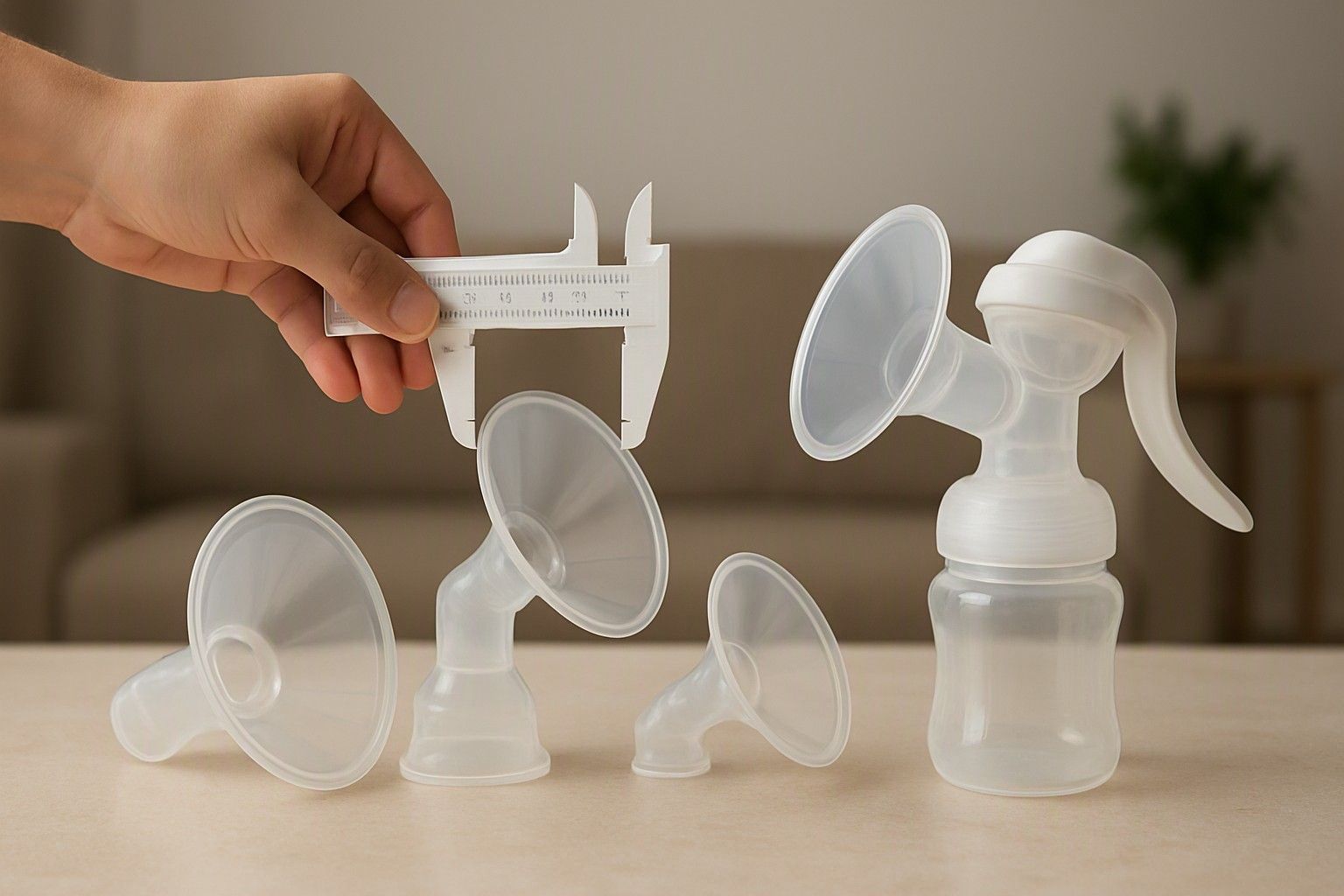
If your pump hurts, pulls in too much of the breast, or leaves you with less milk than you expect, the flange is the first thing to check, and this article shows you how. You will learn how to measure your nipple at home, how to read the signs of a poor fit, and what to do when the size in the box is wrong for you. It is written for mothers choosing or already using a pump, in India, where many pumps ship with just one flange size.
What the Flange Does and Why Fit Affects Milk Output
The flange is the funnel-shaped piece that sits against your breast. Its tunnel holds your nipple while the pump creates suction, and the vacuum and release cycle is what draws milk out. If the tunnel is the right width, the nipple moves freely in and out and the milk ducts behind it can empty properly.
When the fit is off, the mechanics go wrong. A tunnel that is too narrow squeezes the nipple and can restrict flow. A tunnel that is too wide lets extra breast tissue get dragged in, which can cause soreness and poor emptying. In both cases you may pump for the same time and collect less milk, and the breast may stay fuller afterwards. Over time, poor emptying can also affect supply.
This is why a pump's suction strength or motor power does not tell the whole story. A strong motor cannot make up for a flange that does not suit your anatomy. Many pumps arrive with one standard size, usually a mid-range one, because it fits a reasonable share of users. It is a default rather than a measurement of you, and your size can also differ from one side to the other.
How to Measure Nipple Diameter at Home
You need a ruler with millimetre markings, or a flange sizing printout, which many brands publish and which is meant to be printed at 100% scale. A soft tailor's tape also works if you read it carefully in millimetres.
Steps
- Measure when the nipple is in its natural state, ideally after a short pumping or feeding session when it has become slightly erect. Do not pull or compress it.
- Measure across the widest point of the nipple at its base, from one edge to the other. Leave out the areola, the darker skin around it.
- Measure each breast separately and note both numbers.
- Write the result in millimetres, not centimetres, because flange sizes are listed in millimetres.
Most fitting guidance suggests choosing a flange tunnel a few millimetres wider than your nipple diameter, so the nipple has room to move without rubbing the sides. Check the specific brand's own sizing chart, since each one defines its sizes slightly differently. Treat the first measurement as a starting point rather than a final answer, because nipples can swell or relax and the true test is how the pumping session feels and what the nipple looks like during it.
Signs Your Flange Is Too Small or Too Large
A measurement tells you where to begin, but your body gives the real verdict while the pump runs. Watch your nipple through the clear part of the flange during a session.
Signs the flange may be too small
- The nipple rubs against the tunnel walls or looks pinched.
- You feel pain, friction or pinching at the tip or base of the nipple.
- The nipple looks white or blanched after pumping.
- Milk flow seems slow, and the breast still feels full afterwards.
Signs the flange may be too large
- Much of the areola is pulled into the tunnel along with the nipple.
- The breast feels sore or bruised in the surrounding tissue, even though the nipple itself is comfortable.
- Output is lower than you expect, or the breast feels only partly emptied.
A good fit usually looks like this: the nipple sits centred, moves in and out without touching the sides, and only a small amount of areola enters the tunnel. Pumping should feel like a firm tug, not a pinch.
Pain that continues after you change size, cracked skin, blocked ducts or a sudden drop in supply deserve a conversation with a lactation consultant or your doctor rather than more experimenting.
Do Brands Sell Other Flange Sizes Separately in India?
Often, yes, but availability varies a lot by brand and by how the pump is sold. Some brands list additional flange sizes as separate spare parts through their official stores or large online marketplaces. Others sell pumps with only one size and offer no obvious replacement, leaving you to guess or look to third-party sellers.
Before buying, check three things on the product page or with the seller. First, which flange sizes the brand actually makes for that model. Second, whether those sizes are sold on their own or only inside a bundle. Third, whether a different size will physically fit your pump's connector, since flanges are not always interchangeable between models or brands.
It also helps to know how many sizes are in the range. A brand that offers several sizes gives you room to adjust, while one with a single size gives you none. For a fuller look at how easily replacement flanges and inserts can be sourced in India, including cleaning and long-term parts support, that article covers the practical side. Across the category, pumps run from ₹450 to ₹26,000, and the sizing options do not always follow the price, so check them rather than assume.
Flange Inserts, Silicone Cushions and Size Changes After Delivery
If the standard flange is only slightly too large, an insert can bring the tunnel down to a smaller size. These are usually soft silicone rings that sit inside the existing flange. Some pumps include them, others sell them separately, and some soft silicone cushions are designed to be more comfortable against the skin. An insert changes the tunnel width, but it does not fix a flange that is the wrong shape or too small for you, so it is a partial solution.
Also keep in mind that your size can change. Nipples can swell in the first days after delivery, when milk comes in, and then settle over the following weeks. Many mothers find that the size that fit in week one is not the one that fits at month three. It is reasonable to re-measure after the early weeks and again if comfort or output changes.
A few practical points follow from this:
- Do not decide on a flange size from a single measurement taken before delivery.
- Re-check the fit if pumping starts to hurt or output drops without another clear reason.
- Check that any insert fits your specific flange before buying, as sizes and shapes differ by brand.
Checking Flange Options Before Choosing a Model
Flange fit is one of the easiest things to check before buying and one of the hardest to fix afterwards, so it is worth including in your decision from the start. Look at the sizes in the box, the other sizes the brand sells, whether inserts are offered, and whether the parts can be bought in India without a long wait. In the ₹900 tier, pumps more often ship with a single flange size, so confirm whether other sizes can be bought separately. In the ₹3,000 and ₹8,000 tiers, look for models that list more than one size or include inserts, though you should verify this for each model instead of assuming it.
The category average is ₹2,800, but a pump at any price is a poor choice if the flange does not suit you. If you have already measured, you can shortlist models that offer your size and decide today. For where flange choice fits among the other things to verify on a pump, the buying guide places it alongside suction settings, battery, hygiene and warranty.
You now have what you need to answer the question: measure your nipple in millimetres, choose a tunnel slightly wider, and judge the fit by comfort and what you see during a session. Then confirm that the pump you are considering sells your size, and re-check as your body changes after delivery.
Comments
Be the first to comment.