Digital Safe Locker at Home or a Bank Locker: Which Suits Your Gold and Documents?
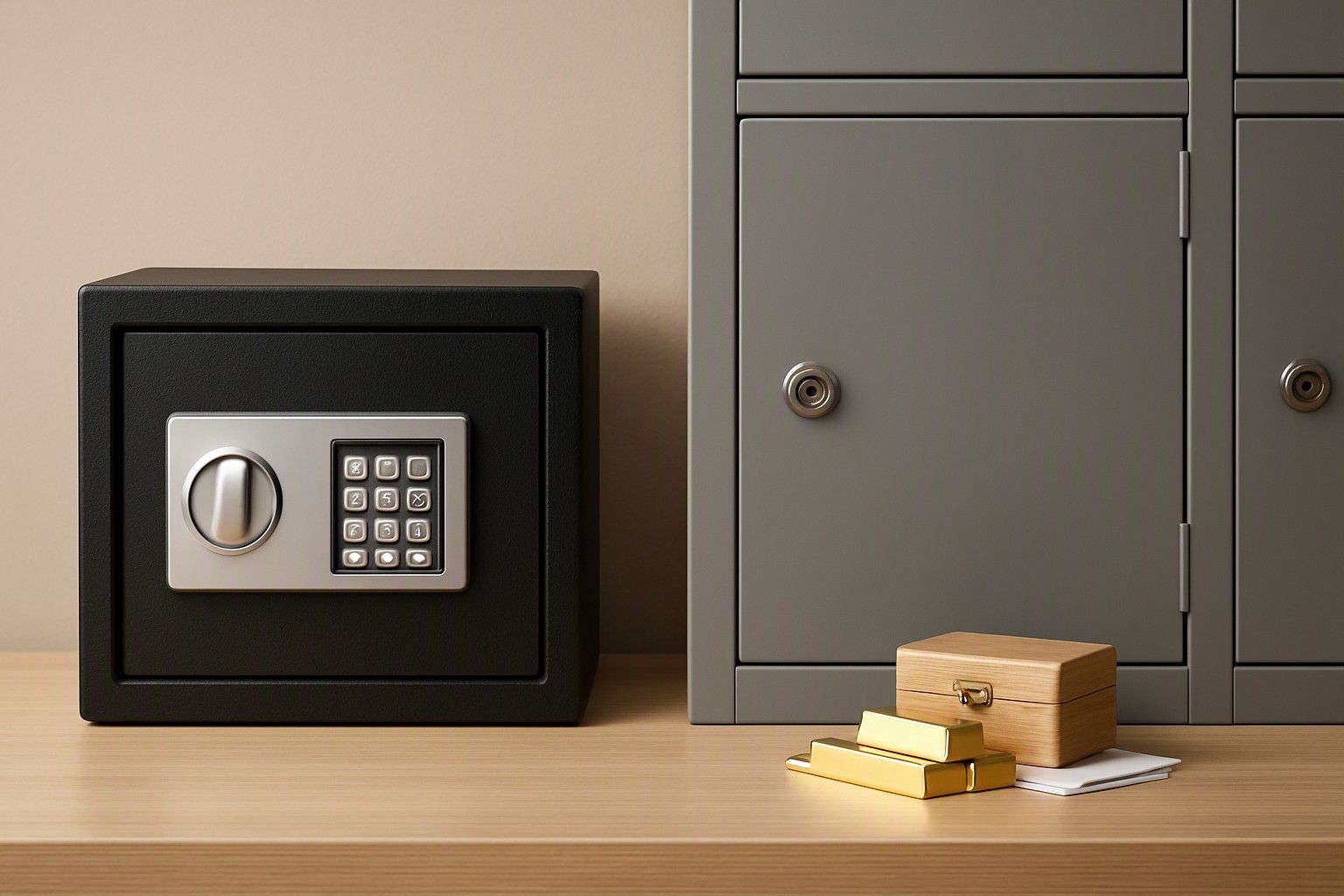
If you are deciding whether your gold and papers should sit in a digital safe at home or in a rented bank locker, this article is for you. The honest answer is that each protects against different problems, and many Indian households end up using both. Below, we compare liability, cost, access, physical risk and insurance so you can decide today.
What a Bank Locker Really Protects and Where Bank Liability Stops
Most people assume a bank locker means the bank guarantees whatever is inside. It does not. The bank rents you a space in its vault and does not know, or insure, what you store there.
Under RBI's locker guidelines, a bank's liability is limited to 100 times the annual locker rent. That applies where the loss comes from fire, theft, robbery, building collapse, or fraud by a bank employee. Natural calamities such as floods and earthquakes sit outside that protection, as do losses caused by your own negligence, such as sharing your key or leaving the locker unlocked.
Now compare that cap with what you may actually keep inside. A family's heirloom necklace set, a few bangles and property papers can be worth far more than a hundred times a modest annual rent. The vault is a strong physical barrier, but it is not a financial guarantee for the full value of your gold.
Bank lockers also have content rules. Cash, weapons and hazardous items are not allowed. Read the allotment agreement before signing, because it spells out these limits and your own responsibilities.
Annual Locker Rent, Waiting Lists and Branch Timings vs a One-Time Home Safe
A locker is a recurring cost. Rent is charged every year and varies with the bank, the branch location and the locker size. Metro branches and larger lockers cost more. Many banks also cap the number of free visits and charge for extra ones. Over ten or fifteen years, the rent adds up to a sum you never get back.
A home safe is a one-time purchase. Digital safes in this category run from ₹5,000 to ₹60,000, with an average of ₹12,000. A compact safe in the ₹7,000 band can hold documents and a small amount of jewellery. The ₹15,000 and ₹35,000 bands offer more internal space and sturdier construction. You can see what a home safe costs across each budget band before you decide, because the gap between a locker's cumulative rent and a one-time purchase is where many households find their answer.
Then there is availability. Popular branches often have waiting lists, so you may not get a locker when you want one, or at the branch nearest you. Access is limited to banking hours, usually on working days, and a visit means travel, queues and a signature check. A home safe has no waitlist and no timetable. Its cost is that you carry the security and the risk yourself.
Access When You Need It: Weddings, Festivals and Daily Jewellery
Gold in an Indian household is rarely just stored. It is worn, lent to a daughter for a wedding, brought out for Akshaya Tritiya or Diwali puja, and put back. How often you need it should weigh heavily in your decision.
With a bank locker, every retrieval is a planned errand. You have to take time off, visit during branch hours, and make the same trip to return the jewellery. Before a wedding season, when you might need pieces several times in a few weeks, this becomes a real nuisance. A festival that falls on a bank holiday or a weekend can also leave you without access to your own gold.
A home safe removes that friction. You can take out a set the night before a function and return it the next morning, without a trip to the bank. It also suits daily-wear pieces and the documents you reach for often, such as insurance papers, property copies and passports.
The flip side is that easy access also means you handle valuable pieces more often. A routine of opening and closing the safe in front of family or visitors can expose where you keep things. Decide who knows the code or holds the backup key, and keep that circle small.
Theft, Fire and Flood Risk at Home vs in a Bank Vault
A bank vault is built to resist forced entry, and it comes with guards, alarms, CCTV and fire protection that few homes can match. Against a determined theft, a vault locker has the stronger position. Banks and their buildings can still face fire, flooding and, rarely, fraud, which is why the liability cap discussed earlier matters.
At home, the main risks are burglary, fire and water. Homes in Indian cities are often empty during the day and during family travel, which gives thieves an opening. A light safe that can be carried off is the most common weak point, so anchoring it to the wall or floor matters as much as the lock. For fire, a safe with no rated protection can leave papers and some jewellery damaged in a house fire. Monsoon flooding is a real risk in ground-floor homes and low-lying areas, so placement above the water line is worth thinking about.
The quality of the safe makes a large difference. Read up on how steel gauge and fire ratings change a home safe's odds before you assume a home safe is either safe or unsafe by default. A well-built, properly anchored safe in a sensible location reduces most of the risk, though it will not match a vault.
Insuring Valuables Kept at Home
With a bank locker, the bank does not insure your contents. Anything beyond the liability cap is your own risk unless you buy cover yourself. Many families skip this step because the locker feels secure.
For valuables kept at home, insurance matters even more. Home insurance policies usually can cover jewellery and valuables, though the terms differ by insurer. Some limit how much is payable for jewellery unless you declare it specifically. Others may ask for proof of ownership, purchase bills or a valuation, and may have conditions on how items are stored, such as in a locked safe. Insurers also differ on whether theft is covered when there is no sign of forced entry.
Practical steps help whichever route you choose. Photograph each piece, keep the purchase invoices and hallmark details somewhere other than the safe, and update the list when you add or sell pieces. Ask your insurer in writing what is covered at home, what is covered in a bank locker, and whether having a safe changes the terms. Policy wording varies, so confirm it before you rely on it.
Using Both: Splitting Heirloom Gold From Everyday Items
You do not have to pick one. The most practical arrangement for many families splits valuables by how often they are used and how much their loss would hurt.
Keep in the bank locker the items you rarely touch and could never replace: heirloom sets, bulk gold bought as investment, and original property or title documents. For these, the vault's physical security is worth the rent, and a retrieval trip once or twice a year is no burden.
Keep at home the pieces you wear or lend regularly, the jewellery set aside for the next wedding or festival, and the papers you need often, such as passports, insurance policies and certified copies. A home safe makes sense here because convenience is the point.
This split also limits your downside. A burglary at home does not touch your heirlooms, and a locker problem does not strand the things you use every week. If you go this way, decide which home safe fits the items you'll keep out of the bank by listing what you plan to store and how much space it needs.
A bank locker offers stronger physical protection but costs rent every year, limits your access, and caps the bank's liability well below the value of serious gold. A home safe gives you control and convenience for a one-time cost, but it leaves theft, fire and insurance in your hands. For most households, the sound answer is to keep heirlooms and irreplaceable documents in the bank and everyday gold in a well-anchored home safe.

Comments
Be the first to comment.