Steel Thickness, Bolt Count and Fire Rating: Judging How Secure a Digital Safe Really Is
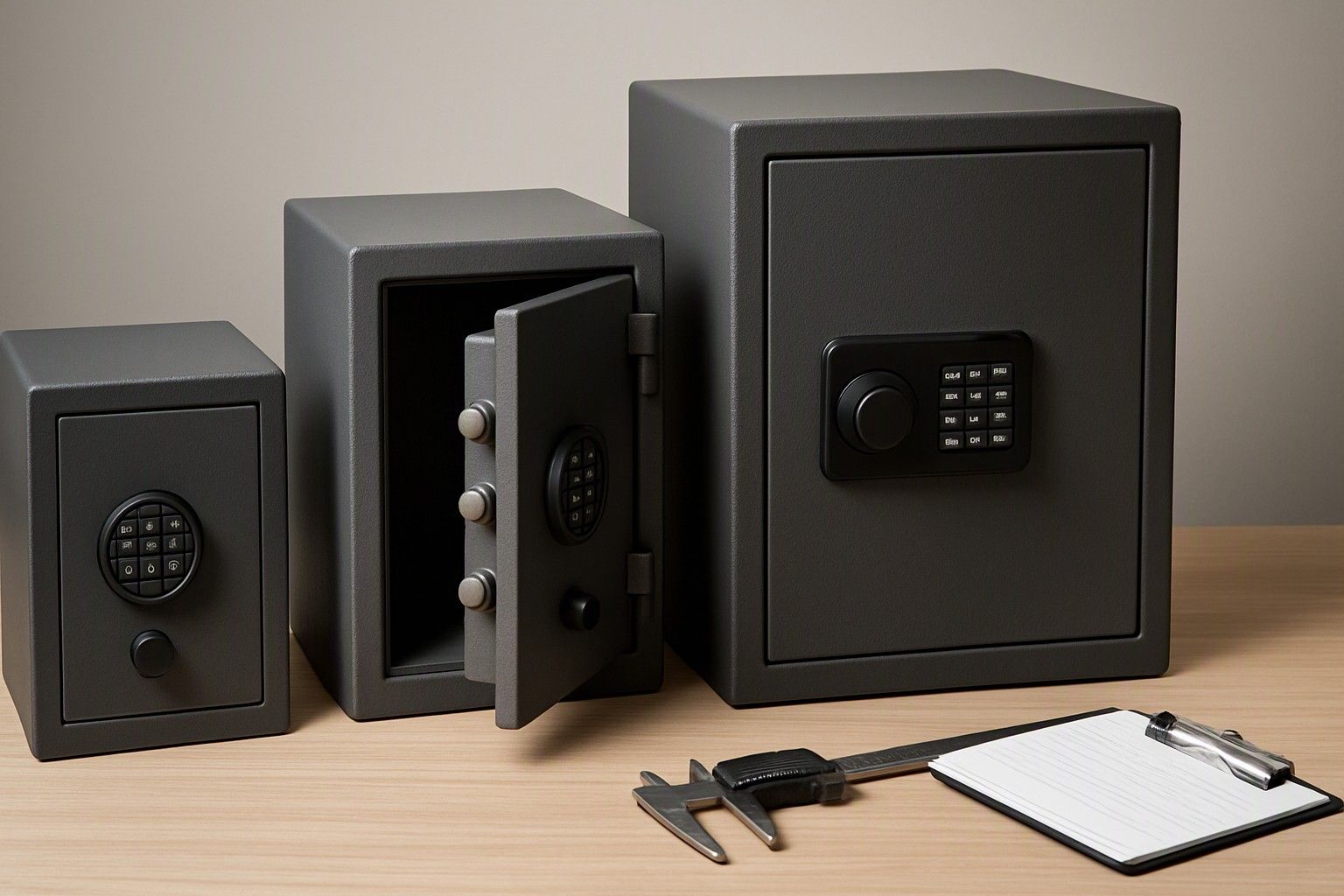
If you are wondering how thick the steel on a home safe should be, and whether you need a fire-resistant one, this article gives you numbers to check and questions to ask before you pay. The short version: thickness, bolts and door design decide how hard a safe is to break into, while fire protection is a separate feature that only matters for certain contents. Read on to see which of those matters for what you plan to keep inside.
Body and Door Steel Thickness: What the Millimetres Mean
Steel thickness is the first number to look for, and the one cheap listings most often leave out. A safe has two thicknesses: the body (the walls, floor and roof) and the door. The door should always be the thicker of the two, because it is the part a thief attacks.
As a working guide, a body under about 2 mm is closer to a metal cabinet than a safe. It can be cut or peeled open with ordinary tools. Bodies of around 3 mm and above, with a door noticeably thicker than that, start to offer real resistance. Heavier doors, often 6 mm or more, are what you see on safes meant for jewellery and large cash. Treat these as rough guides rather than fixed standards, because makers measure and describe steel differently.
Watch for vague wording. "Heavy-duty steel" or "thick plate" is not a measurement. Ask for body and door thickness separately, in millimetres. If the seller quotes a gauge number, ask for the millimetre equivalent.
Weight is a useful cross-check. A small safe that weighs little for its size cannot have thick steel, whatever the listing says. The trade-off is that thicker steel makes the safe heavier and dearer, but for a safe that is supposed to resist a determined attempt, that is the cost of the protection.
Locking Bolts: Count, Diameter and Live vs Dead Bolts
The bolts are what hold the door shut once the keypad has done its job. Three things matter: how many there are, how thick they are, and whether they can be forced back.
Count. Two bolts on one edge is the common entry level. More bolts, spread across the sides and not just one edge, spread the force of a pry attempt and make it harder to bend the door out of line.
Diameter. A thin bolt shears more easily. As a general guide, solid bolts of around 20 mm or more are a better sign than slim pins. Ask for the diameter, not just the count. Also check that the bolts are solid steel and not hollow.
Live vs dead. A spring-loaded latch can be pushed back with a thin tool. In a digital safe the bolts are usually driven out by a small motor, and once extended they should sit firmly in the steel frame and not slide back under force. Fixed, non-retracting bolts (often called dead bolts) and bolts that lock in place once extended are the stronger design. Also check that the bolts seat into a solid frame and not a thin lip of sheet metal.
Finally, ask whether the safe has a mechanical override key, and how that keyhole is protected. A strong bolt set is of little use if the weak point is the electronics or a flimsy key cover.
Pry-Resistant Door Gaps and Concealed Hinges
Most forced entries on home safes use a lever, so the gap between the door and the frame matters as much as the steel. If you can see a visible slot all around the door, or slip a flat screwdriver tip into it, a pry bar will find a grip there. Look for a tight, even gap, and a door that sits inside or overlaps the frame instead of sitting flush against it.
Hinges are the other point of attack. Exposed external hinges can be cut or knocked out. Concealed (internal) hinges leave nothing for a thief to work on from outside. Better still, some designs add fixed bars on the hinge side that lock into the frame, so even if the hinges are destroyed the door stays shut.
Check these by hand if you can buy in person, or by looking closely at the seller's photos and video if you buy online:
- The gap should look uniform from top to bottom, with no bulging or wobble.
- The door should feel rigid when you press on its corners.
- The hinges should not be visible from the outside.
- The keypad and override keyhole should sit behind steel, with no loose plastic panel that comes off easily.
A safe with thick steel but a sloppy door fit is only as strong as its gap.
Fire-Resistant vs Non-Fire Safes for Paper and Cash
Whether you need fire protection depends on what you keep inside. A plain steel safe does not protect against fire. In a house fire the steel heats up and the box can behave like an oven, so paper chars and plastic cards warp even though the safe itself stays closed.
Fire-resistant safes add an insulating layer between the outer and inner walls. A fire rating should state a duration at a stated temperature, from a test report, not a vague "fireproof" label. Be aware of a few trade-offs:
- The insulation makes walls thicker, so a fire-rated safe has less usable space than a non-fire safe of the same outer size.
- It is heavier and costs more.
- Fire insulation is not the same as burglary strength. A fire-rated safe with thin steel can still be pried open.
If you keep property papers, passports, insurance documents or sale deeds that would be hard to replace, a fire rating is worth paying for. Digital media such as pen drives and external hard disks are damaged at much lower temperatures than paper, so a rating that protects paper may not protect them. If you only store cash and jewellery for short periods, build quality against theft should come first. Cash can burn, so if a large sum stays in the safe, a fire rating adds real value. For most Indian homes, the sensible order is to get the burglary-resistance basics right first and add fire protection if irreplaceable papers will live inside.
BIS and Burglary-Grade Ratings Worth Asking the Seller About
Ratings are the only way to check a seller's claims against something independent. Ask three questions: is the model covered by a BIS mark or licence, has it been tested to a recognised burglary-resistance or fire standard, and can the seller show the paperwork?
A proper rating should tell you what was tested (for example resistance to attack with tools for a stated time, or exposure to fire for a stated duration at a stated temperature), which laboratory did the test, and which exact model it applies to. A certificate for a different model, or for the brand in general, does not cover the safe you are buying. Ask for the standard's name and the certificate or report number, and check that any mark on the safe matches the paperwork.
Be realistic about what you will find. Many home safes sold in India carry no formal rating at all. That does not automatically mean a safe is poor, but it means you must rely on measurable specifications: millimetres, bolt diameter, weight and door design. Phrases such as "military grade" or "bank-quality" have no technical meaning and should not substitute for a certificate.
If you plan to insure cash or jewellery kept at home, check with your insurer whether they expect a rated safe, since this can affect what they will cover.
Red Flags on Cheap Online Listings
Various brands of digital safes are sold across a wide range, from ₹5,000 to ₹60,000, with an average of ₹12,000. Steel, bolts and insulation are real material costs, which is why why suspiciously cheap safes cut corners on build is worth understanding before you compare listings. A price at the very bottom of the range usually means thin steel, a smaller bolt set or both, so judge the listing against what that price can realistically buy and decide on that basis.
These signs suggest a listing is hiding something:
- No millimetre figures. Only "heavy duty" or "premium steel", with no body and door thickness.
- Missing or suspiciously low weight. A safe that weighs very little for its size is thin-walled.
- "Fireproof" with no rating. A fire claim without a duration, temperature or test report means nothing.
- Bolt count without diameter, or no mention of bolt material.
- Exposed hinges or a visible gap in the photos.
- Rendered images only, with no photos of the actual product, door edge or inside.
- Words like "unbreakable" or "burglar-proof". No safe is either.
- No override key mentioned, or no clarity on what happens if the battery dies.
- Reviews mentioning a flexing door, a dented body or a loose keypad.
One or two of these may be an incomplete listing. Several together point to a safe built to look secure rather than be secure.
Where Security Ratings Sit in the Bigger Purchase Picture
Steel, bolts, door gaps and ratings tell you how hard a safe is to break into, but they are one part of the decision. You still need to choose the lock type, the right internal capacity and a sensible place to fix it, and the clearest way to do that is to set construction quality alongside lock type and capacity instead of judging any one feature alone.
As a rough guide to the budget tiers, the ₹7,000 tier typically focuses on basic protection, where anchoring the safe to a wall or floor and hiding it well matter as much as the steel. The ₹15,000 tier is where thicker steel, better bolt sets and tighter doors become easier to find. The ₹35,000 tier is where fire insulation and documented ratings are more likely to appear. Every model still needs to be checked against the questions above, because price alone does not guarantee build quality.
A safe that can be carried out of the house is weak whatever its steel, so check for pre-drilled anchor holes and fix it down. Match the protection to what you actually store: fire rating for papers, thicker steel and more bolts for cash and jewellery, and both if you keep all three.
So, how thick should the steel be, and do you need fire protection? Look for a door that is clearly thicker than a body of around 3 mm or more, solid bolts spread across the door, a tight gap with concealed hinges, and a documented rating if the seller claims one. Add fire resistance if irreplaceable papers or digital media will be inside. With those checks, you can compare any listing and decide with confidence today.

Comments
Be the first to comment.