Bolting and Hiding a Digital Safe in Indian Flats: Floor, Wall or Wardrobe?
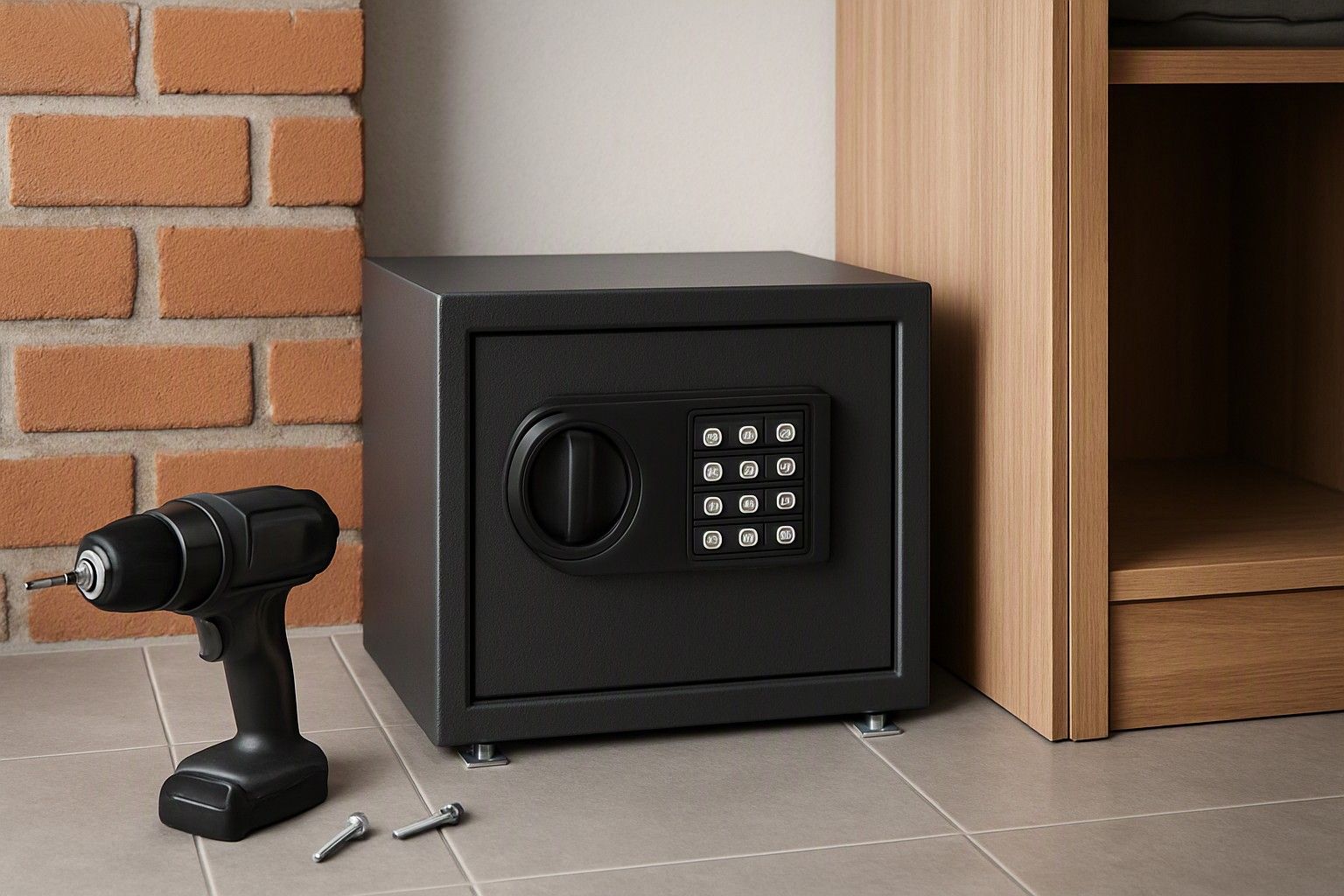
Yes, you can fix a digital safe inside a wardrobe or on a brick wall in a rented flat, but where and how you do it decides how secure it really is. This guide is for anyone about to buy who lives with tiled floors, partition walls, modular wardrobes or a landlord's rules. It covers which surface holds a bolt, how to hide the safe, and how to avoid losing your deposit.
Why an Unbolted Safe Is Easy to Steal
A burglar in a flat has limited time and wants to leave quietly. A safe that can be lifted, wrapped in a bedsheet or dropped into a duffel bag solves both problems for them. Once it is out of your home, they can work on it at leisure with tools and noise that nobody will hear. The lock on the door then matters far less than the fact that the safe walked out whole.
Bolting changes the maths. The thief has to stay in your flat, make noise and spend time, and most will skip a fixed safe for easier pickings. The lighter and smaller the safe, the more this matters. Safes in the price range of ₹7,000 bracket tend to be compact and easy to carry, so they gain the most from being fixed down. Across this category, prices run from ₹5,000 to ₹60,000, with an average around ₹12,000. Whatever you spend, an unfixed safe gives away much of that value.
Two practical checks before you buy: confirm the safe has pre-drilled bolt holes inside the body, and confirm the supplied anchors suit the surface you plan to use. Hiding the safe is the second half of the defence. A fixed safe that sits in plain view still tells a thief exactly where to concentrate.
Floor Bolting on Concrete vs Tiled Floors
Bare concrete is the easiest surface. Anchors grip the slab directly, so the safe resists being pried or pulled up. The trouble is that almost no Indian flat has bare concrete once it is lived in. You are usually dealing with tiles or stone laid over a bedding layer of cement or adhesive, and that layer is not structural. A bolt that only reaches the tile and its bedding will pull out under force.
That means the hole has to go through the tile and bedding into the slab beneath. A masonry or tile drill bit is essential, and the drilling should be slow and steady, because vitrified tiles chip and crack easily. A cracked tile is hard to fix, since an exact match is rarely available years later. Also avoid bathrooms, balconies and any spot where waterproofing or plumbing may sit under the floor.
If you are still in the interiors stage of a new flat, tell your contractor about the safe's position before flooring goes down. It is far cleaner to plan the anchor point then than to drill through finished tile. If you already have tiles and do not want to risk them, a wall or wardrobe-base fixing is usually the better route.
Wall Mounting: RCC Columns vs Brick Partition Walls
Not every wall in your flat is equal. RCC columns, beams and structural walls are dense and hold anchors firmly, which makes them ideal in theory. But they contain steel reinforcement, and hitting a rebar with a drill is a common problem. Many societies also object to anything that disturbs structural elements, so treat columns with caution and check your society's rules first.
Brick partition walls are what most flats actually offer for fixing. Their quality varies a lot. Solid brick in a thicker wall holds an anchor reasonably well. Thin partitions, hollow bricks and soft blocks can crumble around the anchor, and the safe's weight tugging downward can slowly loosen it. The heavier the safe, the less sensible it is to hang it on a thin partition.
Wiring is the other risk. Electrical conduits usually run vertically above and below switchboards and sockets, so do not drill in those lines. Tap the wall first: a dull, solid sound is better than a hollow one. If the only available wall is a thin partition, choose a smaller, lighter safe designed for wall fixing, or move to the wardrobe or floor option instead of forcing the choice.
Fitting a Safe Inside a Modular Wardrobe or Loft
A wardrobe is a popular hiding spot, since a thief opening cupboards expects clothes, not a safe at the base. But a modular wardrobe's carcass is board, and its back panel is thin. Bolting a safe only into that board gives you a safe that looks fixed but can be pulled free. The bolts need to reach the wall behind or the slab below, which usually means a carpenter cutting a neat opening in the back or base panel.
Start by checking external dimensions before you measure wardrobe space. A safe's listed capacity describes the inside, while the wardrobe has to hold the outer shell, with room for the door to swing fully open and the keypad to be reachable. Remember that shelves, hanging rods and drawer channels may need to be removed.
Lofts are a poor choice for most safes. They are meant for light storage, and a heavy safe stresses the loft panel and hinges. They are also awkward to reach, and you will not enjoy reaching overhead to enter a code or change batteries. Keep the safe at the wardrobe base or on a lower shelf anchored to the wall.
Renting a Flat? Installing Without Losing Your Deposit
Drilling is where tenants run into trouble. Read your rental agreement for any clause on alterations, then get the landlord's permission in writing. A WhatsApp or email message that says "yes, you may fix a safe inside the wardrobe" is a useful record if a deposit dispute comes up later.
Choose the location with the move-out in mind. Four small holes in a wall or in the plywood of a wardrobe interior can be filled and touched up. A cracked or chipped floor tile is far harder and costlier to put right, so avoid tile drilling in a rental unless the landlord explicitly agrees. If the wardrobe is the landlord's built-in unit, ask before anyone cuts its base or back panel.
Take dated photos of the spot before and after installation. When you leave, either fill the holes with matching filler and paint, or agree in advance with the landlord that you will do so. Unbolting the safe and taking it with you is simple. Leaving a clean, patched surface is what protects your deposit. If the landlord refuses any drilling, a heavier safe tucked out of sight is a weaker but real fallback, and it should be judged honestly against the risk.
Brand Technicians vs Local Carpenters for Installation
A brand technician knows the safe's bolt pattern and carries suitable anchors. Getting installation done by the manufacturer's team also keeps your warranty position clear, since nobody can later blame a stray drill hole for a fault. The limits are scheduling, since you may wait several days for a visit, and scope. Many technicians will do a standard wall or floor fixing but will not cut a wardrobe panel or work around awkward layouts. Ask before ordering whether installation is offered at your pin code and whether it is free or charged, and get the answer in writing.
A local carpenter or mason is flexible and quick. They can modify the wardrobe base, cut an access opening and fit the safe into an odd corner. The risks are guesswork on anchors and wall type, drilling without checking for wiring, and sometimes drilling the safe body itself, which can damage it and cause warranty disputes.
A sensible split works for many buyers. Have the carpenter prepare the wardrobe opening, then have the brand technician fix the safe, or supervise the carpenter yourself. Either way, check that the working hours and noise are acceptable to your society.
Settle Placement Before You Place the Order
Installation limits should shape which safe you buy, not be discovered after delivery. Before ordering, settle five points: the exact spot, the surface behind or beneath it, the safe's external size and weight, whether your landlord or society permits drilling, and who will do the fixing. It helps to plan placement while you're still shortlisting a safe, because a wall-friendly compact model and a heavy floor-bolted one are very different purchases.
With prices running from ₹5,000 to ₹60,000 and an average near ₹12,000, a safe that cannot be fixed where you need it is poor value at any price. Matching the safe to a surface you have already checked is a decision you can make with confidence today. Once the spot, the wall or slab, the permission and the installer are all confirmed, you can order knowing it will actually be secured on arrival.
So, can you fix a digital home safe inside your wardrobe or on a brick wall in a rented flat? Yes, if the bolts reach solid masonry or the slab, the landlord has agreed in writing, and the safe fits your space with its door fully open. Check the surface, the permission and the installer first, and the rest of the buying decision becomes much simpler.
Comments
Be the first to comment.