Digital Safes for Shops, Clinics and Small Offices: Deposit Slots, Audit Logs and Daily Cash
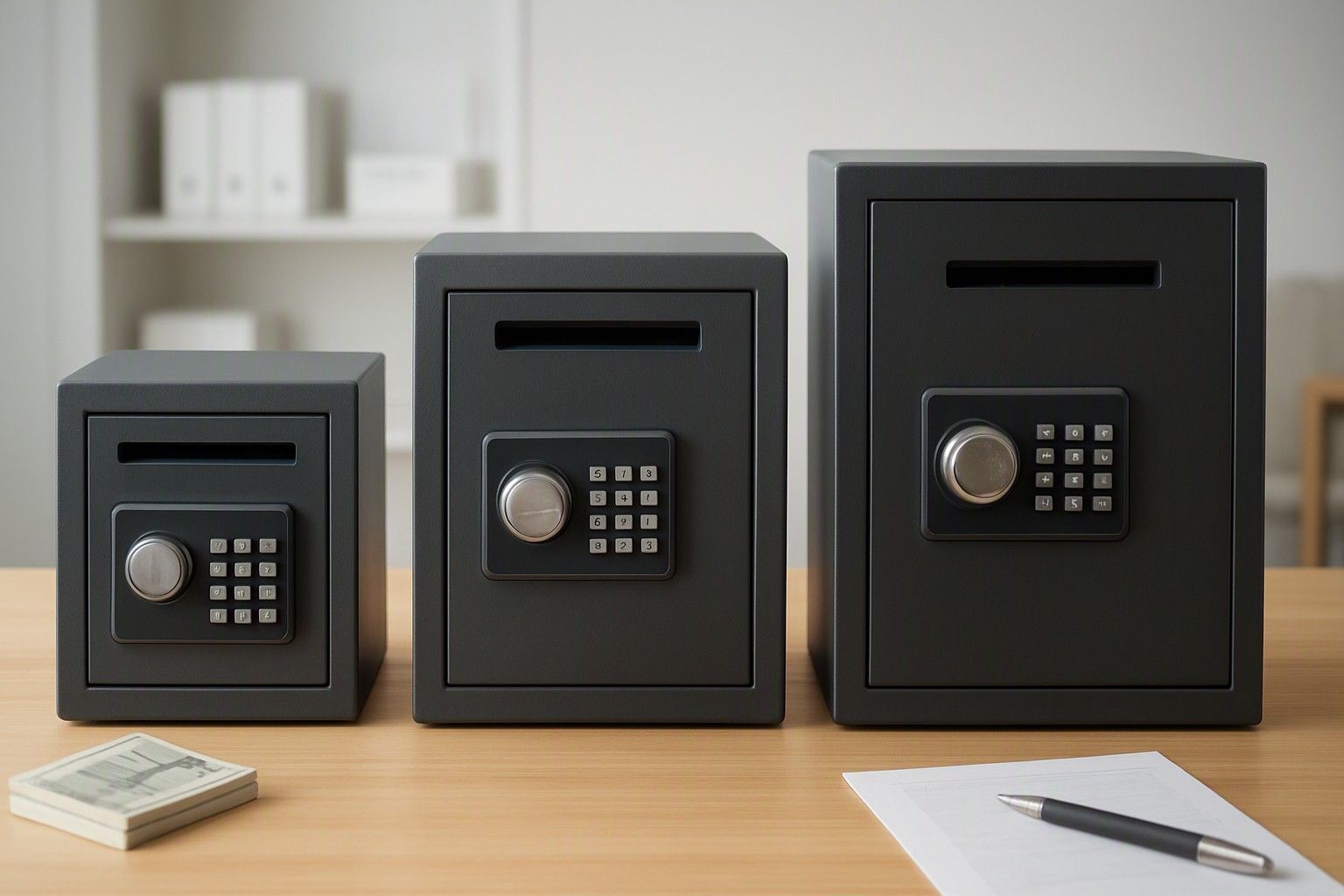
If you run a shop, clinic or small office that takes in cash every day, a safe made for a household is usually the wrong buy. This article explains which type to choose instead. In short: pick a deposit-slot safe if staff handle the takings, a model with separate codes if more than one person needs access, and a heavier body if your premises face the street. If you only keep a small float and a few documents, a home-style safe may be enough, and the last section helps you decide.
How Business Safes Differ From Home Safes
A home safe answers one question: how do I keep my own valuables away from a thief? A business safe has to answer a second one as well: how do I keep cash safe from the people who handle it, and how do I show what happened when the count comes up short?
That second question changes the product you need. A household safe is opened a few times a month, usually by one or two family members who trust each other. A shop safe may be opened several times a day, by a cashier at closing, by the owner in the morning, and by a manager or accountant on collection days. That means three things.
- Access control matters more. One shared code for everyone is a weak point in a business.
- Wear and tear is higher. A keypad pressed daily and a battery drained by constant use need more attention than in a home, so keep spare batteries and know where the emergency override is.
- The threat is different. At home you worry about a break-in. In a shop you also worry about a rushed closing, a shared code that has leaked, or a staff member who knows the routine.
The sections below follow these differences: how cash goes in, who can take it out, what gets recorded, what size you need, and what your premises and insurer expect.
Deposit-Slot and Drop Safes for Daily Takings
A deposit-slot safe, also called a drop safe, has an opening on top or on the front. Cash, cheques or envelopes can be pushed through it into a locked compartment without opening the main door. The person who drops the money cannot take it back out. Only whoever holds the opening code can.
This suits a shop with a counter cashier, a clinic with a front desk collecting consultation fees, or a pharmacy handing over cash at shift change. Cash leaves the till several times a day, so less of it sits in the drawer if the shop is robbed. Staff also never need the owner's code, which removes the most common reason for sharing it.
When comparing models, check three things:
- Slot size: Can it take a folded bundle of notes, a bank pay-in envelope or a rolled cash bag, or only loose notes?
- Slot protection: Look for a baffle or internal flap that makes it hard to fish cash back out with a hook or wire.
- Internal capacity: A small drop compartment fills faster than you expect on a busy day.
These models typically sit above the entry level. Expect most of them in the ₹15,000 range or higher, against an overall category spread of ₹5,000 to ₹60,000. If staff handle cash all day, the slot is worth paying for. A plain safe with no slot does not give you this separation.
Audit Trails, Time Delay and Separate Staff Codes
Three features decide whether a safe protects you from internal losses as well as outside theft.
Separate codes. Each person who needs access gets their own code, with a master code kept by the owner. When someone leaves, you delete one code and nothing else changes. Keep that in mind when you look at how multi-code keypad systems handle staff access, because the number of user slots and the way codes are added or removed differ from model to model.
Audit trail. Some digital safes record each opening with a time and the code or user that opened it. That turns a vague suspicion about a shortage into a dated entry you can check against your cash book. Many basic safes keep no log at all, so ask before you buy and do not assume. A log is only useful if you set the clock correctly and if the entries cannot be wiped by a regular user.
Time delay. On models that offer it, the door opens only after a countdown that starts when a valid code is entered. This helps if someone is forced to open the safe under threat, and it discourages quick, impulsive withdrawals. The delay also affects honest users, so test it against your closing routine.
Not every business needs all three. If you have two trusted staff, separate codes may be enough. If you have rotating staff and large daily cash, the audit trail is worth looking for.
Sizing for Ledgers, Cash Trays and Cheque Books
Business safes are usually bought too small. A home buyer mostly thinks about jewellery and a few documents. A shop owner may need to hold a cash tray, a stack of bundled notes, cheque books, receipt books, a ledger, the shop's key set and sometimes stamps or seals.
Before choosing a size, lay these items on a table and measure them. Then compare against the internal dimensions of the safe, not the outside ones. A thick door and insulation can take a lot of space, and a safe that looks large from outside may have a surprisingly small cavity.
A few practical points:
- Ledger and book size: A bound accounts ledger is bulkier than a cheque book. If you keep a physical ledger overnight, check that it fits flat or on its edge.
- Cash tray: If your till tray is removable, see whether it fits whole. Otherwise, count on handling loose bundles.
- Shelving: An adjustable or removable shelf lets you separate cash from documents.
- Growth: Takings usually rise as the business grows. Leave some spare room rather than buying a safe that is full on day one.
If you buy a deposit-slot model, remember that the drop compartment and the main compartment may have different capacities. Ask which one the stated size refers to.
Heavier Builds for Street-Facing Premises
A shop on a busy road, a clinic on the ground floor or an office with a shutter facing the street stays empty at night, and that is when most attempts happen. A light safe can be lifted and carried away to be opened elsewhere, so weight and anchoring matter as much as the lock.
For these premises, look at thicker doors and more bolts for street-level premises, and combine that with a safe that can be fixed to the floor or a wall. Anchoring only helps if the surface it is bolted into is solid. A floor slab or a thick masonry wall will hold, while a thin partition will not.
Placement counts too. Keep the safe out of sight of the street and away from the front counter, ideally in a back room, a storeroom or a corner behind the counter. A safe visible from the door advertises where the cash is.
Expect to pay more for a heavier build. The thicker designs usually sit in the ₹35,000 range and above, rising toward ₹60,000 at the top of the category. If your premises are off the main road, in a guarded building, or you rarely leave cash overnight, a lighter and cheaper safe may be a fair trade-off. Make that call on the actual risk at your location, not on habit.
Insurance Conditions for Storing Shop Cash
Many owners buy a safe and assume it satisfies the insurer. Do not. Policies differ between insurers and between plans, so the only reliable source is your own policy wording and a written answer from your insurer or agent.
Things worth asking before you buy:
- Is there a limit on cash kept in a safe overnight? Some policies cap the amount covered, and the cap may be lower if the cash is outside a safe.
- Does the policy specify a type of safe? Some require a safe of a certain construction or one fixed to the building. A freestanding light safe might not meet that.
- Is cash in transit covered separately? Carrying takings to the bank is usually a different risk from cash sitting in the premises.
- What proof will a claim need? Insurers generally look for cash records, such as a daily cash book, and signs of forced entry. A safe left open or a code shared carelessly can weaken a claim.
Also note that fire protection and theft protection are separate qualities. A safe that resists fire does not automatically resist a break-in, and the reverse is also true. Choose according to which risk your policy actually covers.
Keeping a dated record of what goes into the safe, matched with the audit log where the model has one, also puts you in a stronger position if you ever need to claim.
Choosing Between a Home-Style and Commercial Safe
Most shop owners can settle this with a few questions about how cash moves through the business.
A home-style safe is enough if: one or two trusted people handle the cash, you deposit it at the bank daily, and the safe holds only a small float, documents and a cheque book overnight. Many such safes cost around the category average of ₹12,000 or less, and the lowest start at ₹5,000.
A commercial or business-style safe is the better choice if:
- Several staff handle takings, so a deposit slot and separate codes are needed.
- You need a record of who opened the safe and when.
- Cash stays on the premises for more than a night, or the amounts are large.
- The premises face the street or stay unattended after closing.
- Your insurer has set conditions on the type or fixing of the safe.
If you are undecided, it helps to compare shop needs with what a household safe offers, since the home-safe features you will not need, such as large jewellery compartments, are not the ones you need to pay for.
For a business with daily cash, spending a little more on a deposit slot, a proper code structure and a sturdier body is cheaper than the first shortage or theft. You can make this decision today with the checklist above.
For daily cash in a shop, clinic or small office, the right digital safe is a deposit-slot model with separate staff codes, an audit log if you can get one, enough internal room for your ledger and cash tray, and a build heavy enough for your location. Confirm the insurer's conditions in writing, then match those features to the number of people handling your cash. That settles what to buy.
Comments
Be the first to comment.