Digital Safe Locker Prices in India: What ₹7,000, ₹15,000 and ₹35,000 Get You
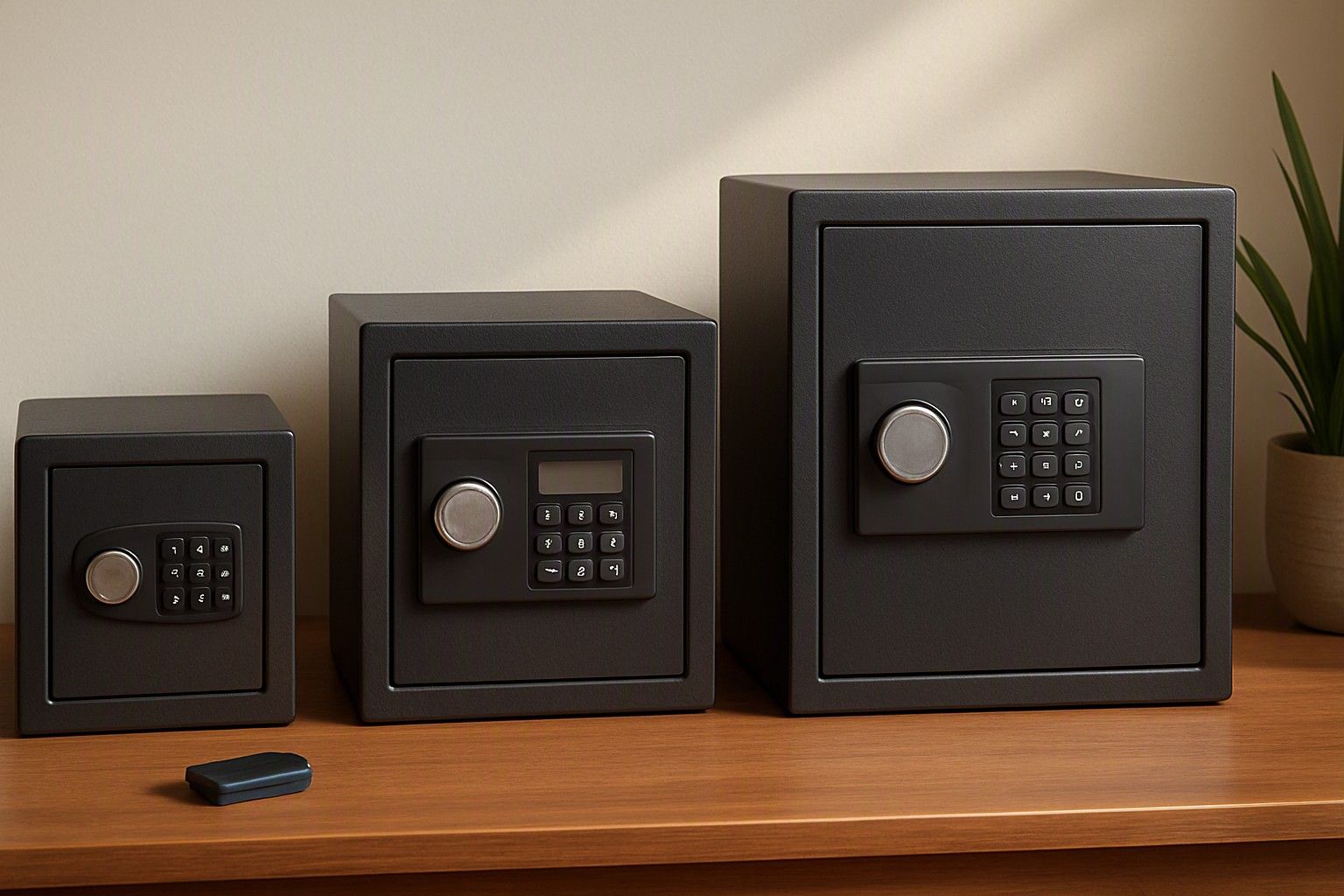
A good digital safe locker in India usually costs somewhere around ₹12,000, though the full market runs from ₹5,000 to ₹60,000. This article is for you if you have a price on screen or in a shop and want to know whether it is fair for the lock, the steel and the capacity you are getting. Read the band that matches your quote, then use the spec-to-price check to test it.
Where Prices Sit: ₹5,000 to ₹60,000, With Most Around ₹12,000
Digital safe lockers rates in India start at ₹5,000 and go up to ₹60,000. The typical buy lands near ₹12,000, which falls inside the ₹15,000 band. That tells you something useful: the market's centre of gravity is not the cheapest compact keypad box, and it is not the heavy, fire-rated unit either. It is the middle, where a sturdier door and a better lock start to show up together.
Four things move the price more than anything else. The first is the lock: a basic keypad costs less than a fingerprint reader, and both cost less than a setup with several user codes and backup entry. The second is the door and body steel, which decides how hard the safe is to force open. The third is capacity, because more steel simply costs more to make and ship. The fourth is fire protection, which adds both cost and weight.
The three bands covered below are ₹7,000, ₹15,000 and ₹35,000. If a price you are quoted sits inside one of them, you can judge it against what that band normally delivers instead of guessing. Prices in this category are fairly stable, so a quote that matches its band's specs is a sound reason to buy today.
The ₹7,000 Band: Compact Keypad Safes and Their Limits
Safes in the ₹7,000 band are mostly compact units with a keypad lock, sized for passports, a few documents, some cash and a small amount of jewellery. For that job they work. They keep valuables out of sight, away from children and from casual access by guests or domestic help, and they are easy to place inside a wardrobe or on a shelf.
The limits are about physical resistance. At this price the door and body are usually thin compared with the next bands up, and the locking bolts are small. A determined person with tools can get through a light safe far faster than through a heavy one, so treat these as protection against opportunity, not against a planned break-in. Fire protection is generally absent, and a listing that implies otherwise at this price deserves hard questions.
It helps to know what door thickness entry-level safes usually ship with before comparing two similar-looking listings, since the photos rarely show the difference. Check that the safe can be bolted down, that there is a mechanical override key, and that the battery compartment is easy to reach. If your valuables are modest and your main concern is tidy, lockable storage, this band is a reasonable and honest place to buy.
The ₹15,000 Band: Fingerprint Locks and Sturdier Doors
Moving into the ₹15,000 band, which is also where ₹12,000 sits, two things change together. Fingerprint locks become common, and the door and body construction gets noticeably more solid. This is where most households with real jewellery, property papers and a meaningful amount of cash end up.
The fingerprint reader is the feature buyers notice first, and it is convenient: no code to remember, and quick access for a second family member whose print is enrolled. If you are unsure whether a fingerprint lock is worth paying extra for, the honest answer is that it depends on who opens the safe and how often. The sturdier door is the part that quietly earns its price, because it is what slows down forced entry.
Within this band, spread matters. A safe near the lower end may have a fingerprint reader on a body that is only a little tougher than the entry tier, while one near the upper end usually has a more substantial build and more capacity. Look for a stated door and body specification, a backup entry method for when the battery dies or the reader fails, and a warranty you can actually claim on. Without those, a fingerprint lock is just a nicer-looking keypad.
The ₹35,000 Band: Fire Ratings, Larger Capacity and Heavier Builds
In the ₹35,000 band, you are paying for protection against more than theft. This is where fire resistance, larger internal capacity and heavy construction appear, and they show up together because fireproofing needs extra insulation and thicker walls, which makes the safe bigger and heavier.
A fire rating is the main reason to step up. It matters if you keep original documents, deeds, policies or backup drives that cannot be replaced easily. The rating should be spelled out clearly in the listing: how long the safe is meant to withstand heat, and under what test. A vague claim such as "fire resistant" with no duration is a warning sign, however attractive the price.
Larger capacity also means you can keep documents flat instead of folded, and store laptops or several lockers' worth of jewellery in one place. The trade-off is weight. A heavy safe is harder to move for a thief, which is good, but it is also harder to deliver and position, and some buildings make that difficult. Think about where it will sit before you buy. If you hold irreplaceable paperwork or significant valuables at home, a price in this band is usually justified when the fire claim is specific and the build is genuinely heavy.
Beyond the Usual Bands: Commercial and High-Security Models up to ₹60,000
Above the third band, prices climb toward ₹60,000, and the products are built for a different buyer. These are commercial and high-security safes meant for shops, jewellers, clinics, small offices and the occasional home that holds unusually valuable items. Few household buyers need to spend at this level.
What the extra money pays for is mainly scale and resistance. The steel is heavier and the locking mechanism is more elaborate, and the safe is often large enough to be treated as a fixture. Many models in this range support several users with separate access, and some add alarms or tamper responses. Treat these as examples of what the range offers, not a checklist every model meets, and confirm each one against the specific listing.
The question to ask is whether the risk justifies the cost. A business holding daily cash or stock overnight has a clear case. A household with a modest amount of jewellery and some documents is usually better served by the ₹15,000 or ₹35,000 band, where a solid door and a stated fire rating cover most real risks. Spending near ₹60,000 for home use often buys capacity and features you will never use.
Is the Price in Front of You Fair? A Spec-to-Price Check
To test a quote, start with what it should include for its band, then look for anything missing or oversold.
Lock type against price. A keypad-only safe priced like a fingerprint model is overpriced. A fingerprint safe should also have a backup method, such as a code or mechanical key, so a dead battery or a failed read does not lock you out.
Steel and weight. A listing that never states door or body construction is hiding something. Weight is a useful cross-check: if a safe claims a heavy build but the shipping weight is low, the claim is doubtful.
Capacity. Compare the internal volume you actually need with what is offered. Paying for space you will not fill is the most common way buyers overspend, and a tight safe that cannot hold your documents flat is the most common way they under-spend.
Fire claims. Anything marketed as fire-resistant should state a duration and a test basis. If it does not, assume there is no meaningful rating and judge the safe as a theft-protection product only.
Warranty and service. A longer, clearly worded warranty from a seller with local service is worth some premium. An unusually low price with no service support costs more in the long run.
If the lock, steel, capacity and any fire claim all match what the band usually offers, the price is fair, and you can buy it with confidence now.
Installation, Delivery and Other Add-On Costs
The sticker price is not always the final one, so ask about these before you pay.
Delivery. Heavier safes in the upper bands can be awkward to move. Confirm whether delivery is free, whether it includes carrying the safe up stairs, and what happens if the lift is too small. Check on arrival that the carton is intact and the body shows no dents.
Installation. Most buyers should anchor the safe to a wall or floor, because a safe that can be carried away protects very little. This may need drilling and fixings, and in some cases a technician. Ask whether the seller provides installation or only supplies anchor hardware, and whether doing it yourself affects the warranty.
Batteries and spares. Digital locks run on batteries. Confirm which type they need, whether any are included, and whether spare override keys are supplied. Keep one key somewhere other than the safe.
Service. Check who handles a lock fault after the first few weeks, and whether the warranty covers the electronics as well as the body.
When you are ready to line up the price you're quoted with every other spec worth checking, the full buying guide gives you the rest of the criteria in one place.
So how much should a good digital safe locker cost in India? For most households, around ₹12,000, inside the ₹15,000 band, where a fingerprint lock and a sturdier door come together. Go lower if you only need tidy lockable storage, and move into ₹35,000 if fire protection and capacity matter. With the spec-to-price check and the add-on costs in hand, you can look at a quote and know whether it is fair.

Comments
Be the first to comment.