PlayStation vs Xbox vs Nintendo: Choosing a Console Ecosystem in India
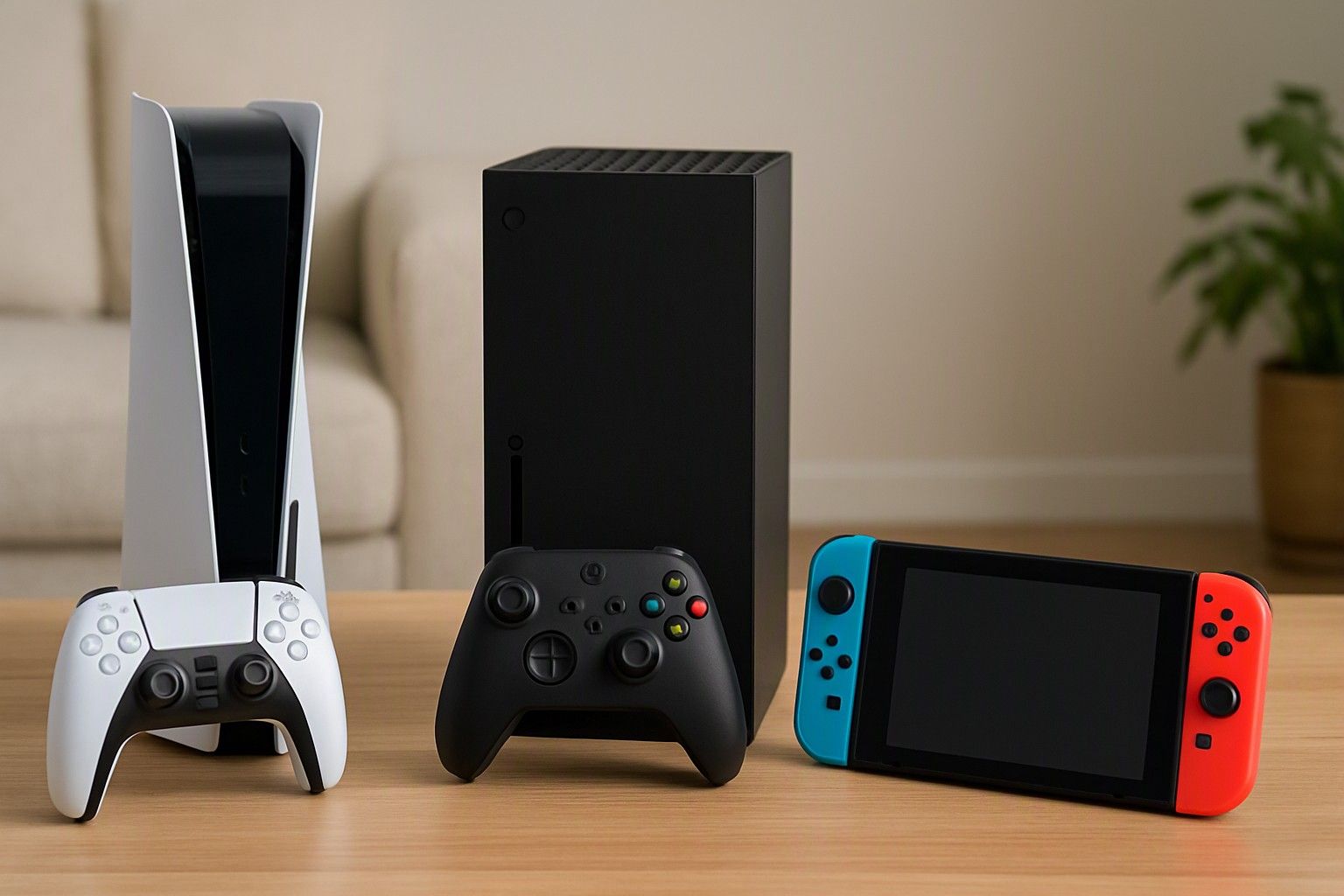
If you are trying to decide between a PS5, an Xbox Series console and a Nintendo Switch in India, this article is for you. The hardware matters less than the ecosystem around it: the games you will play, the subscription you will pay for, and the friends you will play with. By the end, you should be able to name one platform and know why it suits you.
Exclusive Games That Define Each Platform
Exclusives are the clearest difference between the three, so start there.
PlayStation leans on big, cinematic single-player games: story-heavy action adventures and open-world titles with film-style production. If you want a long game you can finish alone over a few weeks, Playstation is the platform's strongest argument.
Nintendo makes games that exist nowhere else and are built around play rather than realism. Mario, Zelda and Pokémon are the obvious franchises. Nintendo suit families, shared-screen play and short sessions, and they hold their appeal even though the hardware is less powerful.
Xbox is the hardest to pin down. Its first-party studios make racing, shooter and role-playing games, but Microsoft has been releasing some of them on other platforms and on PC. That weakens the case for buying an Xbox just for exclusives, and it works in your favour if you want those games without committing to the console.
The question to ask is which exclusive library you would still be playing a year from now. If the answer is a cinematic single-player game, look at PlayStation. If it is something you can hand to a cousin or a child, look at Nintendo. If you want a large catalogue instead of a few flagship games, Xbox deserves a look.
Availability and Service Support for Each Brand in India
Official support in India is uneven, and it affects what you can safely buy.
PlayStation has the most established presence. Consoles are sold through official channels and Sony has a visible after-sales setup, so buying with an Indian warranty is straightforward.
Xbox consoles are also sold officially, but stock has been less consistent and the retail footprint is thinner. Check whether the unit you are buying carries an Indian warranty, and ask which service centre would handle repairs.
Nintendo is the most complicated. Its official presence in India has historically been limited, so many Switch units on sale come through other routes. Warranty may then be hard to claim locally, and the seller's promise matters more than the brand's. Our explainer on why some units reach Indian shelves through import channels covers what to check for region locking, power adapters and warranty.
Whichever brand you choose, get a proper GST invoice, confirm the warranty is valid in India, and note how repairs are handled. A console that cannot be serviced locally is a real risk, because games, accessories and subscriptions all tie back to that one device.
Game Pass vs PlayStation Plus vs Nintendo Switch Online
Each subscription is built for a different kind of player, and the one attached to your console will probably be your biggest ongoing cost.
Xbox Game Pass works like a library. You pay and get access to a large rotating catalogue, including many new first-party releases on the day they launch. It suits players who sample many games and would rather not buy each one.
PlayStation Plus has tiers. The base tier is mainly what you need for online multiplayer on PlayStation, plus some monthly games. Higher tiers add a catalogue of older titles and other extras, so the price depends on how much of that library you will use.
Nintendo Switch Online is the lightest of the three. It covers online play and a library of classic games from older Nintendo systems. It adds less than the other two, but it also costs less to carry.
One structural point: on PlayStation and Switch, online multiplayer needs the paid subscription, while the extra catalogues are optional. Budget for the subscription alongside the console, not after it. We cover this in detail in comparing what each subscription tier costs Indian players. A subscription that matches how you actually play usually costs less over a year than buying games one at a time.
Online Player Base and Server Latency From India
Playing online from India means your experience depends on where the game's servers are and how many people are playing near you.
PlayStation generally has the largest console player base in India, so matchmaking in popular multiplayer games tends to fill quickly. Xbox's Indian community is smaller, which can mean longer waits in less popular games. Nintendo's online audience here is mostly casual players, and its titles lean towards local play and friends, not ranked competition.
Latency varies by game, not by console. Many publishers run servers in Asia, and some titles use peer-to-peer connections, where the quality of your match depends on your opponent's connection as much as your own. A fast, stable broadband line affects your results more than the logo on the console. A wired connection also helps a lot over a crowded home Wi-Fi network.
If you mainly play competitive multiplayer, check which servers your two or three target games use before you buy. If you mostly play single-player or local multiplayer, none of this will affect you much.
Cross-Play and Which Platform Your Friends Use
Your friends can matter more than any spec on this list, because an online game is only fun if people you know are in it.
Friends lists, party chat and purchased digital games do not move between platforms. If your group is on PlayStation and you buy an Xbox, you are not automatically playing together. Many popular multiplayer games now support cross-play between PlayStation, Xbox and PC, so you can often join a friend on a different console. Support is decided game by game, and Nintendo's cross-play options are narrower than the other two.
Two practical steps help. First, ask your regular gaming group what they play on and which games they actually launch together. Second, check whether those specific games support cross-play and whether it works across the exact platforms involved.
If your friends are scattered, the safer choice is the platform with the largest Indian player community, which is usually PlayStation. If you are mainly buying for family and local play, the friends question matters less, and Nintendo's strengths count for more.
Raw Graphics Power vs Portability
This is a real trade-off. You cannot get the most powerful hardware and a console you can carry in a bag in the same device.
PS5 and the higher-end Xbox Series console are built for the TV. They deliver the sharpest visuals and fastest loading, and they make the most of a modern 4K television. The lower-powered Xbox Series model costs less but trades away some of that performance, and it is typically digital-only, meaning no disc drive. Make sure the TV in your home can show what you are paying for, and check whether HDMI cable and port support match.
Nintendo Switch is the portable option. It works as a handheld and docks to a TV, but its graphics are visibly simpler than the other two. In return you can play in bed, on a long train journey or while a TV is in use by someone else, which matters in many Indian households where the main screen is shared.
Choose power if you play at a fixed spot on a good screen and care about visual detail. Choose portability if your play time is split across rooms, travel and short sessions. Do not buy a powerful console you will rarely get the TV for.
Narrowing Down to One Ecosystem
Start with the question this article opened with, then apply four filters in order.
- What do you want to play? Cinematic single-player games point to PlayStation. Family-friendly and portable play points to Nintendo. A large catalogue for a monthly fee points to Xbox.
- Where will you play? A fixed TV favours PS5 or Xbox. A shared TV or travel favours Switch.
- Who will you play with? Follow your friends' platform if multiplayer matters, or choose the biggest Indian community.
- What can you get supported here? Prefer a unit with a valid Indian warranty over a cheaper one you cannot get repaired.
On cost, the category runs from ₹25,000 to ₹65,000, with an average of ₹40,000. Three tiers help you place yourself: ₹28,000, ₹40,000 and ₹60,000. Decide your tier first, and only then compare platforms within it. Include a subscription and a few games in your budget, because the console is rarely the whole bill.
Once you have picked a platform, you can buy with confidence instead of waiting for a better moment, because the main cost of waiting is time you could have spent playing. Our hub covers the rest of the console decision for Indian buyers, including storage, accessories and what to check at purchase.
You now have what you need to answer whether a PS5, an Xbox Series console or a Nintendo Switch is right for you in India. Match the platform to the games you will play, the screen you will play on and the friends you will play with, then confirm the unit comes with Indian warranty support. If those four line up, you have your ecosystem.

Comments
Be the first to comment.