Gaming Console Prices in India: What ₹28,000, ₹40,000 and ₹60,000 Actually Get You
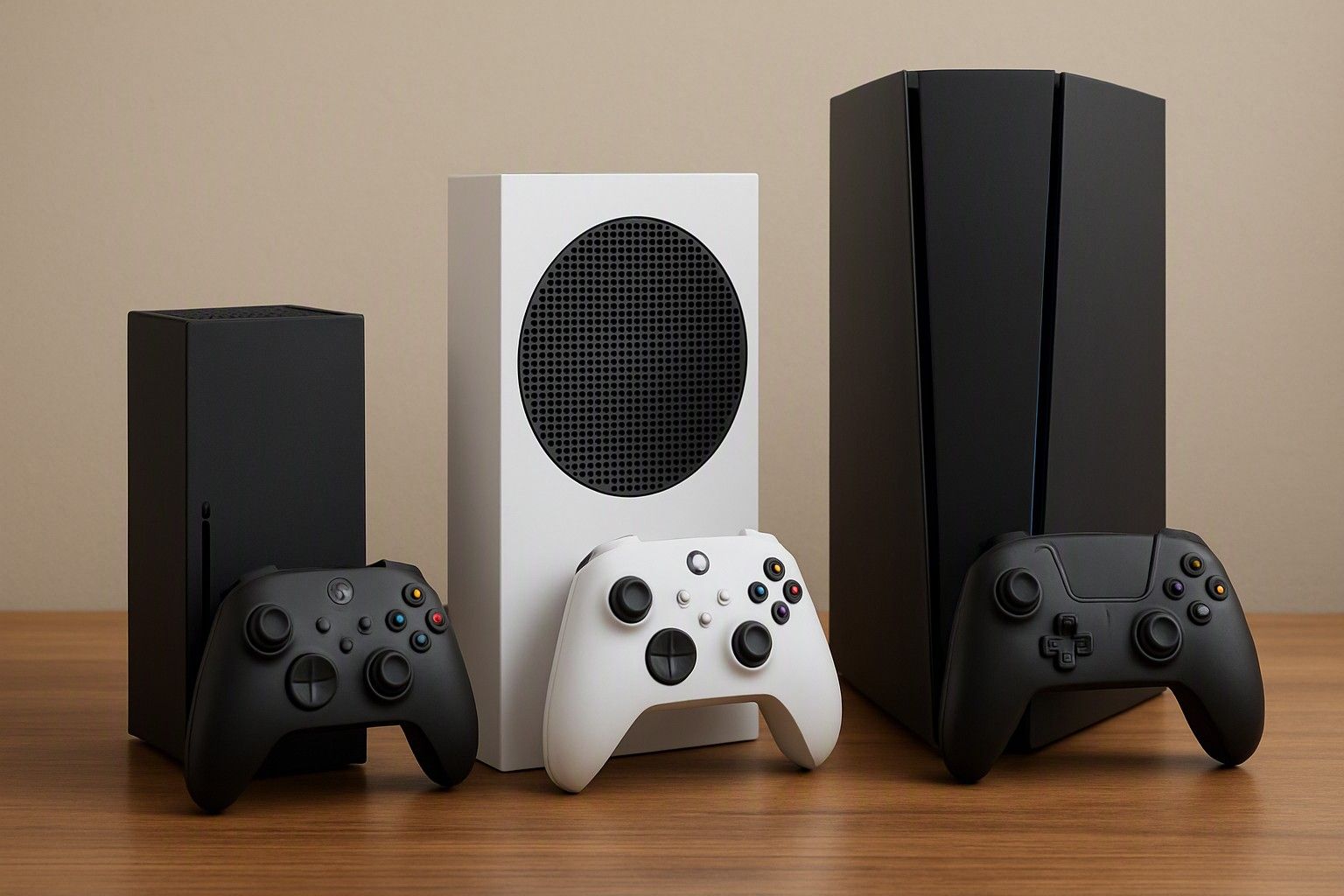
If you are ready to buy a gaming console in India and want to know how much to spend, and whether the price on your screen is reasonable, this article is for you. It walks through what each budget band actually gets you, what you give up at each step, and how to check a listing against the typical price range for the category. By the end you should be able to pick a band and judge a price with confidence.
The Full Price Range: ₹25,000 to ₹65,000
New gaming consoles in India run from ₹25,000 to ₹65,000, with an average of ₹40,000. That spread is wide enough that two buyers can both say they bought a console and have paid very different amounts for very different experiences.
Four things mostly decide where a console lands in that range. The first is hardware strength, meaning how smoothly and how detailed games can run. The second is whether the unit has a disc drive or is digital-only. The third is how much built-in storage it ships with. The fourth is what comes in the box, such as extra controllers or game codes. Whether the unit is sold through official channels or imported also moves the price, which we cover later.
The average is worth noticing. ₹40,000 sits right where the mainstream band meets the premium band. So a listing near that figure is not a bargain or a markup by default. It is the point where you start choosing between a balanced console and a more powerful one. The sections below take the bands in order, starting from the lowest, so you can see where your budget falls and what it buys.
₹28,000: Entry Consoles and Their Compromises
Entry pricing starts from ₹25,000, and the compromises at this level are real but manageable if you know them in advance.
Consoles here typically have less raw performance than the bands above, so expect lower graphics headroom and less future-proofing as newer games get more demanding. You may also find smaller built-in storage, or a digital-only design that removes the disc drive. That affects how you buy and resell games. Accessories are usually minimal, often a single controller, so a second player means a second purchase.
This band suits casual players, households buying mainly for children or family sessions, and anyone adding a second console for a particular kind of game. It is a weaker fit if you want the newest big-budget releases running at their best.
Budget for the costs beyond the console as well. Games, an extra controller, a paid online subscription and storage expansion all add up, and at this band they can change what you can afford. A console in this band is good value when you plan around those extras, not when you stretch to the ceiling and have nothing left for games.
₹40,000: The Mainstream Band Around ₹40,000
This is where most Indian buyers end up, and for good reason. The mainstream band, centred near ₹40,000, generally gives you current-generation performance, a reasonable amount of storage and access to nearly the full library of new releases, without paying for headroom you may never use.
The main decision inside this band is the edition. A disc-drive model and a digital-only model of the same console can sit in different parts of the range, and the choice also changes how you buy, lend and resell games. If you are deciding between them, how the edition you pick moves you between bands is worth reading before you commit, because it can be the difference between staying in this band and drifting into the next.
What you give up compared with the premium band is mostly top-end smoothness and resolution, and those gains only show on a capable display. What you gain over the entry band is performance that holds up for longer, and more stability as games get heavier. If you play regularly and have no strong reason to go higher or lower, this band is the safest place to start your shortlist.
₹60,000: Premium and Pro Models
Premium pricing buys the strongest hardware in the category: smoother performance, sharper visuals and, often, more storage and extra features. The band runs up to the ceiling of its range, and the last stretch toward ₹65,000 usually belongs to the most fully specified or special-configuration units.
The catch is that these gains depend on the rest of your setup. If your TV or monitor cannot show higher resolutions or faster refresh rates, much of what you pay for here goes unseen. A premium console on a basic screen is the most common way buyers overspend in this category.
This band makes sense in three situations. You already own a display that can use the extra performance. You play demanding games where smoothness matters, such as fast competitive titles. Or you want one console to last as long as possible before the next upgrade. It also suits buyers who would rather pay once for the strongest option than revisit the decision.
If none of those apply, the mainstream band usually covers your needs for less. Treat this band as a deliberate choice for a specific reason, not a default for anyone with a larger budget.
Bundles: When Included Games or Controllers Add Real Value
A bundle is worth paying for only when what is inside is something you would have bought anyway.
The simplest test is to price each item separately. Take the game, the extra controller and any subscription time, and ask whether you would have purchased each one. If the answer is yes for most of them, the bundle probably saves you money. If the bundled game is one you would never pick up, you are paying for filler, and the plain console is the better buy.
An extra controller is the most reliably useful inclusion if you play with a partner, friend or child at home, because it saves a separate purchase you would otherwise make quickly. Included games are a good deal when they are recent titles you actually want, and a poor one when they are older or niche.
Check how the game is delivered too. A physical disc or a redeemable code is not the same thing, and a code should be valid for the Indian region and not expired. Then compare the bundle price against the standalone console from the same seller. A bundle that costs noticeably more than its parts add up to is not value, however generous the box looks.
How to Judge Whether a Listed Price Is Fair
Start by locating the listing within the range. Match it to the same edition and storage, and see whether it falls inside the typical band for that kind of console. A price that sits in line with comparable listings is fair, and you can buy on that basis without second-guessing.
Next, compare several sellers for the identical configuration, not just the first result. Look at what is included: controllers, cables, game codes and warranty terms. Two listings with the same headline price can differ meaningfully in what you receive.
Be careful with prices that sit well below everything else. A very low number is rarely a lucky find. More often it signals a different kind of unit, and why an unusually low listing is often an imported unit explains what that means for warranty, servicing and compatibility with Indian power and region settings.
Finally, check the basics of the sale itself. Look for a proper GST invoice, a clearly stated warranty and a seller you can trace. A fair price from an untraceable seller is not fair, because the cost of a failed unit lands entirely on you.
Settling on the Right Band for You
Pick your band by how you will actually play, then check it against your screen and your total spend.
If you play occasionally, mostly with family or kids, or want a second console, the entry band beginning at ₹25,000 will do the job as long as you keep money aside for games and a second controller. If you play regularly and want current releases to run well without paying for extras, the mainstream band around ₹40,000 is the sensible centre of the market. If you own a display that can use the extra power, play demanding games, or want the longest-lasting machine, the premium band is justified.
Whichever band you choose, confirm the edition, the seller and what is in the box before you pay. Those three checks protect you more than a few rupees of difference in the headline figure. Your budget is only one input, and how budget connects to every other console decision shows how it fits with edition, games and setup in the wider buying process.
You now have what you need to decide: a band that matches how you play, a sense of what each one costs you in compromises, and a way to check whether a listing is fair. Pick the band, verify the seller and the edition, and buy the console that fits your setup.

Comments
Be the first to comment.