Kitchen Chimney Installation Guide for Indian Homes and Rented Flats
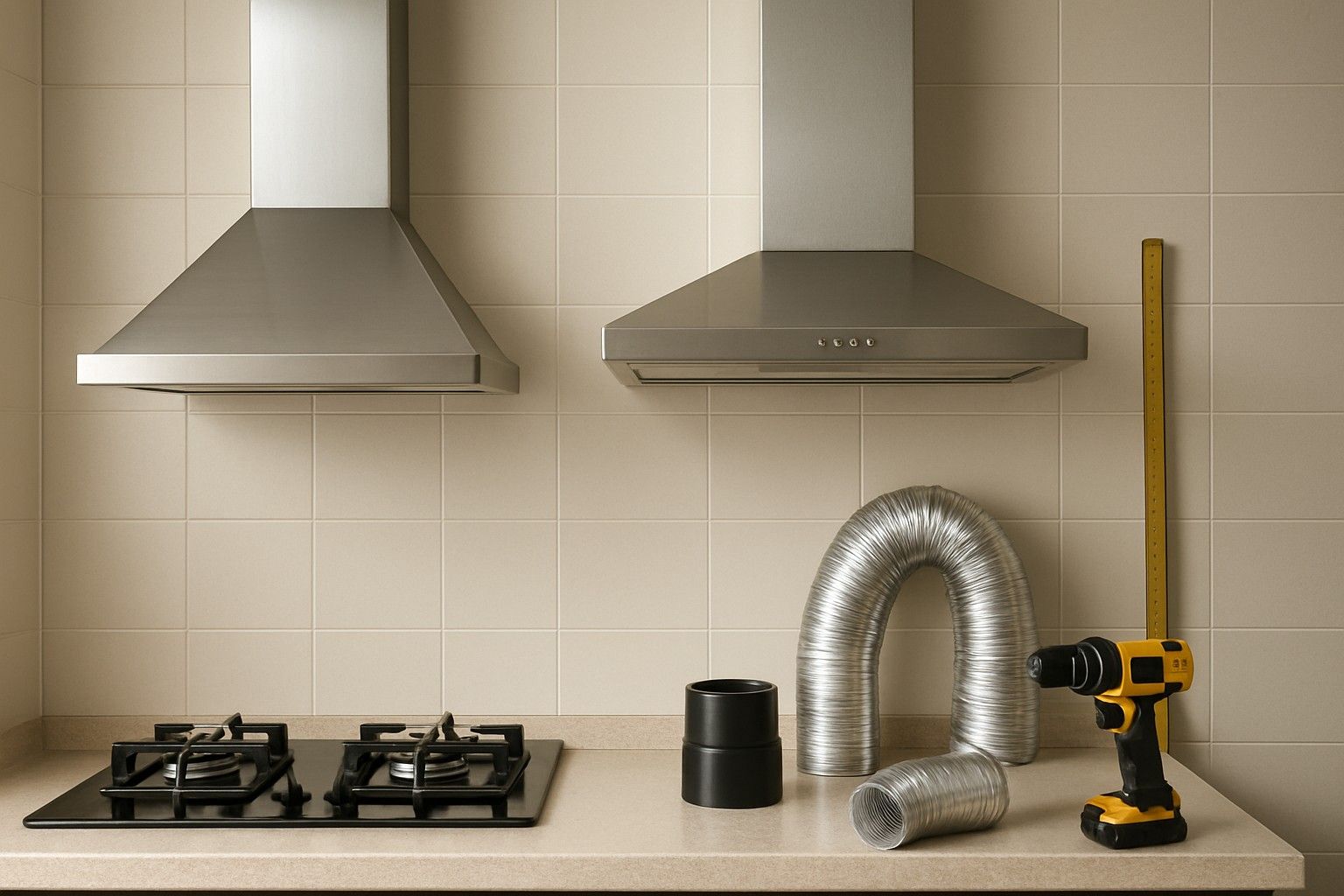
If you're wondering how a kitchen chimney actually gets fitted above your hob, and whether that's even possible in a rented flat without drilling into someone else's wall, this is the page for that. Installation in Indian homes runs into three real obstacles: getting the height right so suction works, finding a legal duct route in an apartment, and doing all this in a home you don't own. We'll work through each one so you know what to expect before the delivery truck shows up.
Correct Mounting Height Above Your Hob
Mounting height is the single most common installation mistake in Indian kitchens, and it directly affects whether your chimney actually pulls smoke and grease away or just sits there looking expensive. Most manufacturers specify a range of 65 to 75 cm between the bottom of the chimney and the top of your cooktop, with 65 cm being tighter and better suited to shorter users or lower-ceiling kitchens, and 75 cm giving more headroom for taller cooks and larger vessels. Go lower than this range and you risk heat damage to the unit and constant head-knocks while cooking. Go higher and suction efficiency drops sharply, because the chimney has to pull fumes over a longer vertical distance before capturing them, which means more noise on higher speeds to compensate and a filter that clogs faster since it's working harder for the same result.
The exact figure within that range should depend on your own height and how you cook. If you regularly use tall pressure cookers or kadhais, err toward 70-75 cm so lids clear the chimney body. If your kitchen ceiling is low to begin with, a 65 cm mount keeps the unit from feeling like it's boxing you in. Whoever installs it should measure from your actual hob surface, not the platform, since hob thickness varies. Get this measurement wrong and no amount of motor power or auto-clean technology will make up for it.
Ducting Routes and Outlet Options in Indian Flats
This is where installation planning genuinely diverges based on what kind of home you live in, and it's worth sorting out before you even shortlist a chimney. A ducted chimney needs a physical path for a pipe to carry smoke and grease-laden air out of the kitchen, either through an exterior wall, a shaft, or up through the roof. Independent houses and ground-floor units usually have a straightforward external wall route. Apartments are trickier: many housing societies restrict punching new holes in exterior walls or routing pipes through shared shafts, and older buildings sometimes have no usable shaft at all near the kitchen. If you're on a middle floor of a high-rise with a sealed facade, arranging ducting can mean society approvals, additional core-cutting charges, and a pipe run long enough to reduce suction efficiency.
This is exactly why ducting availability, not preference, ends up deciding the choice for a lot of buyers, and it's worth reading why ducting availability decides ducted vs ductless before you finalise a model, since a ductless chimney recirculates filtered air back into the kitchen and needs no external route at all. Before you commit to ducted, physically check for an existing shaft, exhaust duct, or wall opening near your hob location. If your kitchen sits in the interior of the flat with no exterior wall nearby, ducting becomes a genuinely expensive add-on rather than a simple pipe run, and that changes which chimney type makes sense for your home.
Installing in a Rented Home Without Damage
Renters face a specific version of this problem: the chimney needs to be mounted securely and, if ducted, needs a hole punched for the outlet pipe, but landlords are often unwilling to allow permanent alterations. The practical path here is to have this conversation before signing anything or before the chimney arrives, not after. Explain exactly what installation involves: wall mounting brackets, and if ducting is needed, one core-cut hole roughly the diameter of the outlet pipe, which is a one-time, coverable modification rather than structural work.
If permission for wall drilling is a hard no, a ductless chimney is the more realistic route, since it eliminates the external hole entirely and only needs secure mounting for the unit itself, which most landlords treat the same as fitting a shelf or curtain rod. For the wall-mounting brackets, ask your installer whether the existing wall material (brick versus a lightweight partition) needs different anchors, since this affects whether the eventual patch-up on move-out is minor or noticeable. Keep a written or WhatsApp record of what installation work was agreed to, including any hole size, so there's no dispute at the time of vacating. Many tenants also negotiate a small deposit adjustment upfront specifically to cover this, which avoids awkward conversations later and lets you install without constant anxiety about the security deposit.
Professional vs Brand Installation Charges
Almost every chimney sold in India, across the full range from ₹2,999 to ₹45,990, comes with an installation option either bundled by the brand or arranged separately through a local electrician or kitchen fitter, and the difference between these two routes matters more than most buyers expect. Brand-authorised installation typically costs more but comes with technicians trained specifically on that unit's mounting brackets, ducting requirements, and electrical load, along with a workmanship guarantee that protects you if the unit is damaged or wrongly fitted during setup. This matters especially for chimneys with auto-clean mechanisms or heavier motor assemblies, where incorrect mounting can genuinely affect performance and even void your product warranty.
Local or independent installation is usually cheaper and faster to schedule, and for a straightforward wall-mount job with a short, simple duct run, a competent local electrician handles it without issue. The trade-off is accountability: if something goes wrong, whether that's a crooked mount, a suction problem traced back to ducting, or damage during drilling, you're negotiating with the same person who did the job rather than invoking a brand's service guarantee. For a chimney toward the lower end of the price range, say within ₹4,999, the cost difference between brand and local installation is proportionally larger, so many buyers reasonably choose local. For a higher-value unit in the ₹24,999 range with auto-clean or advanced controls, brand installation is worth the extra cost simply to keep the warranty intact and get someone who has fitted that exact mechanism before.
Pre-Installation Checklist Before Delivery
A few things sorted before the chimney reaches your door save an installation-day scramble. First, confirm the exact mounting height you want measured against your own hob and ceiling, as covered earlier, and mark it on the wall if you can. Second, settle the ducted-versus-ductless question for your specific kitchen layout, since installers need to know this to bring the right hardware and pipe length. Third, if you're renting, have the landlord conversation and any written agreement done well before delivery day, not while the installer is standing in your kitchen waiting for a decision.
Also check the electrical point near the hob: most chimneys need a dedicated socket within reach of the unit, and if your kitchen wiring is older, you may need an electrician to add or reposition one before the installer arrives. Confirm the unit's width matches your hob or cooktop width, since a mismatched size affects both suction coverage and how installation brackets sit against the wall. Finally, before delivery, make sure the model itself is settled and not still under debate, because switching chimney types after brackets are drilled means redoing wall work. If you haven't locked in a choice yet, it's worth going back to make sure your choice is finalised first so installation day is about fitting the chimney you've chosen, not still deciding between options with an installer waiting.
Between getting the mounting height right, matching your ducting reality, working around a rental agreement, and picking who actually does the fitting, installation stops being a mystery once each piece is settled ahead of time. Sort these before delivery day and the chimney goes up once, correctly, whether you're an owner drilling into your own wall or a tenant working within what your landlord allows.
Comments
Be the first to comment.